

A New Chapter for the Fondation Cartier
On October 25, 2025, after three decades on Boulevard Raspail in Jean Nouvel’s iconic glass-and-steel pavilion, the Fondation Cartier pour l’art contemporain opened its doors at 2 Place du Palais-Royal, directly opposite the Louvre, marking a radical new chapter for this contemporary art centre.
On October 25, 2025, after three decades on Boulevard Raspail in Jean Nouvel’s iconic glass-and-steel pavilion, the Fondation Cartier pour l’art contemporain opened its doors at 2 Place du Palais-Royal, directly opposite the Louvre, marking a radical new chapter for this contemporary art centre.
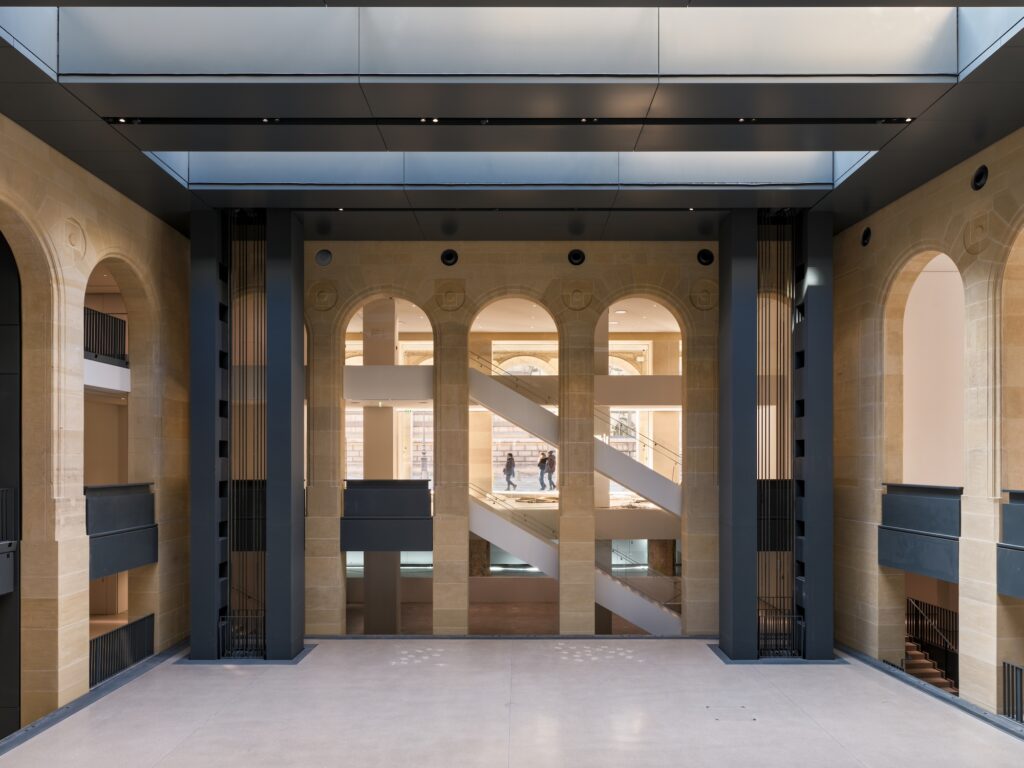
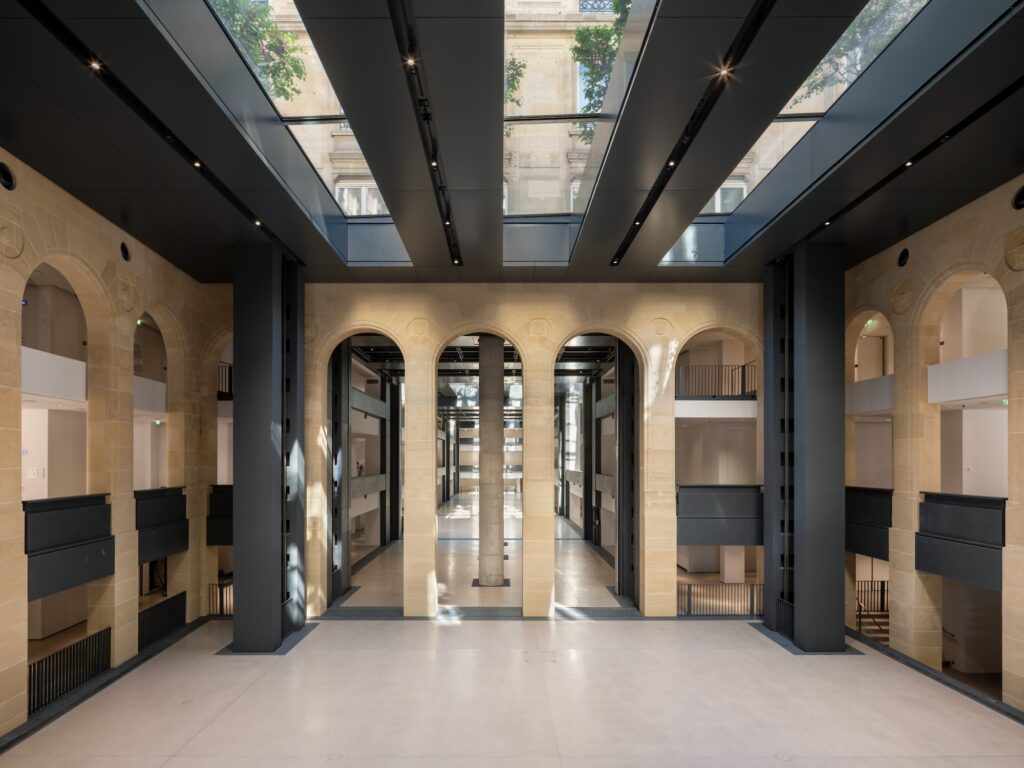
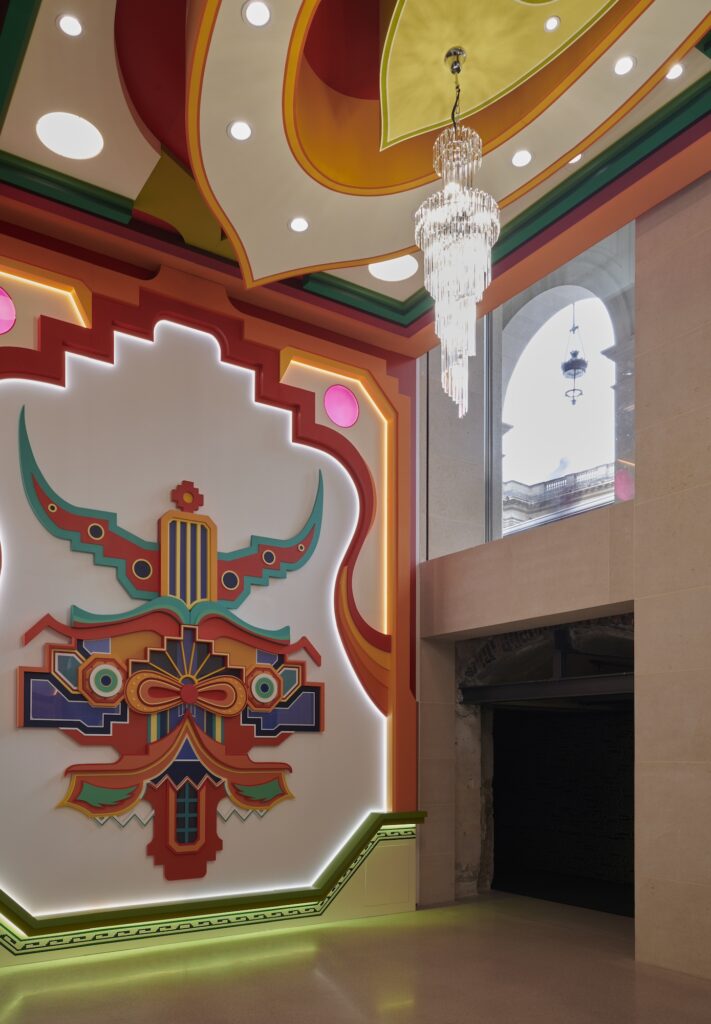
The move represents more than a change of address. It signals a fundamental rethinking of what a cultural institution can be in the 21st century. Once again designed by Nouvel, the new 8,500-square-meter space occupies a Haussmannian building that was originally the Grand Hôtel du Louvre in 1855, later the Grands Magasins du Louvre, and most recently the Louvre des Antiquaires. Rather than preserve the building as a static monument, Nouvel has created what he calls a “giant internal machine.”
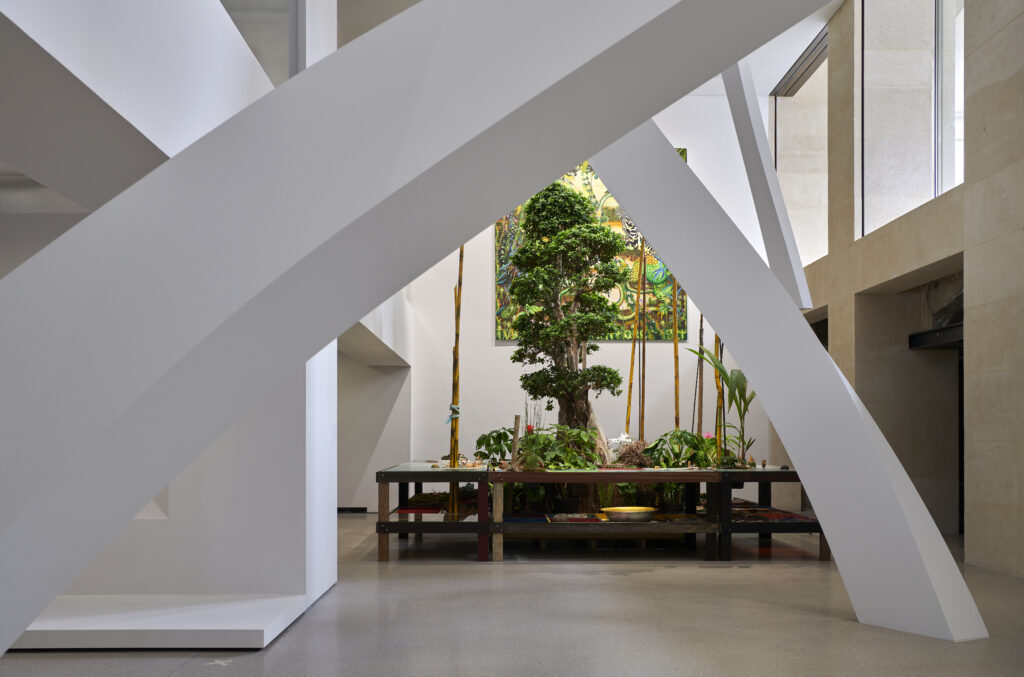
The museum is designed with five mobile platforms, each spanning 200 to 340 square meters, capable of adjusting to eleven different heights. This unprecedented mechanism transforms the museum into a living space where walls rise and fall, ceilings retract, and perspectives shift with each exhibition. “The Fondation Cartier will most likely be the institution offering the greatest differentiation of its spaces, the most diverse exhibition forms and viewpoints,” Nouvel explains. “According to the selected configuration, these spaces of variable geometries will be invented and discovered as the different projects unfold.”
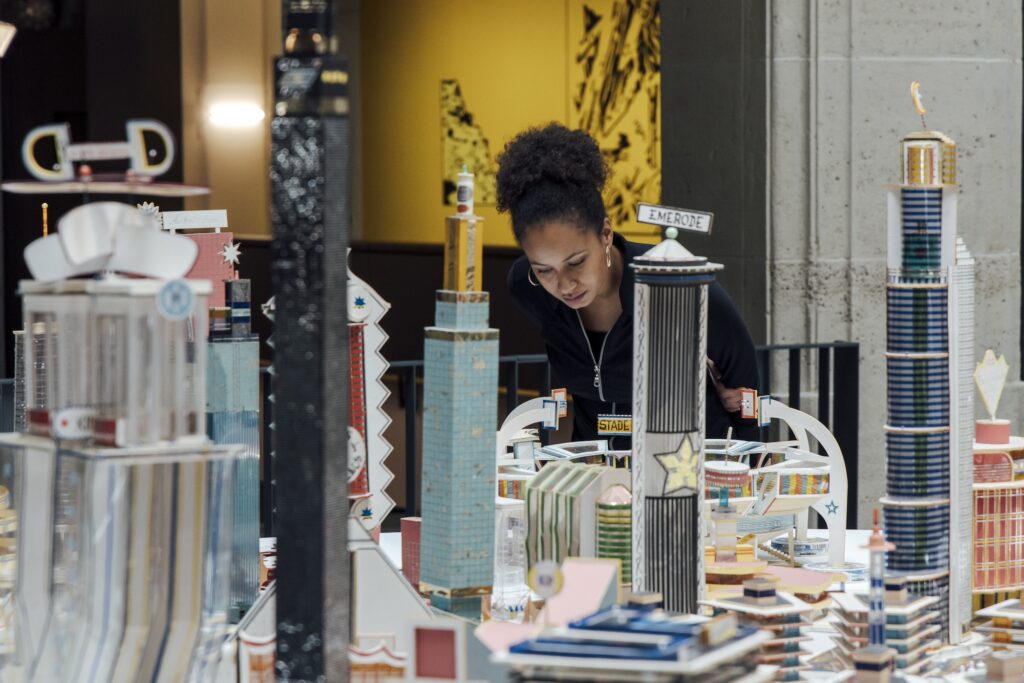
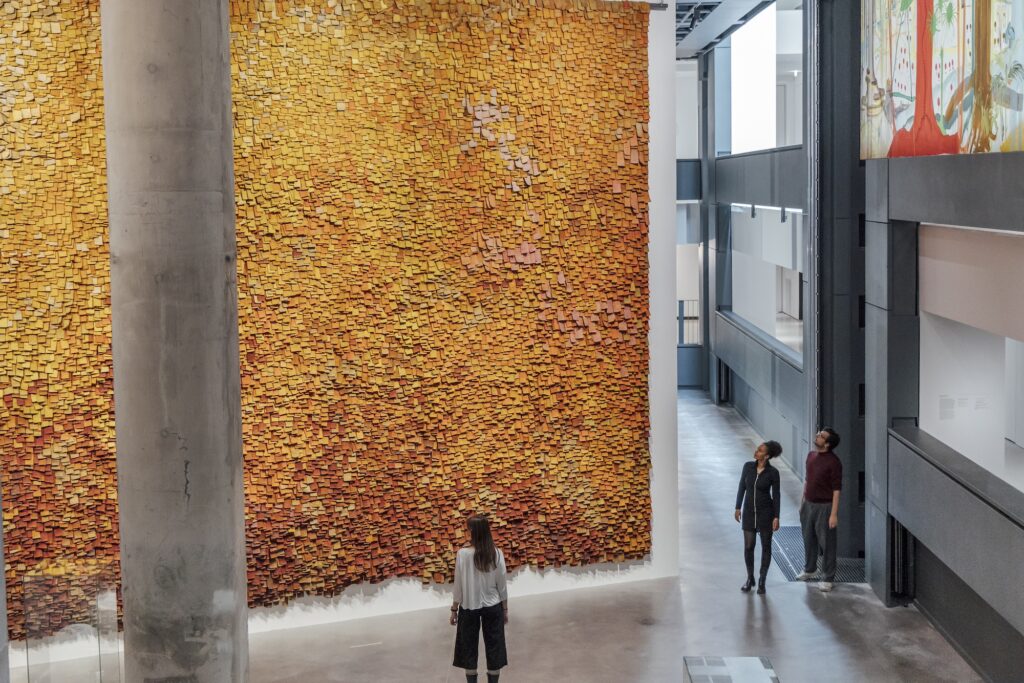
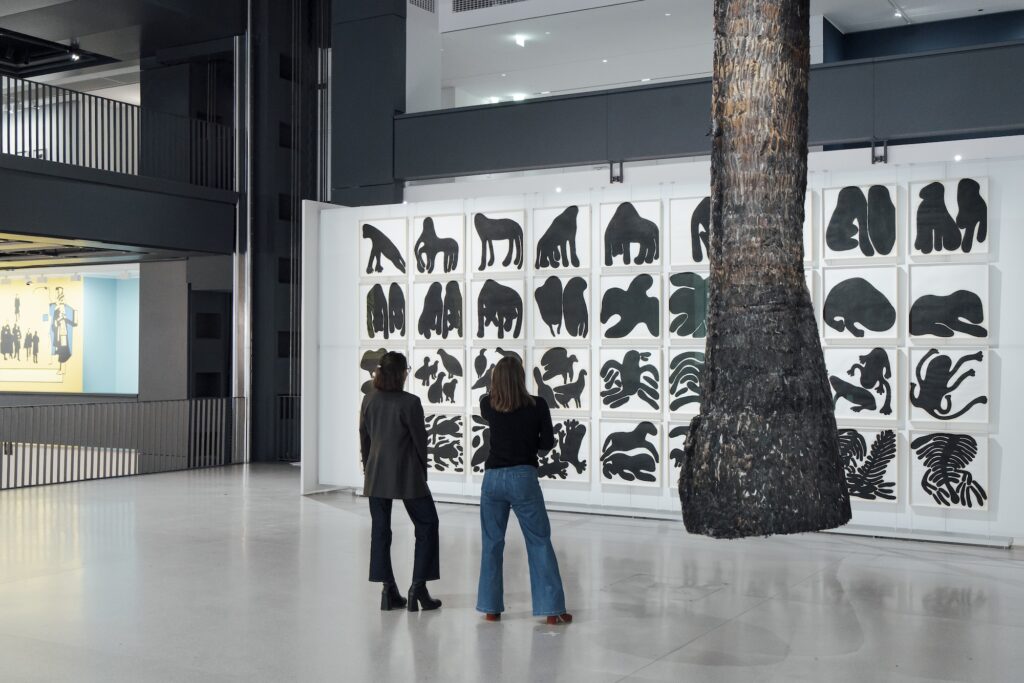
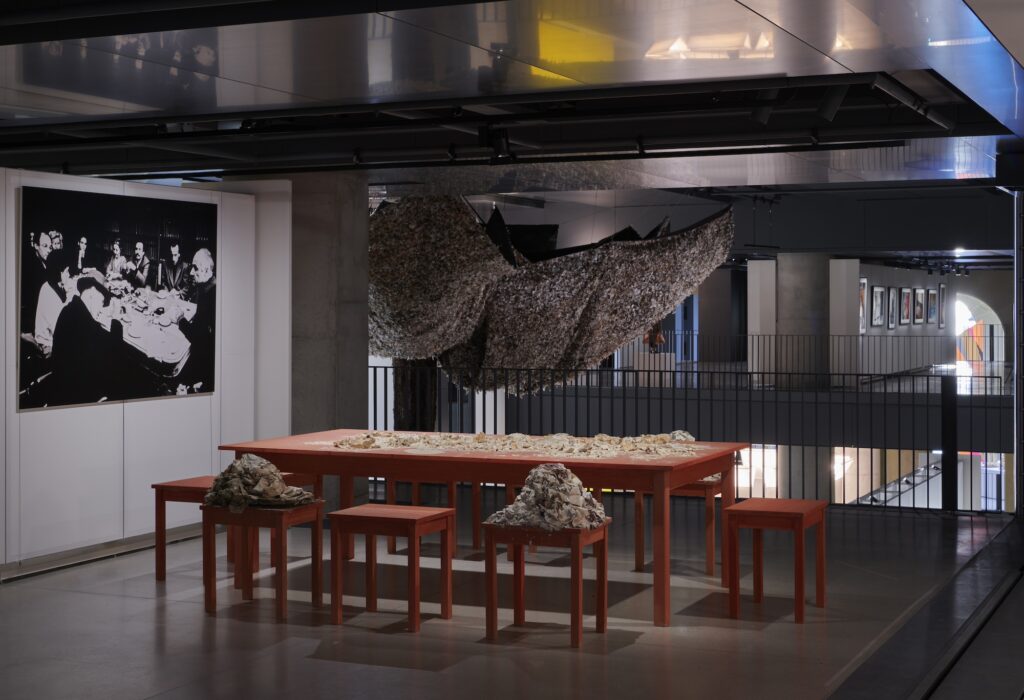
The inaugural exhibition, Exposition Générale, running through August 2026, perfectly demonstrates this new approach. Drawing from the foundation’s collection of over 4,500 works, the exhibition presents 40 years of contemporary creation through nearly 600 works by more than 100 international artists. The title nods to the 19th-century exhibitions once held in this very building, when the Grands Magasins du Louvre organized expositions that democratized material culture and expanded the cultural sphere.
Organized around four thematic sections—Machines d’Architecture, Être Nature, Making Things, and Un Monde Réel—the exhibition eschews traditional chronological or geographic arrangements. Instead, it weaves together human and non-human forms, craft and technology, creating what the curators describe as “an alternative map of contemporary creation that breaks away from conventional museum compendiums.”
For the exhibition installation, the museum invited Formafantasma, who utilized modular textile structures mounted on aluminium sections to visitors through the collection while revealing the exhibition’s own mechanisms. As Andrea Trimarchi notes, “Rather than imposing a fixed path, we introduced tall vertical and luminescent elements—what we call “lanterns”—that serve as wayfinding markers within the space, subtly guiding visitors while allowing them to navigate intuitively.” This transparency extends to the building itself: large bay windows flood the ground floor with natural light and offer passersby glimpses into the galleries, reconnecting the institution with urban life.
The foundation has also enhanced its public mission with La Manufacture, a 300-square-meter education space, alongside a new auditorium and bookstore. These additions reflect what the institution calls its commitment to creating “places for exchange and sharing,” rather than merely scenographic propositions.
By reactivating the building’s historical role as an exhibition site while embracing radical architectural innovation, the Fondation Cartier has created a model for how cultural institutions can honour heritage while remaining experimental. Throughout the year, the museum will present a regular series of events, talks and interventions in the city. In Fall 2026, they will open The Harvest, an exhibition by Ghanaian-born artist Ibrahim Mahama.
For more information: www.fondationcartier.com
Opening photo © Cyril Marcilhacy

Articles you also might like
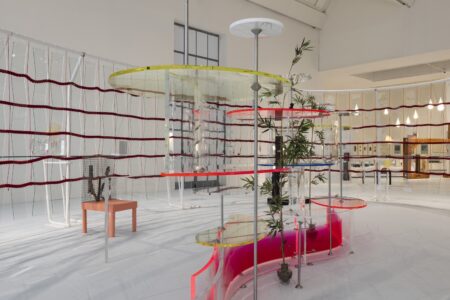
Triennale Milano pays homage to one of Italian design’s most radical minds — Andrea Branzi — through the eyes of his longtime friend and collaborator, Toyo Ito.
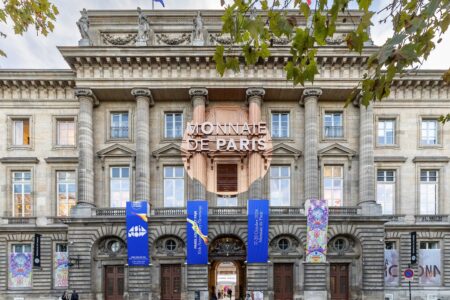
Returning for its 11th edition from 22 to 26 October 2025, ASIA NOW transforms Paris’s Monnaie de Paris into an exciting presentation of contemporary art from Asia and its diaspora.
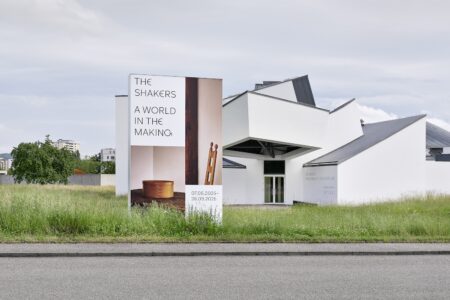
The Vitra Design Museum presents “The Shakers: A World in the Making”, an engaging and comprehensive exhibition around this unique American design style that also examines what possibilities its values offer us today. The exhibition is on view through September 28th, 2025.
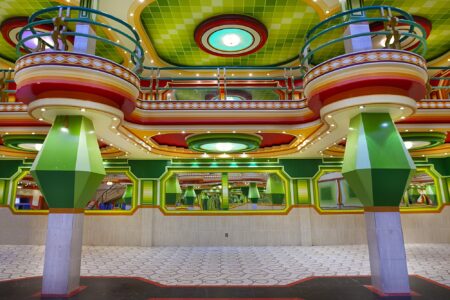
For the 2024 issue of TLmag40: The Ideal Home, Bolivian architect Freddy Mamami Silvestre wrote about his architectural practice based in the Neo-Andean Style, including his singular ‘Cholets’, multi-purpose, public and private buildings that embrace the country’s layered culture and past.