

The Mindcraft Project 2026
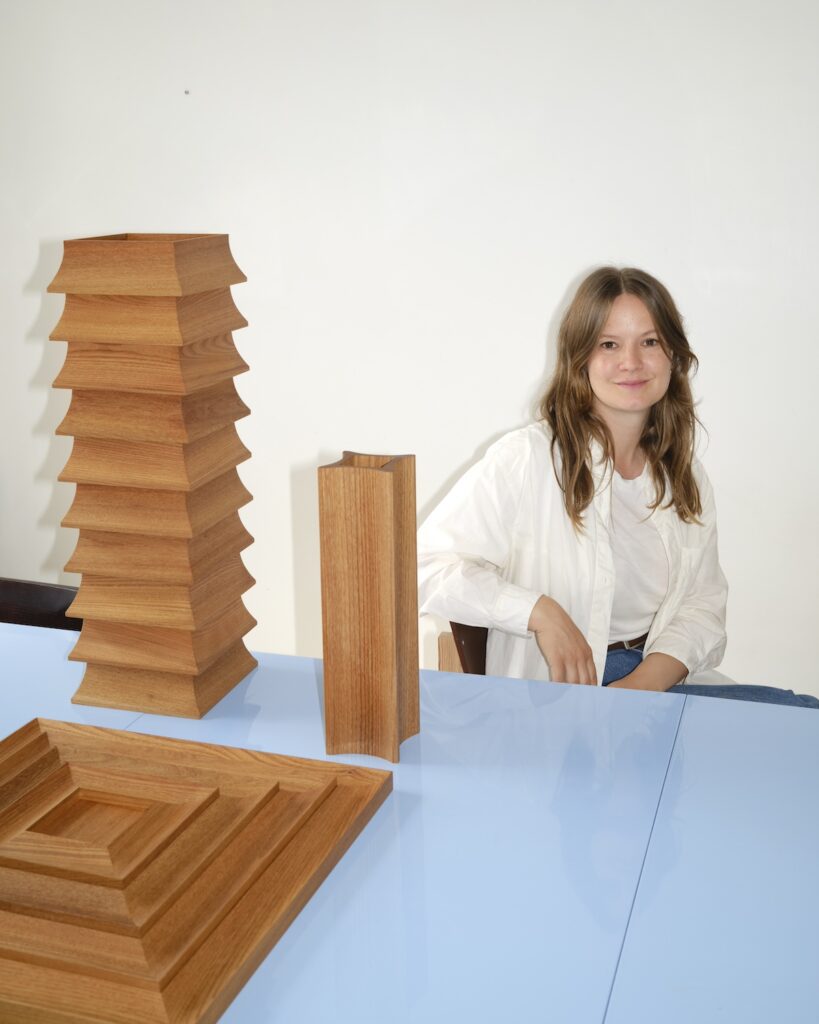
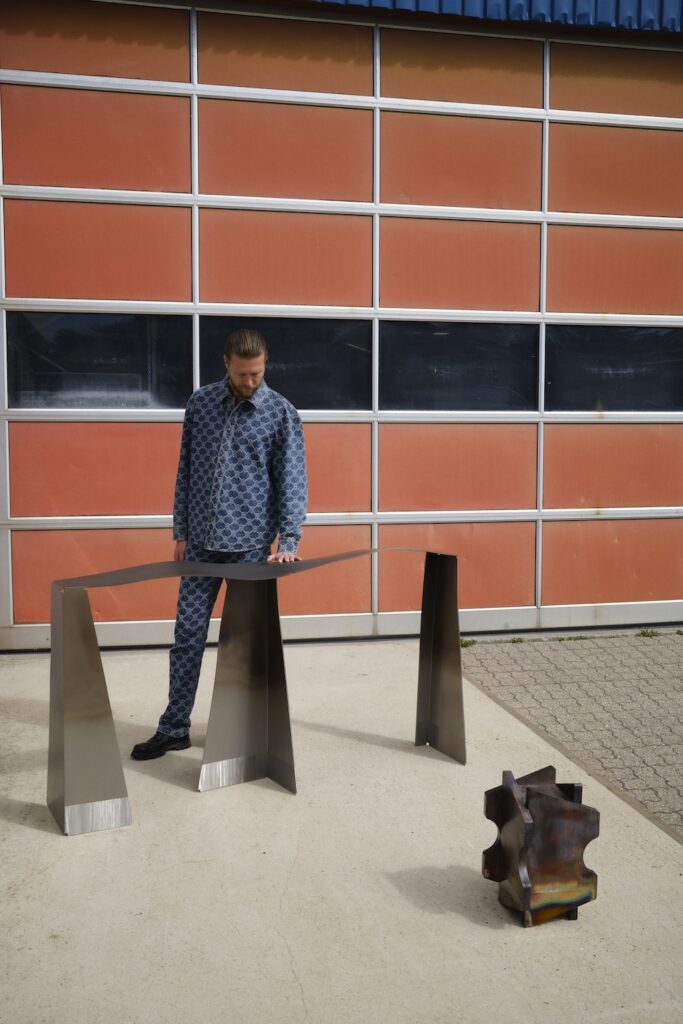
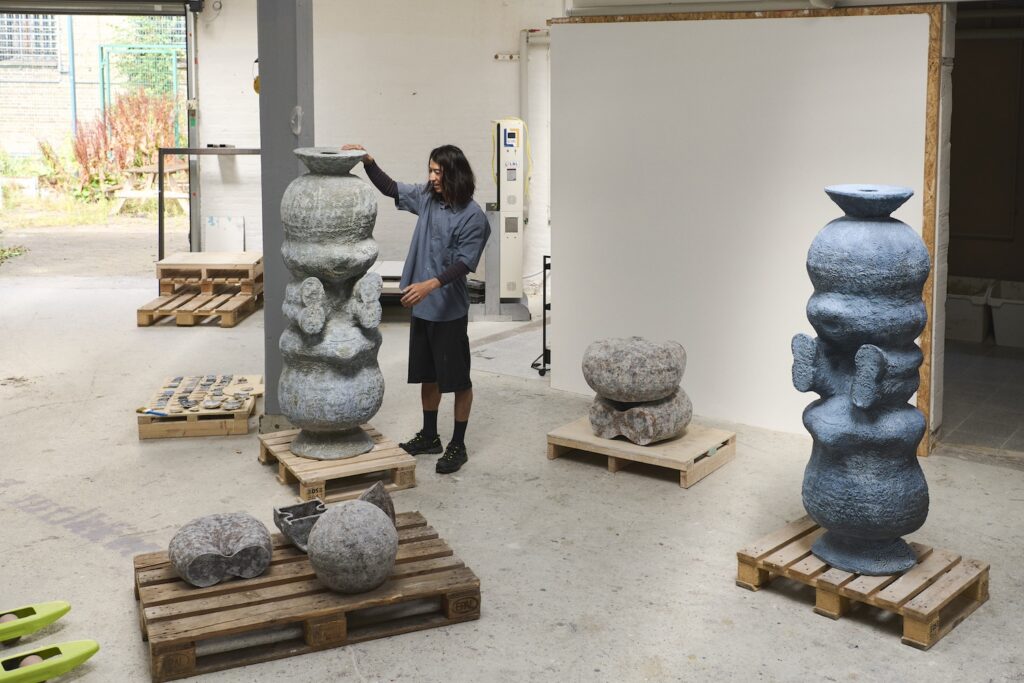
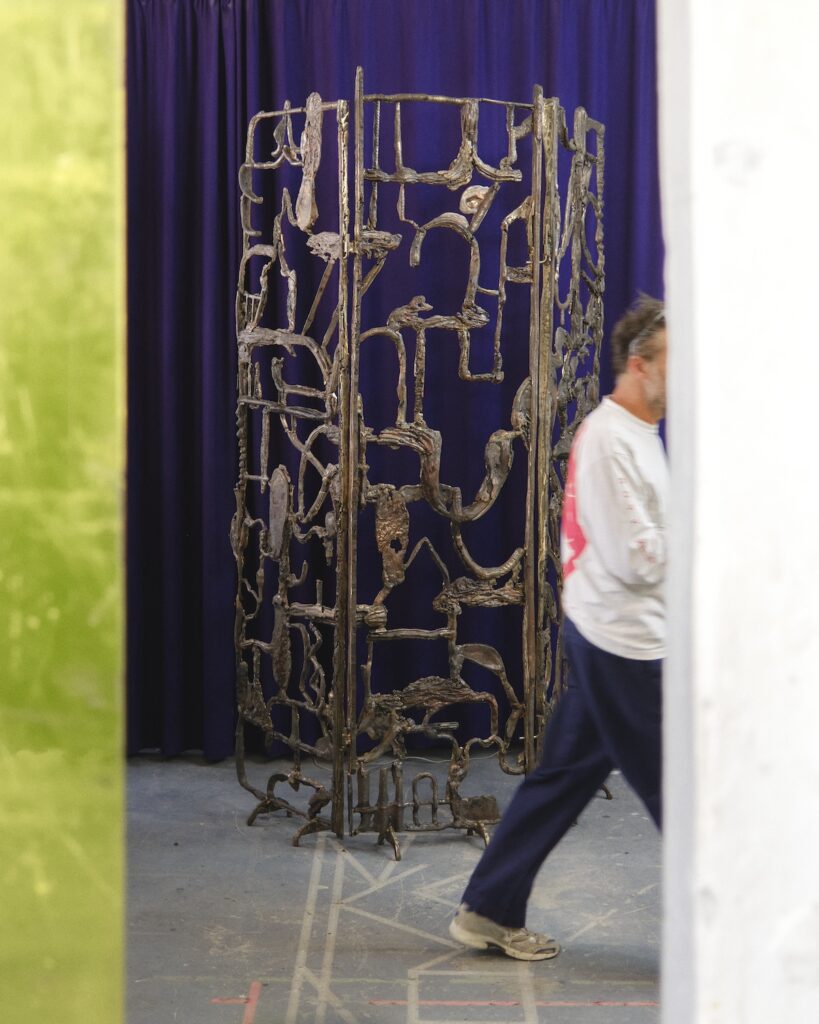
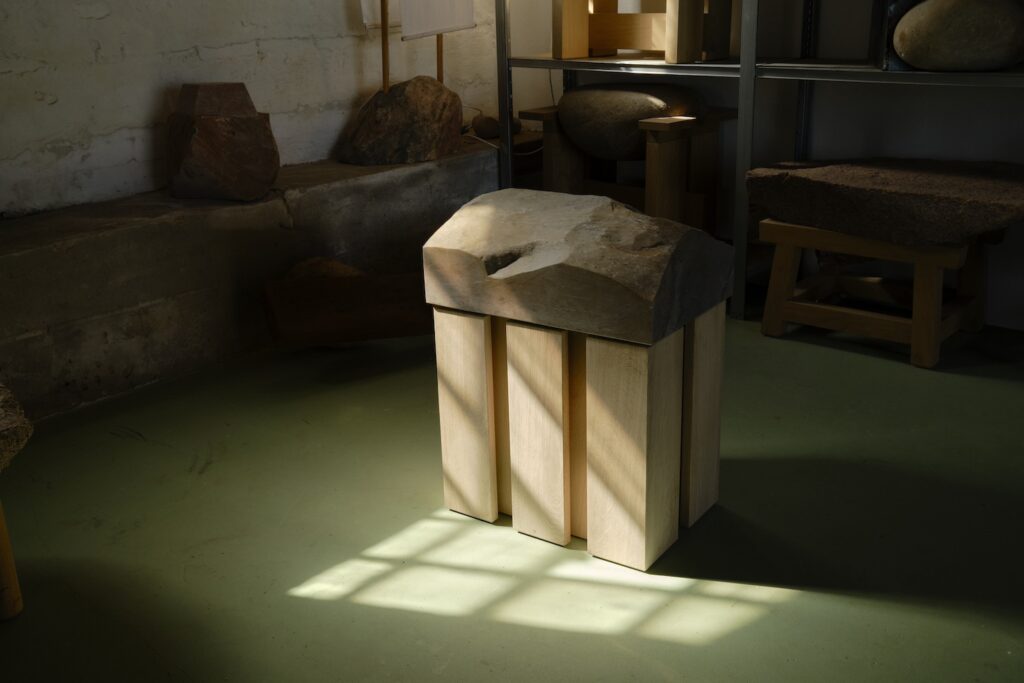
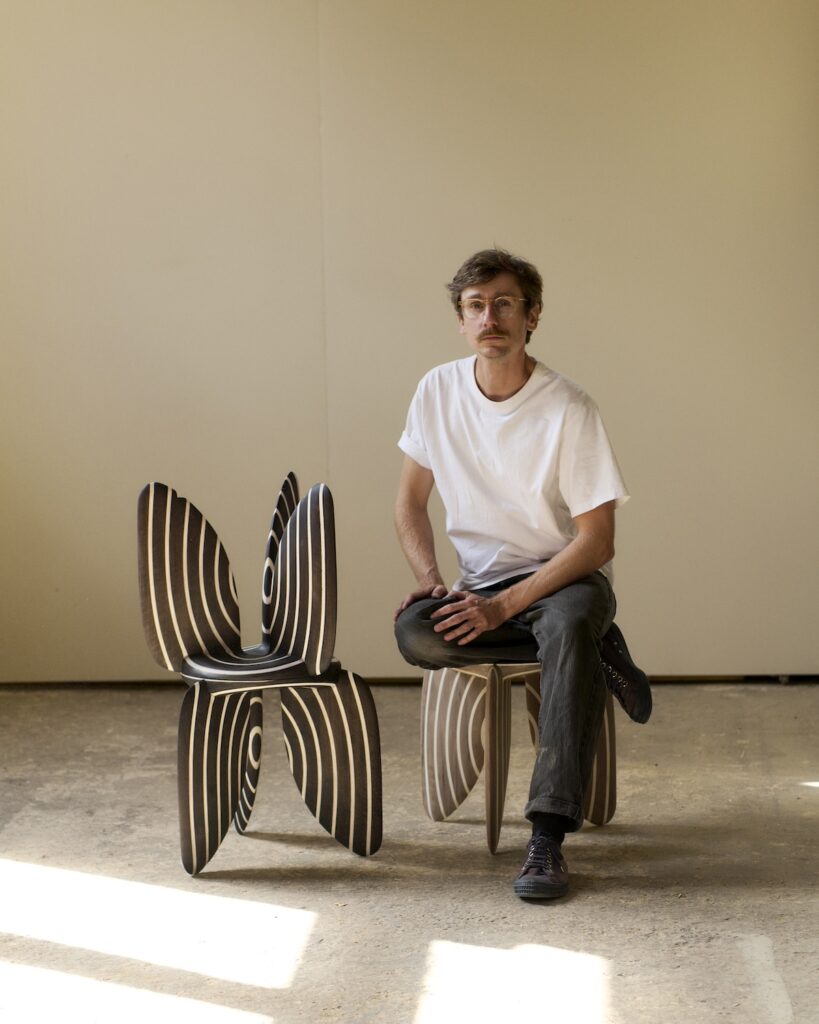
“The work of the ten selected participating designers this year carry forms of tacit, sometimes esoteric knowledge – knowledge embedded in the hand, the body and the material itself,” write Christian and Jade, curators of The Mindcraft Exhibition, which opens on September 23, 2026. TL Mag spoke to the designers ahead of the opening.
The Mindcraft Project opens its annual exhibition on September 23, 2026 at the historic Charlottenborg in central Copenhagen. Led by the Copenhagen Design Agency (CDA), the exhibition was curated by Christian Hammer Juhl and Jade Chan, and brings together ten contemporary Danish designers and craftspeople. Christian and Jade have a Copenhagen-based design studio that places craft and material research as essential components to their practice. We spoke to the curators ahead of the exhibition opening to learn more about their background and curatorial approach to the 2026 edition of The Mindcraft Project.
TL Mag: Tell us about being selected as the curators of the 2026 Mindcraft exhibition and how you approached the role. Have you curated exhibitions before? How do you see it complementing your own design practice?
Christian and Jade: We felt very humbled to be chosen as the curators of The Mindcraft Project. It is a platform that we have admired for a long time, and back in the days when it was shown during Salone Del Mobile, it was always one of the exhibitions that we looked forward to seeing, and dreamt of being a part of one day. To be invited to take on a curatorial role feels quite special. The very first job we had after graduating from the Design Academy Eindhoven, was with a Dutch exhibition platform, Dutch Invertuals, where a big part of our job was developing themes, researching and selecting designers, and creating the exhibition design. In that sense, it feels fun and familiar to come back to curating an exhibition again.
What feels different now is that we have a much clearer sense of what we are drawn to, and why. In our own practice, we often design within a context. We are often bringing materials, techniques, and existing stories into new relationships. Curating feels very connected to that way of working, only instead of working with materials and objects, you are working with different practices and perspectives, and trying to create a conversation between them.
TL Mag: The idea of “tacit knowledge,” a skill embedded in the hand and body rather than written down, is central to this year’s show. Was there a specific moment, conversation, or piece of work that first crystallized this theme for you, or did it emerge gradually as you began thinking about the exhibition?
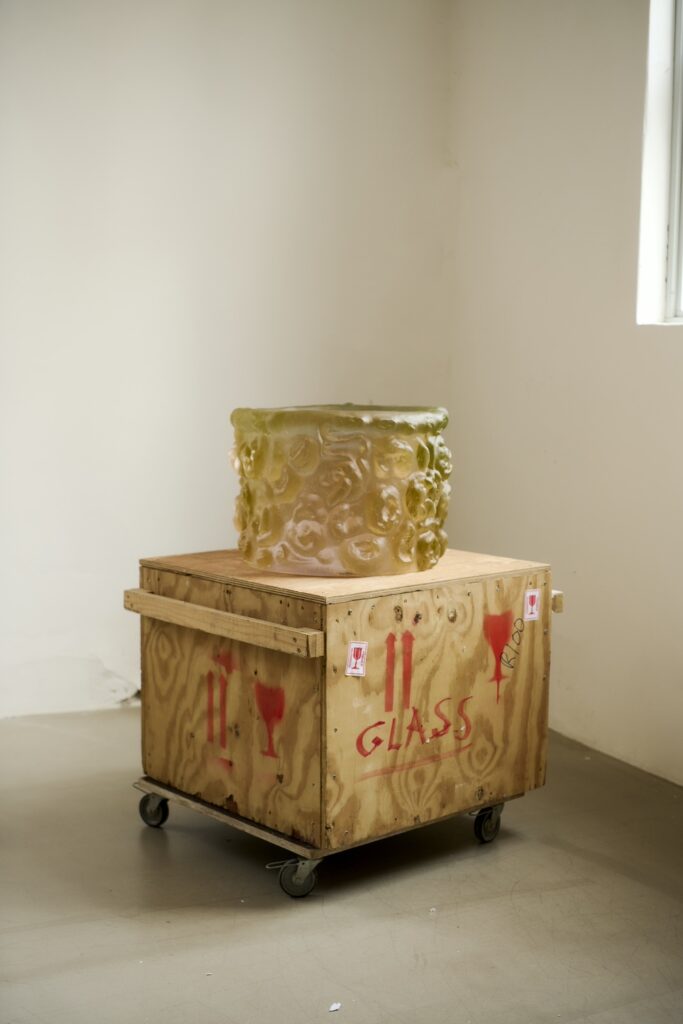
C + J: We think it emerged quite gradually. We actually started by looking at practices and works that we admired, and as we brought them together, we began to see a red thread between them. Tacit knowledge became a way of articulating something that was already present across all of these very different practices. We were drawn to this idea of the specialist—someone who has developed such a deep and particular relationship with a material or a process that their knowledge becomes almost embodied. It is not necessarily something that can be fully explained or written down; it comes through repetition, experimentation, intuition, and time. You can see that in very different ways across the exhibition. Lene Bødker, for instance, has an incredibly specialised relationship with cast glass, while Thomas Woltmann is investigating ochre not only as a material, but through the histories and stories embedded within it. Their practices are very different, but both involve going deeply into a material and allowing that knowledge to guide the work. So rather than beginning with “tacit knowledge” as a fixed curatorial concept, we discovered it through the designers. In a way, it gave us the words for something we had already intuitively been drawn to.
TL Mag: With ten designers spanning different generations, materials, and even countries of origin, how did you actually go about building the list? Were there designers you knew you wanted from the start, and others you discovered specifically while researching this theme?
C + J: What connects the designers is not a particular generation, material, or aesthetic, but a shared hands-on and experimental approach—an openness to discovering form through the process of working directly with material. We kept coming back to the idea of the designer as a maker – to design emerging through the process of making. Mindcraft is a platform that presents Danish design, and because Jade and I both come from different places ourselves, it felt important to think about what “Danish design” actually means today. For us, it is perhaps less about nationality and more about an approach, a context, and a way of working. We decided to expand the search beyond the idea that Danish design has to mean Danish-born designers, to also look at designers who have been a part of shaping the design culture here today. Danish design has been influenced by many different movements and cultures throughout time, and we wanted the selection to reflect that. In that sense, the exhibition is also a picture of Danish design as something porous and continually evolving. What interested us was not trying to define its boundaries, but looking at what happens when different backgrounds, traditions, and ways of making meet within the same design culture.
TL Mag: You’ve spoken about wanting to balance historically rooted Danish crafts with more contemporary, sustainability-driven practices. Was that balance something you deliberately engineered from the outset, or did it reveal itself as you got deeper into studio visits and conversations with the designers?
C + J: We don’t see historical Danish craft and contemporary sustainable practice as two separate things that need to be balanced. For us, there is already a lot of overlap between them. Many of the values we talk about today in relation to sustainability – a deep understanding of materials, making things well, considering how they age, and so forth, are all elements that have long been embedded in Danish craft traditions. It wasn’t really a balance we set out to engineer. If anything, our conversations with the designers confirmed how connected these ideas are. The act of making often demands a particular kind of attention, to the material, to the process and to the time involved, which for us can really translate into an object itself, changing the way we value and relate to it. For us the care given to the creation of a piece is something the receiver also inherits.
TL Mag: Could you talk about how the designers approached the project? Did any of them choose a material that they’d not worked with before or were they selected specifically for a material? Did they have a specific brief or was it open-ended?
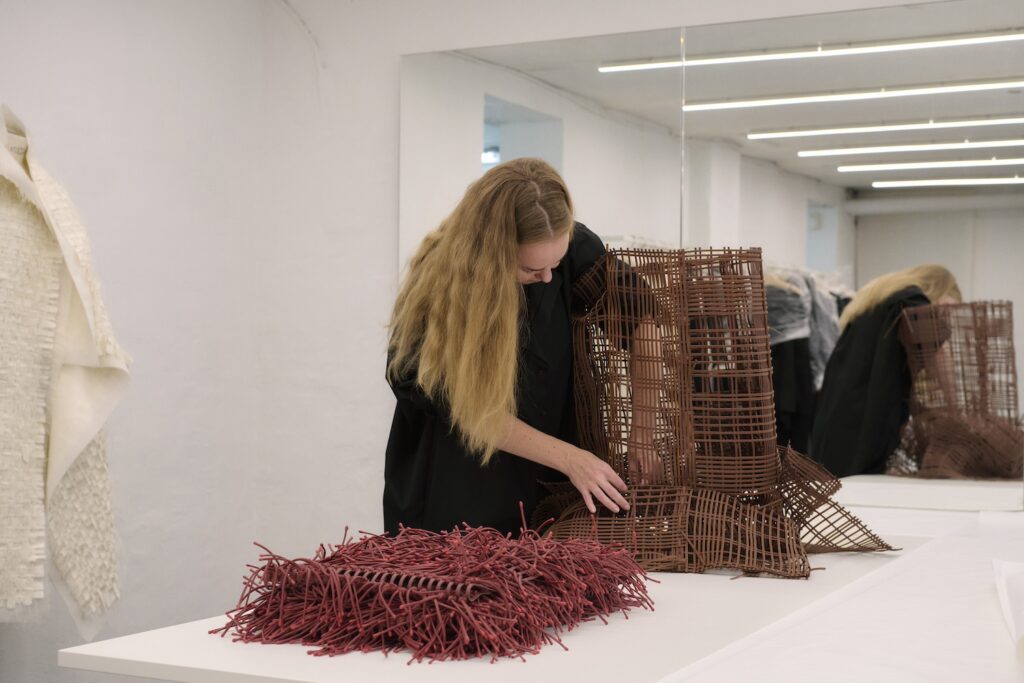
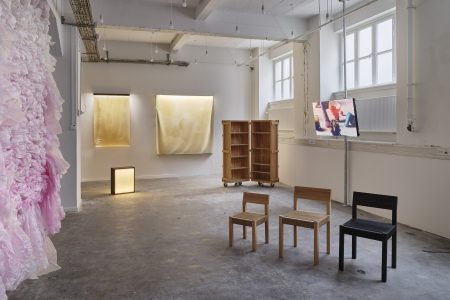
C + J: The exhibition presents a mix of existing works and new ones. For some designers who chose to develop new works the brief was quite open and most chose to continue working with materials and techniques they had already been developing for some time. We were less interested in asking them to work with something completely new, and more interested in seeing how they would develop their existing material language for this context. For example, Freya Dalsjø, whose fashion practice is rooted in craft techniques such as woven leather, has translated that language from the body into objects. Nicholas Shurey, whose work sits between sculpture and functional furniture, has pushed his interest in movement further through references to Kansai Yamamoto’s costumes for David Bowie and Oskar Schlemmer’s Triadic Ballet.
TL Mag: Is there anything else we should know about the exhibition?
C + J: The exhibition design became another way of expressing the ideas behind the curation. We created a simple landscape of stacked podiums using handmade bricks from the Danish family company Petersen Tegl. Each brick carries the thumbprints of the person who pressed it from the mould, a small trace of the hand embedded in the material itself. It was also very important to us that the material was not reduced to a temporary use. The podiums are simply stacked, so the bricks can be used again. We liked the idea of working with a material that could take on another life rather than ending with the show.
The Mindcraft Project is open between September 23-27, 2026. An online exhibition can be seen at: mindcraftproject.com.

Articles you also might like
The Director of Craft & Heritage at Fritz Hansen, Christian Andresen, talks to TLmag about the brand’s legacy and its approach to preserving their archive, reissuing iconic pieces and its role in Danish design history.
During 3 Days of Design, TLmag sat down with Fritz Hansen’s new Creative Director, Els Van Hoorebeeck, and designer Michael Anastassiades, who introduces the After Series—a solid wood table and chair collection—for the iconic Danish heritage brand.

Artisans have always told stories with their hands, bringing traditions, knowledge and place into their craft. This storytelling becomes even more critical when it’s done to preserve a culture in a time of war.
On October 5th, The Mindcraft Project opened its annual exhibition featuring Danish designers and makers who collaborate with nature.