

Viúva Lamego Embodies Portuguese Ceramic Heritage
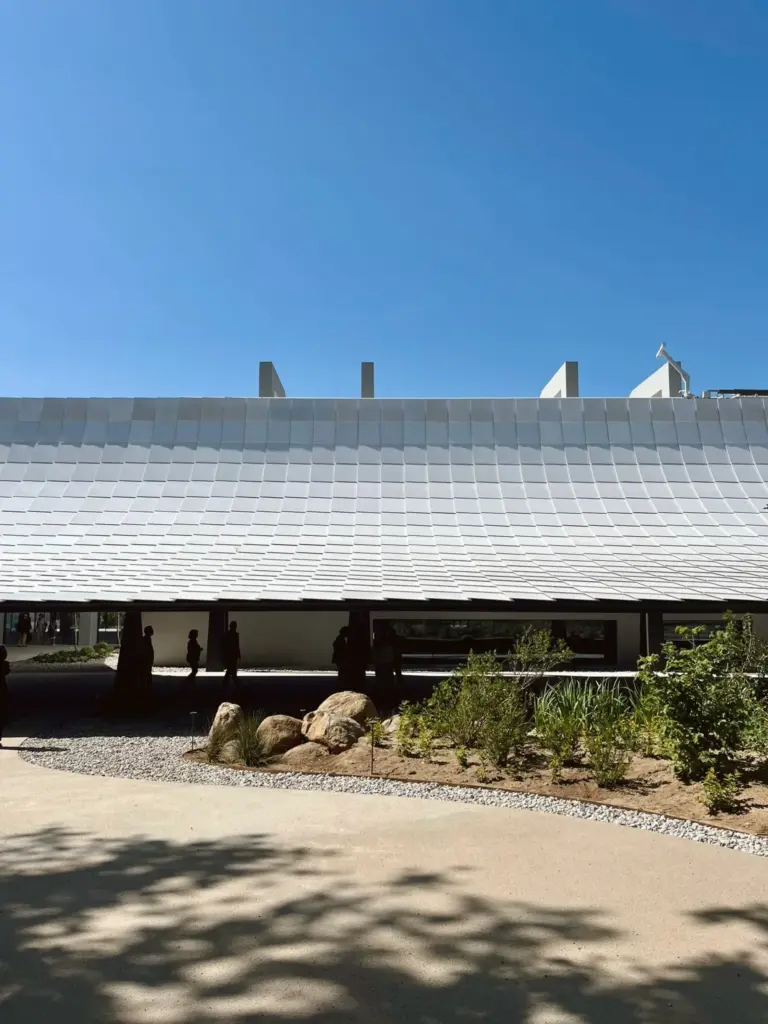
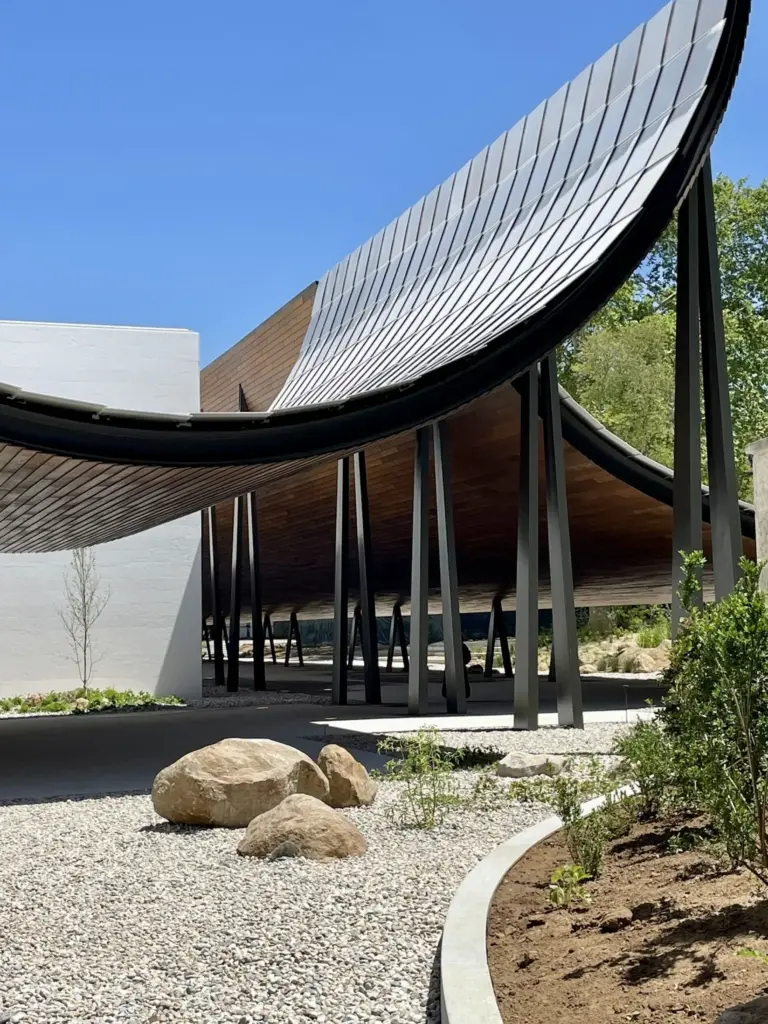
Viúva Lamego is an icon of Portuguese ceramic traditions and after 175 years, is managing to lead the way with contemporary collaborations, from the tiled roof on Kengo Kuma’s design for the Gulbenkian Museum to Joana Vasconcelos’s wild ‘Wedding Cake’ at the Rothschild Foundation.
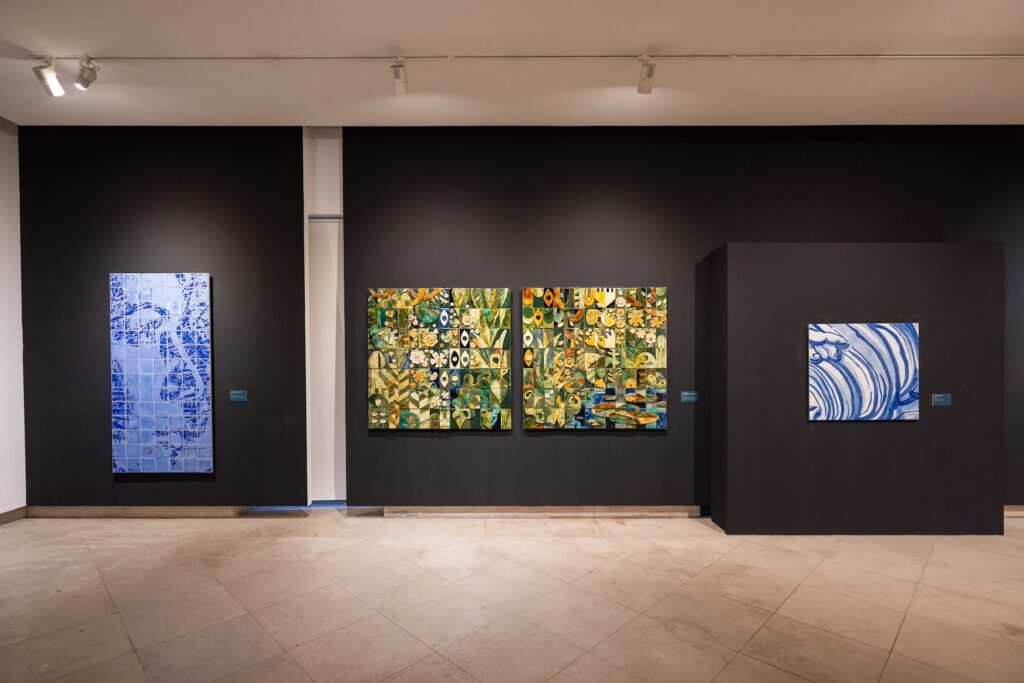
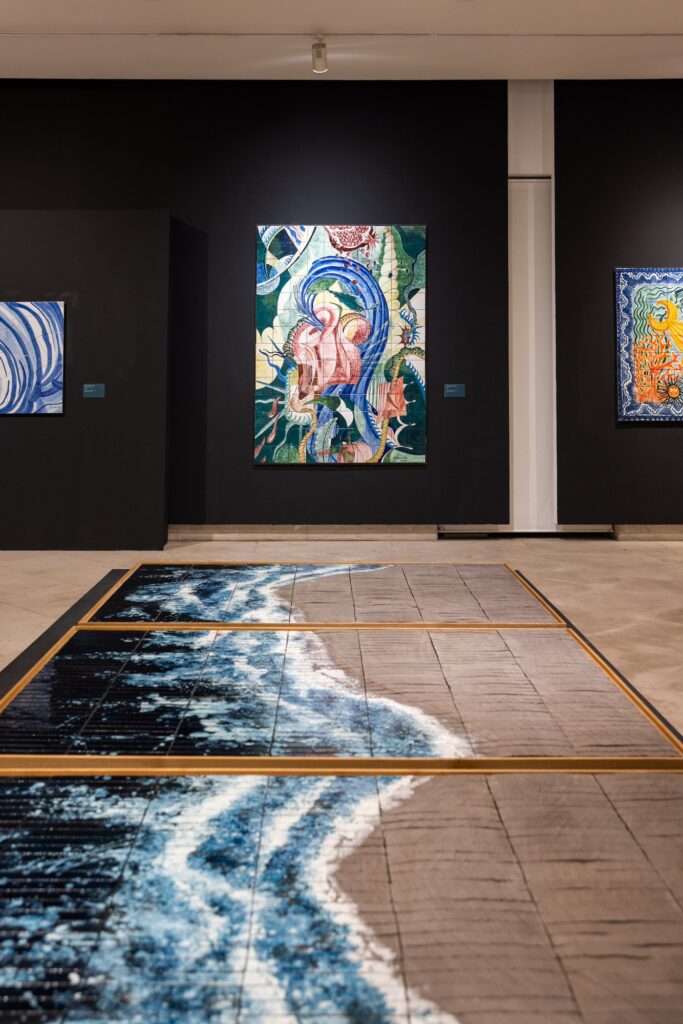
An icon of Portuguese craft and design, the heritage company Viúva Lamego celebrated its 175th birthday in 2024 with a new series of artistic collaborations and a special exhibition presented at the National Tile Museum titled: “A Perspective of the Present,” between October 4-December 29, 2024. The exhibition featured collections by leading artists and designers including Bela Silva, Adriana Varejão, Noe Duchafour Lawrance and Gezo and Jose of Oficina Marques, who presented their recent tile collaboration “Arcadia.” TLmag spoke with Viúva Lamego’s CEO Gonçalo Conceiçao about how the company manages to honour the past while remaining contemporary, fresh and as innovative as ever.
TLmag: Would you tell me a bit about your role as CEO of Viúva Lamego and how long you have been with the company?
Gonçalo Conceiçao: In 2017 I took over the leadership of the company, which was already recognized in the market for its history, know-how and permanent dialogue with national and international artists. It was precisely in that year that I acquired the company and have since taken on the role of CEO. As CEO, my job is to ensure that Viúva Lamego remains viable and attractive in the market, combining its historical legacy with its eyes on the future. I aim to respond to what I consider to be the most current challenges – this requires training and retaining talent and further strengthening the credibility of a century-old brand.
TLmag: The company recently celebrated 175 years yet seems as contemporary as ever in terms of its vision and energy. How do you keep it fresh and innovative?
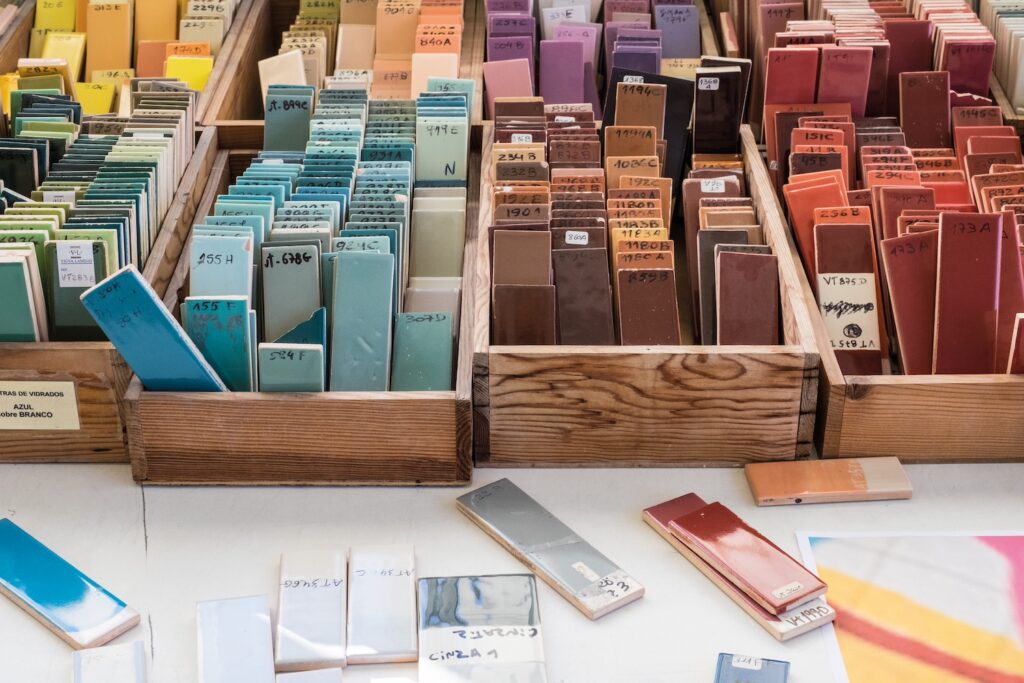
G.C.:The way we celebrated Viúva Lamego’s 175th anniversary says a lot about what keeps it fresh and innovative. To mark this milestone, we invited several artists with whom we already had a relationship to create and/or exhibit works made from a primordial material: the Viúva Lamego tile. The exhibition was on display at the National Tile Museum until the beginning of 2025 and featured important names in the sector. The factory-atelier, as I like to refer to Viúva Lamego, has maintained close relations with big names in the artistic world and in architecture, a link that was established in the 1930s when the “cocoons” were created, i.e. artistic residencies through which artists and craftsmen from Viúva Lamego worked side by side. These residences still exist today. I also must mention the work done regarding Public Art. It was in the second half of the 20th century that patterned tiles caught the attention of the creative community. The artists liked the democratizing element and the possibilities for combinations. In this area, Maria Keil was one of the first artists to explore the limits of tile patterning.
TLmag: I read that Viùva Lamego began collaborating with artists as early as the 1930s? Is that correct?
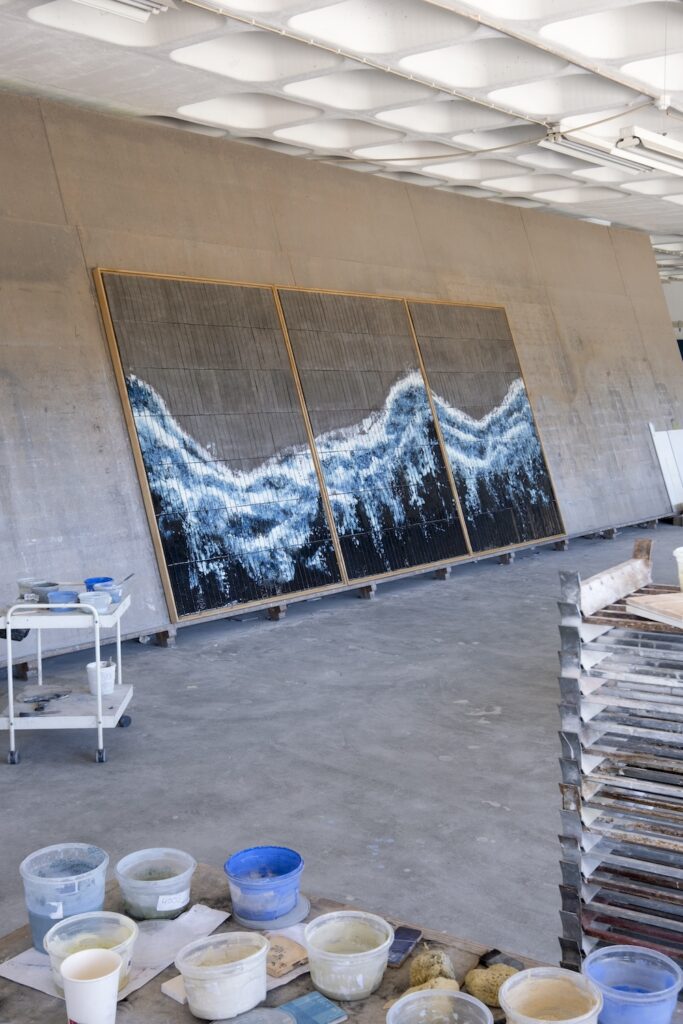
G.C.: Yes, that’s right. In the 1930s, artist residencies called “cocoons” were created. They were, and still are, an essential part of the collaborations that Viúva Lamego maintains with artists. These “cocoons” have brought well-known names from the Portuguese and international artistic scene to work side by side with the craftsmen of the factory/industrial atelier. Alves de Sá, Jorge Barradas, Querubim Lapa, Manuel Cargaleiro and Maria Keil have previously marked the path of this historic house, which has reinvented itself at the behest of art since 1849, the year it was founded. The relationship between craftsman and artists allows this factory to continuously reinvent the very traditional portuguese tiles – the availability of the technicians present at Viúva Lamego allows for the frequent creation of innovations applied to daily practice. Until his death, Manuel Cargaleiro had an artistic residence in Viúva Lamego’s factory. The Portuguese painter and ceramist from Beira Baixa had the artistic residence for more than 70 years. One of his most emblematic works is the tile panel at the Champs-Élysées/Clemenceau Paris metro station, created in 1995 – a project that the artist was invited to extend in 2019 (a new extension to the Grand Palais was involved).
TLmag: How does it a collaboration work? Do the artists approach you for a project or you commission artists for special collections? Both?
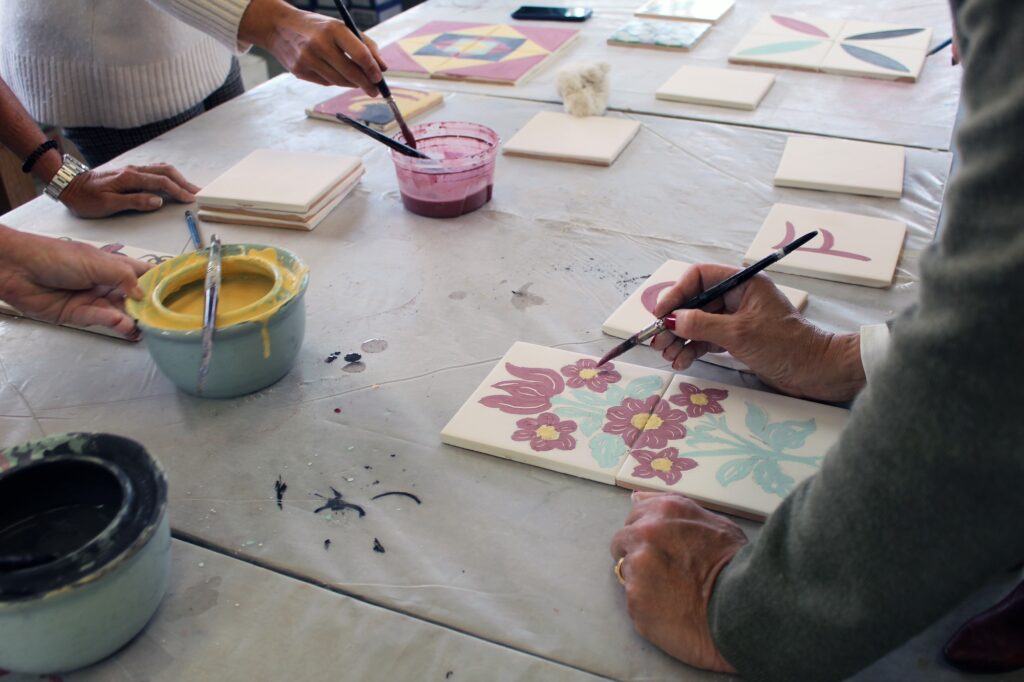
G.C.: It happens both ways – we can either commission a specific artist we want to work with on a specific project for a specific client, or we are approached by a name in the artistic community. In both cases the artist can work directly in the piece or our artisans do it on their behalf in a very intense and interactive development process. I think this happens because of the constant dialogue between Viúva Lamego and the artistic world. We have one person dedicated in exclusivity to this job and a special team at the factory to deal with all needs from the artists. As a result, over the years we developed a lot of special collections, including with Portuguese architects. Collections that we are very proud to feature.
TLmag: What’s incredible is that every artistic tile project is so different, so unique. What is the process like? How long does it typically take from idea to final product? Do they discuss their ideas with the company’s artisans and specialists to perfect the idea?
G.C.: I used to say that we have two limits – the physics and the artist imagination. The process itself is very interactive and evolves over time, from the beginning, on our side with the Commercial, Innovation and Production areas. Upon the concept presentation it’s time for our teams to present a prototype for the artist to approve. Once approved, we start the production with predefined milestones for the author to revise the finished work. Alternatively, the artist can come to the factory and do the work themselves, and our team will make sure that all the needs are covered in order to assure they are focused on the creativity part of the project.
TLmag: Please talk a bit about working with Oficina Marques and the Arcadia collection that was presented during Lisbon Design Week this year?
G.C.: The latest collaboration between Viúva Lamego and Oficina Marques results in the “Arcádia” collection. This new collection follows on from the tile panel created by Oficina Marques, in partnership with the factory-atelier, for the exhibition at the National Tile Museum that celebrated Viúva Lamego’s 175th anniversary. “Arcádia” draws inspiration from the natural world, from the ‘Bucolics’ of the Latin poet Vergilio, and takes its name from the territory of Greek mythology, an idyllic environment inhabited by shepherds who live in communion with nature. Adopting a naturalistic language, it combines the manual universe of Oficina Marques with Viúva Lamego’s long tradition of producing tiles.
The collection was designed as a panel, made up of 12 different relief tiles distributed in two rows and six columns. The set, with a total size of 60x40cm (each tile is 10x20cm), is repeated every 12 tiles, allowing for a wide variety of combinations, and there are two colour options – white and green. In addition to the texture that already characterises Oficina Marques’ work, “Arcádia” features an intricate chromatic play made possible by subtle variations in the glazes (four shades of white and six shades of green). Working with Oficina Marques was like an extension of the work done in relation to the exhibition commemorating the 175th anniversary of Viúva Lamego. The partnership developed spontaneously, almost organically, since we are very complementary. It was a pleasure to once again have the opportunity to see how the Oficina Marques duo works with the Viúva Lamego tiles.

Articles you also might like
Lisbon Art Weekend returns for its 7th edition, taking place November 6-9th, a citywide celebration of contemporary visual art from Portugal and internationally. With more than 50 venues and 80 free events, Lisbon shines as a contemporary art capital.
Featuring 23 French and international galleries, the inaugural Ceramic Art Fair takes places this week, between October 21-25, at the Maison de l’Amérique latine, including installations in the building’s elegant garden.
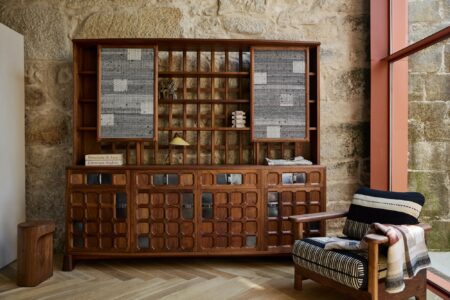
From a barn in rural Spain, to a small showroom in London, to collections with designers including Neri & Hu, Manuel Aires Mateus and Sam Baron, De La Espada continues to innovate and expand while always staying true to its belief in slow, handcrafted design.
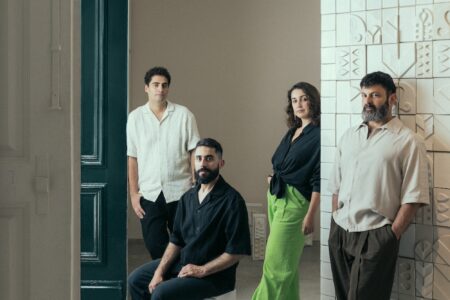
During Lisbon Design Week, Oficina Marques partnered with Spacegram Studios and the heritage ceramics company Viúva Lamego, to present “Arcádia,” a joyful, contemplative temple-like structure that was adorned with a new collection of handcrafted tiles that are inspired by the botanical world.