

Tell Me About Love…
Yvon Lambert spent more than five decades shaping the international contemporary art scene through collecting, publishing, and close relationships with artists. Together with his daughter Eve Lambert, he reflects on a lifetime dedicated to art, literature, and artist’s books.
Yvon Lambert opened his first gallery in Paris in the 1960s and spent over half a century at the forefront of the international art scene. When most collections are built around encounters, it has been about a lot more than this for this emblematic art dealer and collector. Since he bought his first painting, at the age of 14, until now, Yvon Lambert has never stopped maintaining relationships with artists and with literature. In 2000, he donated a large part of his collection to the French State, which now lives at the Collection Lambert in Avignon. Fourteen years later, he closed the gallery to focus entirely on his bookshop and a quiet, exacting practice of making artist’s books. For TLmag41: The Art of Collecting, Sibylle Grandchamp spoke with Yvon Lambert and his daughter, Eve Lambert, who now runs the bookshop, about his long history of collecting, from his early days in the South of France to discovering the New York art world of the late 1960s.
Sibylle Grandchamp: Yvon Lambert, is collecting an art form?
Yvon Lambert: If you buy well, yes, it is an art: the art of buying well. The question is: well for whom? For a particular person, or for the common good?
S.G.: For you, it started at an early age. You acquired your first painting at 14. Could you describe it ?
Y.L. : It was a painting by an English post-Impressionist who lived in the South of France. He wasn’t well known, but my father had mentioned him once, without having met him, because he had painted landscapes of Vence, where I was born, as was my father. I knew someone who had many of his paintings because she had inherited them from someone. And she told me: “I’ll sell you one at a good price for me.” That was all there was to it. It depicted a view of Vence, nothing special. There’s not much else to say about that work. But I still have it.
S.G.: Do you remember what you felt at the time?
Y.L.: I bought that painting because I wanted it – I almost needed it. I lived with my parents, where there wasn’t much art. I was proud to have a painting of my own.
S.G.: At that age, were you already thinking about building a collection?
Y.L.: At 14, you don’t know what “collecting” means. It was only many years later that I discovered the history of the collection and that of the art dealer.
S.G.: What were the early signs of this thirst to collect?
Y.L.: It began with reading. Very early on, I bought and read magazines about art and art history. I had many references and read all the reviews, whether of mediocre or talented painters. I wanted to know everything about them and about the art world, about culture in general.
S.G.: Was art present in your family?
Y.L.: My father was a taxi driver and my mother ran a grocery store. Art was far from their concerns, but when I decided to open a gallery, my mother helped me rent a space and paid the first six months’ rent. That was a very powerful maternal gesture.
S.G.: While he may not have collected art, your father was apparently very fond of literature… Eve, did this grandfather influence your taste for books also ?
Eve Lambert: Of course! Yvon’s father was passionate about literature and the history of Provence. He had a fine library full of books about Provence. We always exchanged a great deal and he inspired us greatly.
S.G.: This elective affinity with books can hardly be a coincidence in the family: it ultimately brought you together, father and daughter, into opening this art library in Paris. At what point did you two start working together?
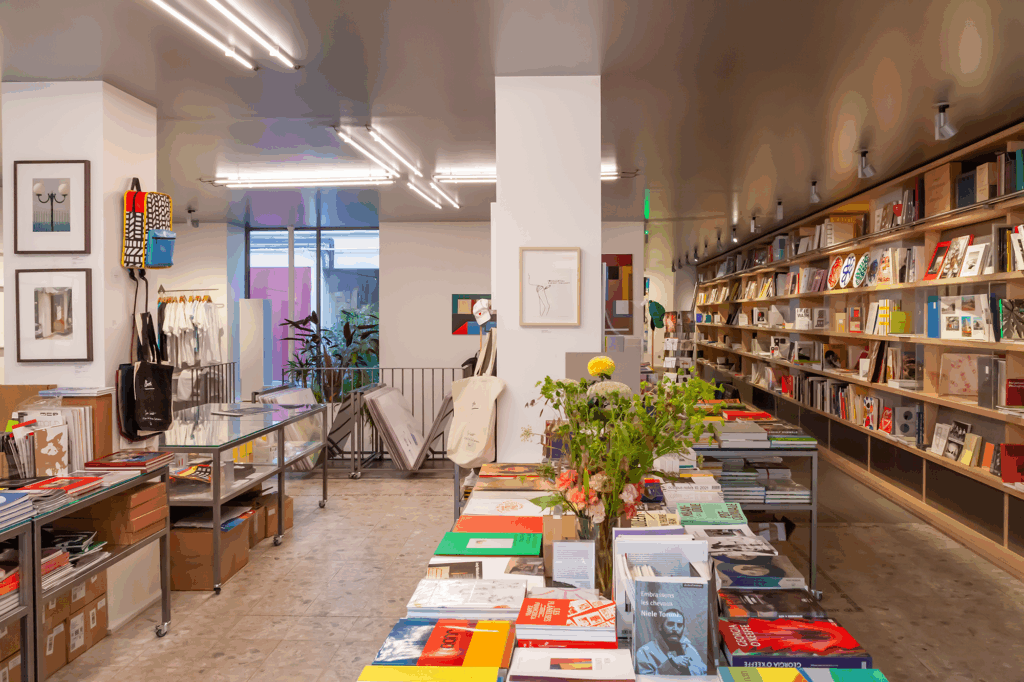
E.L.: It is true that the love for art books and literature is something that has stayed with us. I started working with Yvon when he closed his gallery and decided to focus on the bookshop. We opened that space together ten years ago, at 14 Rue des Filles du Calvaire.
S.G.: Was it something planned at all?
E.L.: Not at all! I was doing something completely different, and then one summer he said to me: “Why don’t you come and work with me?” I didn’t think about it for long [smile].
S.G.: How do you divide the work between you?
E.L.: There’s a strong sense of closeness in the way we work, beyond our father-daughter relationship. It also stems from the presence of two members of the former gallery team, who have been working with Yvon for nearly twenty years. When there are projects, we receive the artists together, we discuss the books together, everything is done in a fairly collegial way. I have total respect and admiration for Yvon and his opinion is more than precious to me, and there are of course artists I really want to show, where I feel we should commit. But everything is done together, to everyone’s great joy.
S.G.: Yvon, did being born in Vence – where many artists and gallerists lived at the time – influence your artistic outlook?
Y.L.: In Vence, there were artists of varying renown, most of them obscure. I could ask them questions and they would answer. I remember a gallery opened by a former local dentist who sold expensive things, you could see drawings by Chagall there, which carried real authority. Back then, in the South of France, there were no museums… I formed my own opinion over the years. I quickly came to Paris, saw exhibitions, and began building very friendly relations with Parisian dealers who could entrust me with a drawing or a painting, which I would then sell to people in the South.
S.G.: How did you make your choices at the time?
Y.L.: I chose with the public in mind, of course, but I also couldn’t show things that didn’t interest me. I mainly sold 20th-century works by artists of varying fame. I could hang works by Raoul Dufy, who painted a great deal in the South, notably in Vence, and find buyers for them. At the beginning, I primarily showed local artists, including one from the South of France called Auguste Chabot, from Graveson, a small village near Avignon.
S.G.: In the 1960s, you opened a gallery on Rue de l’Echaudée. At that point, you were turning towards abstract and conceptual artists, and subsequently towards minimalists creating primary structures… What was the Parisian art scene like at the time?
Y.L.: The School of Paris, was dominant. While I was showing and developing a collection around Richard Long, Carl André, Brice Marden, Robert Ryman… a totally different matter.
S.G.: Buy what you love, is that your way of collecting?
Y.L.: Yes, you have to buy artwork because you want it, you need to desire it.
S.G.: When you’re attracted to a work, where in your body does that happen? The heart, the eyes, the mind?
Y.L.: It’s by living with works that you love them more or less. It can’t be explained. If you begin to grasp who is behind the painting, you start to discover a whole body of work, and your attachment deepens. And you grow to love it more and more.
S.G.: With which artist did you experience that kind of intimacy?
Y.L.: With a painter like Cy Twombly.
S.G.: Your collection includes more than a hundred works by Nan Goldin. I gather you are particularly attached to her.
Y.L.: I couldn’t help having photographs by Nan Goldin. But half the photographs in the collection are gifts from her. You only have to look at her dedications on the backs of the photos to prove it.
S.G.: Can you name one artist you immediately connected with?
Y.L: It’s almost impossible to answer this question… [silence] Everything Ryman did moved me. I loved him immediately and straight away proposed an exhibition in Paris. He had never exhibited before me. That was in 1969.
S.G.: Is it true that one of his small paintings – a homage to white painting – is one of your favourite works in your collection?
Y.L.: Certainly! It is a Surface Veil. It is an application of paint that is very pure and very simple. There is no intervention beyond that. That fragility, that poverty of means of expression – yes, it really means a great deal.
S.G.: Like most of the American painters who are part of your collection, you discovered them by travelling to New York. How did you manage to meet them?
Y.L.: Meeting artists was easy when you were a dealer from Paris and there was perhaps a possibility of exhibiting. You were welcomed. One must not forget that at the time, the Parisian market was exclusively French and American.
S.G.: Do you remember particular emotions when entering their studios?
Y.L.: My first perception is the smell of paint, different each time. But those sensations vanished very quickly, giving way to conversation with the artist about their paintings. In Sol LeWitt’s studio, there was no smell, it all happened through pencil or through idea.
S.G.: In what way does your collection reflect the evolution of artistic movements?
Y.L.: Evolution took place in the studios: some artists shook off what they had learned and moved on to something new while remaining artists. That was extraordinary! Lawrence Weiner, who was truly remarkable for his freedom and thinking, was, for example, a central figure in this conceptual evolution of art.
S.G.: Did competition exist between artists at the time?
Y.L.: Of course! That’s nothing new. Artists have always looked at what others were doing. Some could be very critical and very unkind! I found myself drawn into their confidence. One is rarely confided in about meanness, bitterness, or jealousy. But it is interesting nonetheless to have witnessed it.
S.G.: Does collecting require a taste for risk?
Y.L.: Before thinking about risk, you must be clear-eyed, knowledgeable about the market, and above all, alert to everything.
E.L.: I don’t think we operate in that discourse of risk-taking, worrying about what the next trend will be… Yvon above all took risks by showing artists who were completely unknown!
Y.L.: I could tell you about exhibitions that were almost historically significant where no one came! I did the shows for myself… or for a handful of people.
E.L.: But was it really a risk?
Y.L.: No, it wasn’t, because you always gain something. If you love a work, you have swept away the risk. On the other hand, we may sometimes come to love it less…
E.L.: [laughs]… That’s like life! Things can evolve.
S.G.: Have there been stormy partings?
Y.L.: Yes, but I prefer to forget them.
E.L.: Relationships with artists are human relationships, with all that entails in the way of love, tenderness and friendship – and also, at times, misunderstanding, misreading, falling out, or making up again…
S.G.: What were the most delicate sticking points?
Y.L.: Some artists work more slowly… A dealer always wants to see something new. And when there isn’t novelty very often, you get bored, you grow impatient…
S.G.: In 2014, you brought your gallery at 108 Rue Vieille du Temple to a close, to devote yourself entirely to your passion for art and books. Why that decision?
Y.L.: What truly interested me was making bibliophile works. It requires each artist to invest themselves in making a book, to ask themselves questions. It is above all an exchange – that is what I enjoy.
E.L.: Yvon began this bibliophile collection in 1992, long before the bookshop opened, with a work by Robert Barry & Jean-Claude Lebensztejn entitled “Musing from my leisure.” It now numbers 33 books.
S.G.: What is the guiding principle of the project?
E.L: The collection is called “A Reverie Emanating from My Leisure,” referencing a text by the art historian, critic and curator Jean-Claude Lebensztejn. Originally, artists were to compose a work in response to Lebensztejn’s text. But some artists freed themselves from it and made other proposals. Others wished to retain it. In fact, there is no fixed method of working.
S.G.: Why this text?
Y.L.: Because it is a general text on culture and, more precisely, a text on plagiarism. So the general idea is to use that plagiarism to commit a plagiarism. It was only Lawrence Weiner who truly understood it, using the text as a copy, cutting it up and reusing it as he pleased, true to his practice. And also, Boltanski, who entirely recomposed it in secret combinations, reworking each of its letters, hence the book’s title: “Les mots à secret.”
S.G.: The links between art and words : has that always been obvious in the art dealing world ?
Y.L.: For dealers considered serious, books have always mattered. Daniel-Henry Kahnweiler [the celebrated collector and art dealer, champion of Cubism in the 1910s] published illustrated books by Picasso at an early stage, and it was Ambroise Vollard who published the first illustrated monograph in 1914, on Paul Cézanne.
E.L.: Today we take it for granted, but writings on art and exhibitions are fundamental interpretive tools that gave meaning to gestures and materialities which, without those interpretive tools, could not have existed as artistic facts.
S.G.: Which author do you love most, Yvon?
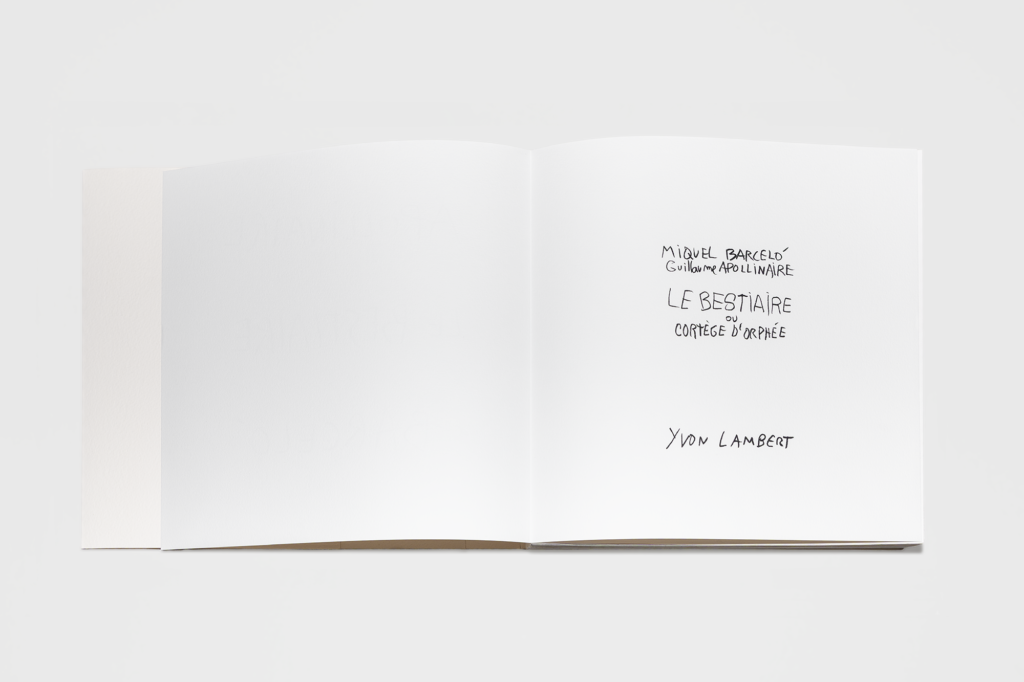
Y.L.: Certainly Guillaume Apollinaire. He was the inspiration for the last artist’s book we made with Miquel Barcélo (Le Bestiaire by Guillaume Apollinaire, illustrated by Miquel Barcélo). We agreed on that choice, as he too loves Apollinaire greatly. This was by far our longest book project. It took seven years!
S.G.: Is there a common thread running through your collection ?
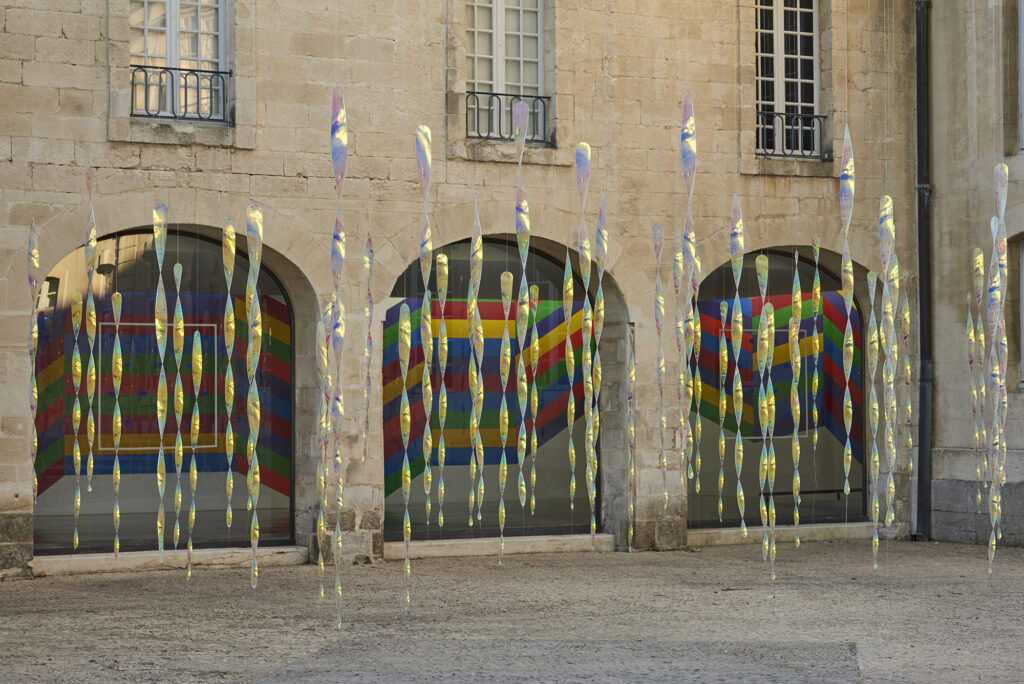
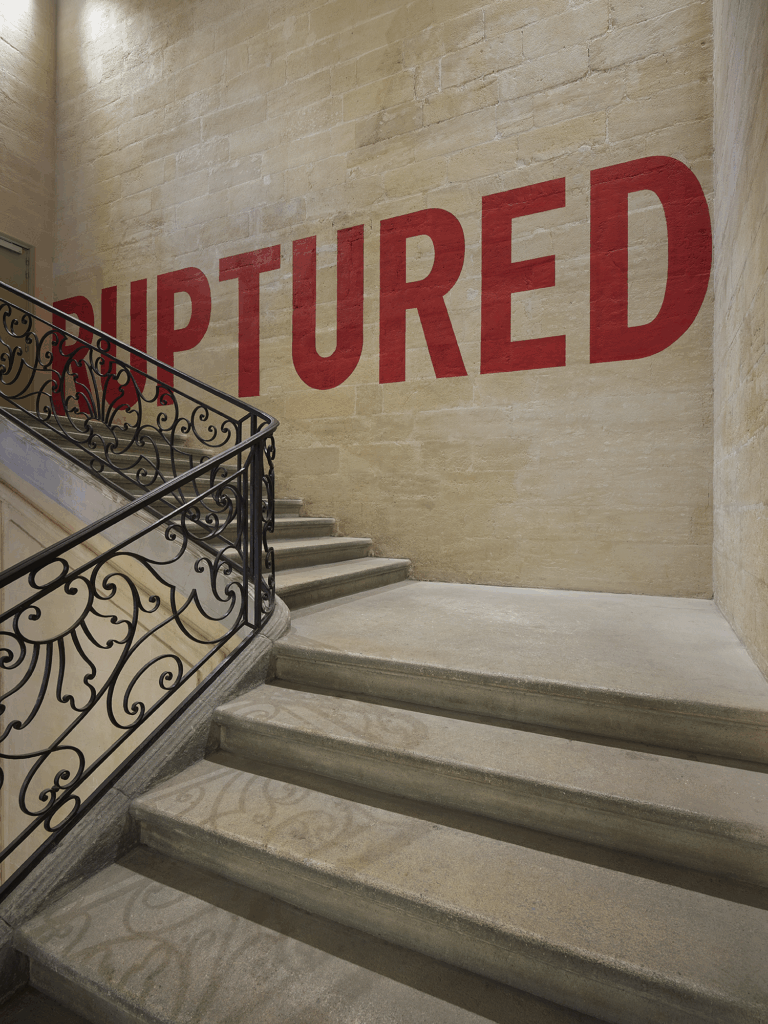
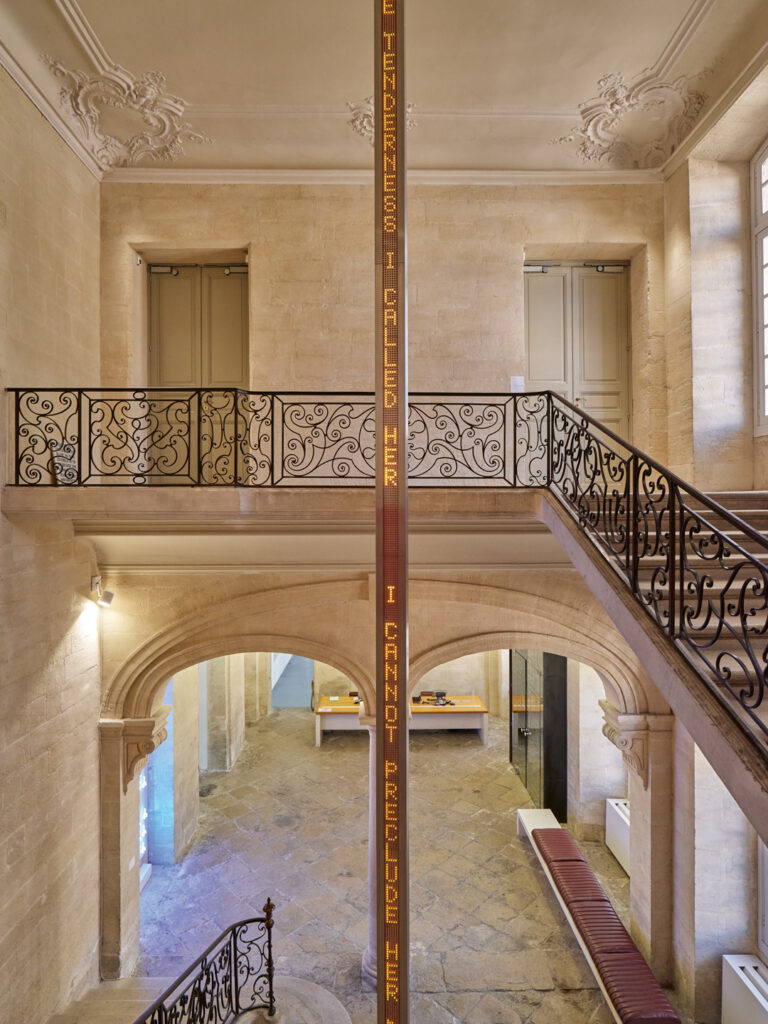
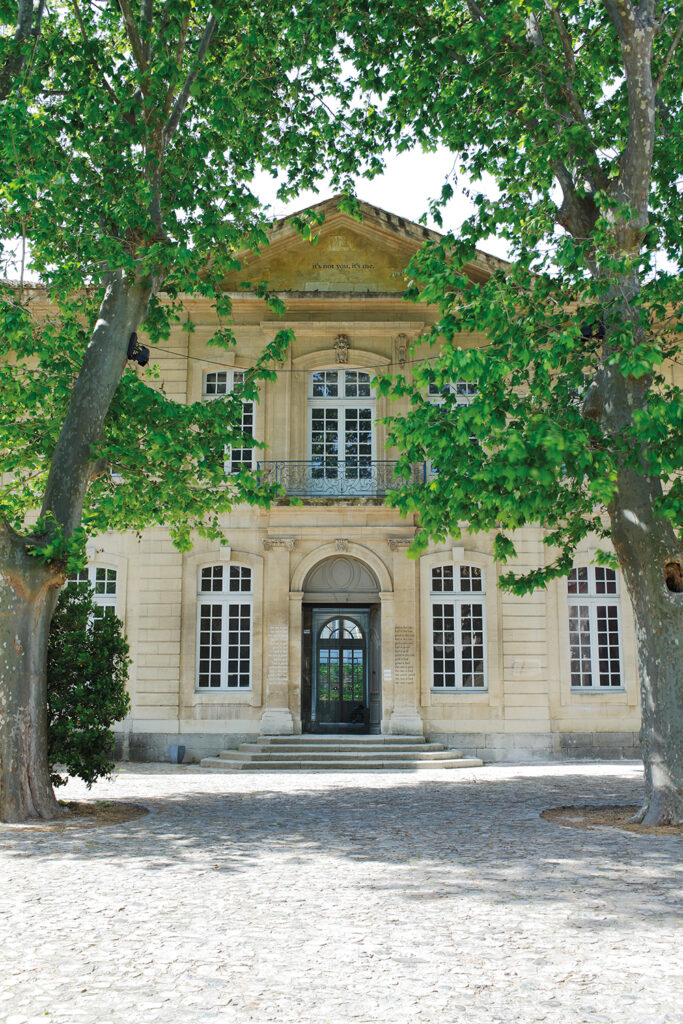
Y.L.: You have to go and see it in Avignon (Collection Lambert) to form an opinion of what it represents and who the artists present in it are. There are some exhibitions that aren’t always easy; it is work that each of us must do with art.
S.G.: It feels as though many artists of your collection engage in a distinctive way with language and words…
E.L.: Yes, for sure, the collection maintains a strong relationship to language and writing. It is indeed rare when they don’t have some kinship with literature, poetry, or writing. Words are not necessarily at the centre of their practice, but there is always a connection, more or less evident, with their work.
S.G.: A painter like Anselm Kiefer, for example, incorporates excerpts from French poems into his paintings…
Y.L.: What he does above all is dedicate his works to writers. He inscribes their names on his canvases. He was particularly marked by the work of Paul Celan, and by that of the German writer Ingeborg Bachmann, a woman to whom he was very attached, they were lovers, and who had a very particular fate.
S.G.: Did you read her?
Y.L.: Yes, Kiefer introduced me to her books.
S.G.: In the bookshop you find all kinds of multiform publications, including the Locus Solus collection, very affordable, on A4 sheets… What is the concept?
E.L.: We ask authors, artists, or poets to compose an original work on a perforated blank page… Each sheet, numbered and produced in editions of 100 to 300 copies, is inserted into a ring binder and sold individually, so that over time you can build up a poetry book featuring the authors you choose.
S.G.: Tell us more about this rare choice you made in 2000 of turning a large part of your collection into public property. When did the question of transmission become pressing for you ?
Y.L.: I wanted to give a body of work from a dealer of a certain generation. I wanted it to be in the South of France. I raised it with Montpellier and it didn’t work out. Eventually, they gave me a space in Avignon and it went well. It happened very simply, without calculation, because it was only with hindsight over the years that we realised it had a certain value.
S.G.: What were your expectation by donating your collection to the State?
Y.L.: The moment you give a collection to someone, among others, to the State, if they appreciate and accept it, their role is above all to enhance it and ensure it is accessible to a wide public.
S.G.: What is your greatest source of pride?
Y.L.: Having exhibited Robert Ryman in Paris in 1969, to general indifference. We pushed the exhibition to a kind of degree zero of painting. That was my pride.
S.G.: Do you still fall in love with artists from the young scene as you once did?
Y.L.: Less than before. But the proof of my interest in the work of these often-little-known artists can be demonstrated through an acquisition.
E.L.: Come on Yvon, you still fall in love! Recently, we bought this piece of the artist Luca Resta [she shows the piece in the office]. He caught our attention at a POUSH exhibition at the Collection Lambert. We then went to visit him in his studio, and subsequently held an exhibition.
Y.L.: That’s true. We loved his discourse, his great curiosity, and his interest in old painting and in literature. He too has a writing practice – not of words but of symbols. He collects disposable plastic objects and reuses them, transcribing them onto fragments of marble. These things that are supposedly unusable but which in fact become usable again – that is interesting.
S.G.: Do you have regrets? Enthusiasms that couldn’t be realised?
Y.L.: I have regrets, of course, but few. It’s like a broken engagement: I prefer to forget or slip out through the emergency exit…



Articles you also might like
For TLmag41: The Art of Collecting, Simon de Pury spoke to Jean Pigozzi about his gift for throwing such legendary parties, his obsession with collecting art, most recently contemporary Japanese Art, and how he is essentially the inventor of the selfie.
Miami-based art collectors Mera and Don Rubell talk to Simon de Pury about how their love of art turned into a decades-long passion for collecting, why they still get excited about visiting artist’s studios and how collecting has become a true family affair.
For TLmag41: The Art of Collecting, Christian Levett, founder of FAMM (Femmes Artistes de la Musée de Mougins), writes about how he came to create one the largest collections of art by women artists.
For our 2026 print issue: TLmag41: The Art of Collecting, Patrizia Sandretto Re Rebaudengo writes about her discovery of American costume jewellery over 40 years ago, sparking a passion for the jewellery as much as the history behind each piece. In 2025 she published a monograph with Taschen documenting her collection.