

American Costume Jewellery
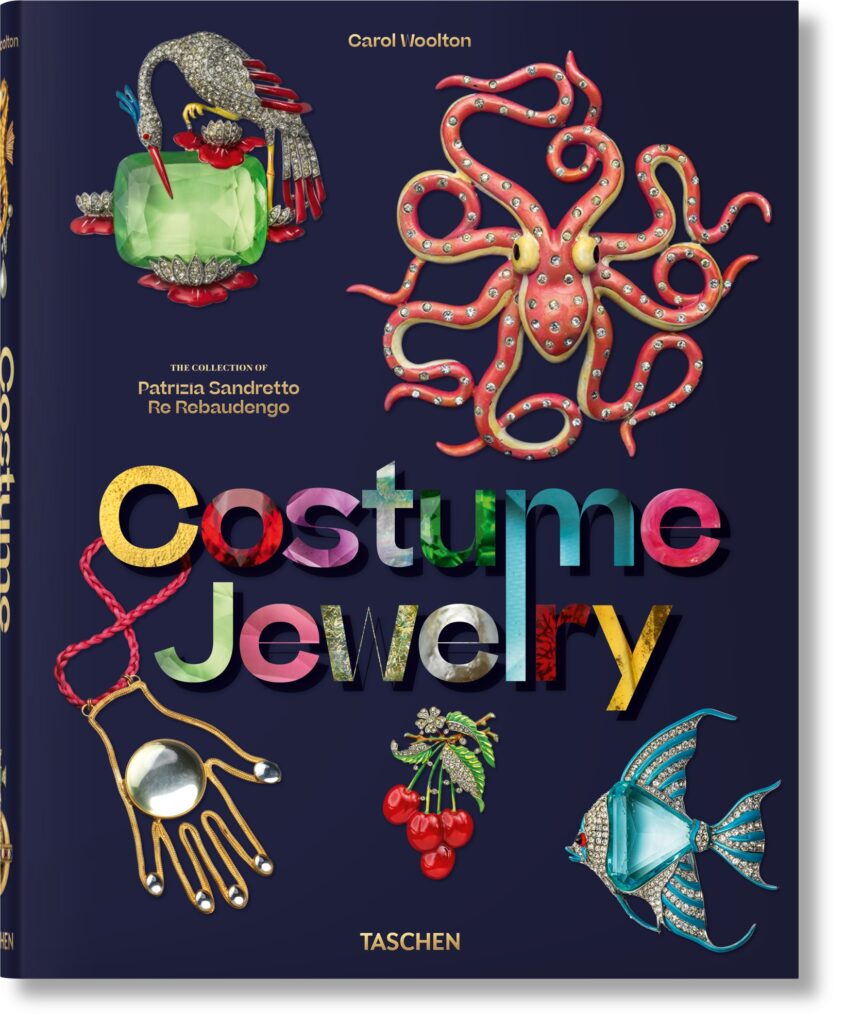
For our 2026 print issue: TLmag41: The Art of Collecting, Patrizia Sandretto Re Rebaudengo writes about her discovery of American costume jewellery over 40 years ago, sparking a passion for the jewellery as much as the history behind each piece. In 2025 she published a monograph with Taschen documenting her collection.
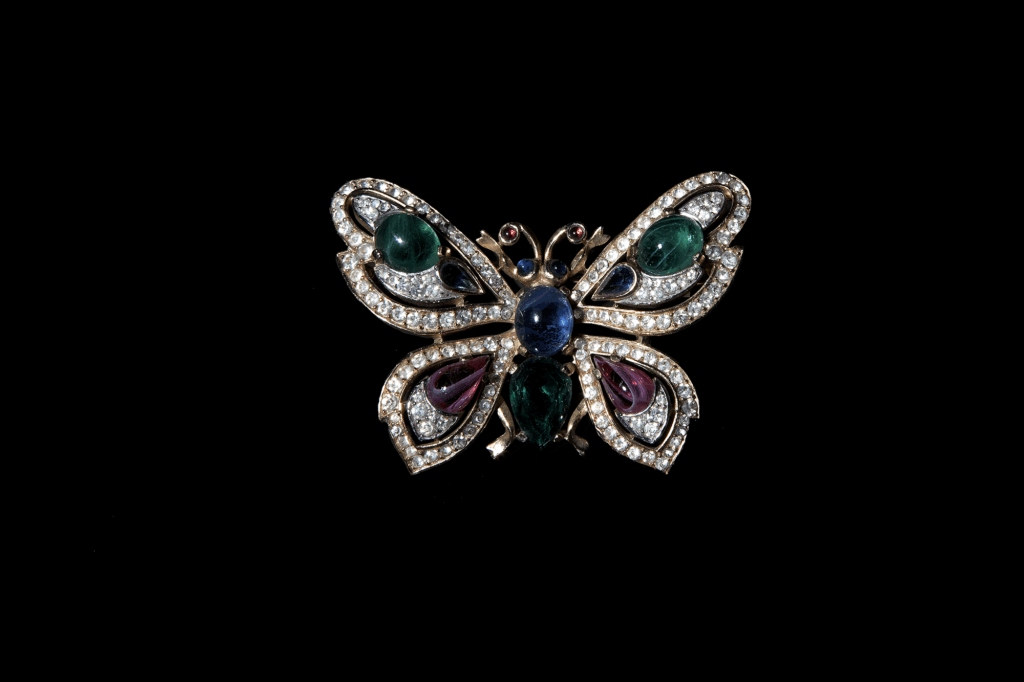
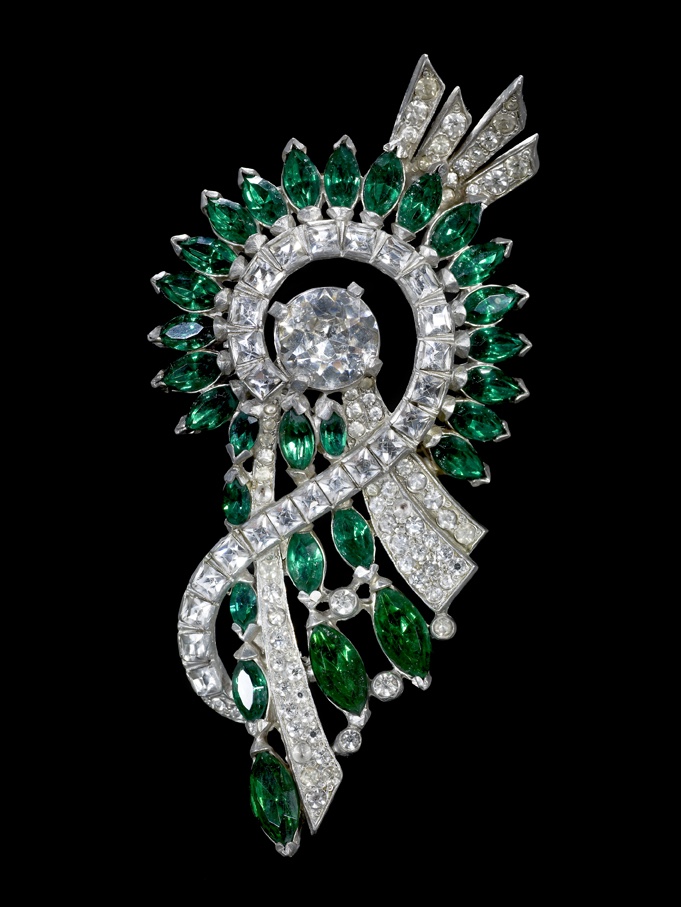
Collecting has always been part of my DNA. As a child, I catalogued pillboxes in a small notebook with meticulous care. Yet it was not until the late 1980s that I discovered the world of American Costume Jewellery. A dear friend pinned the first Trifari brooch to my jacket, and I was immediately captivated: the playful forms, the vintage elegance, the free spirit of a jewel anyone could own.
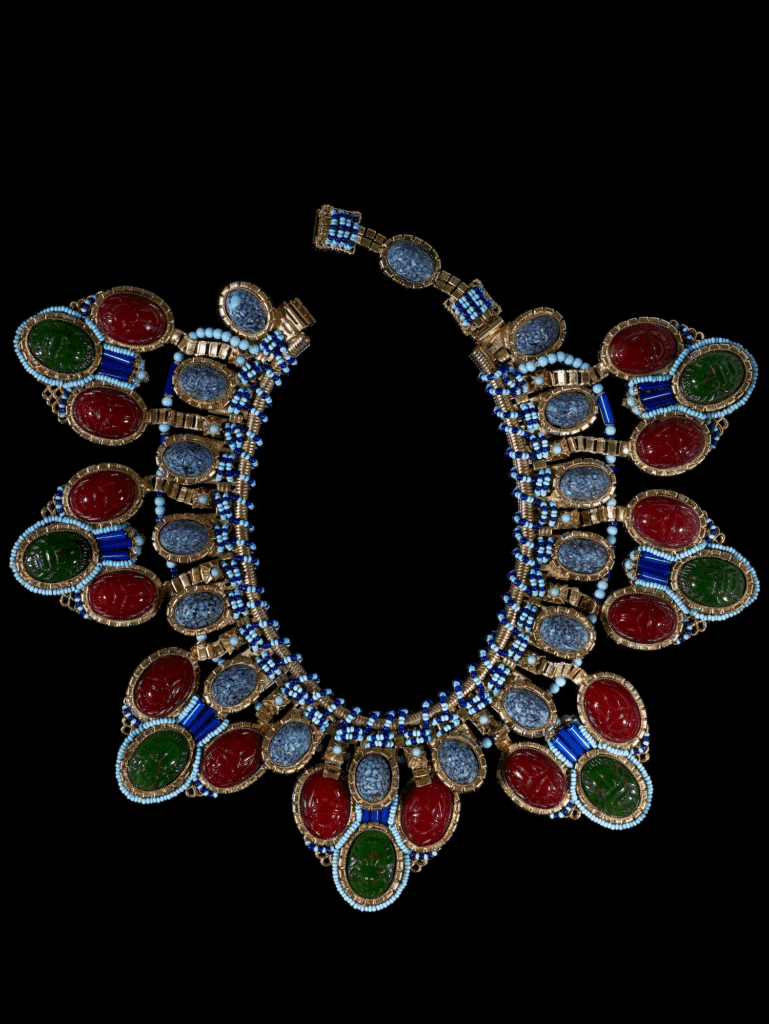
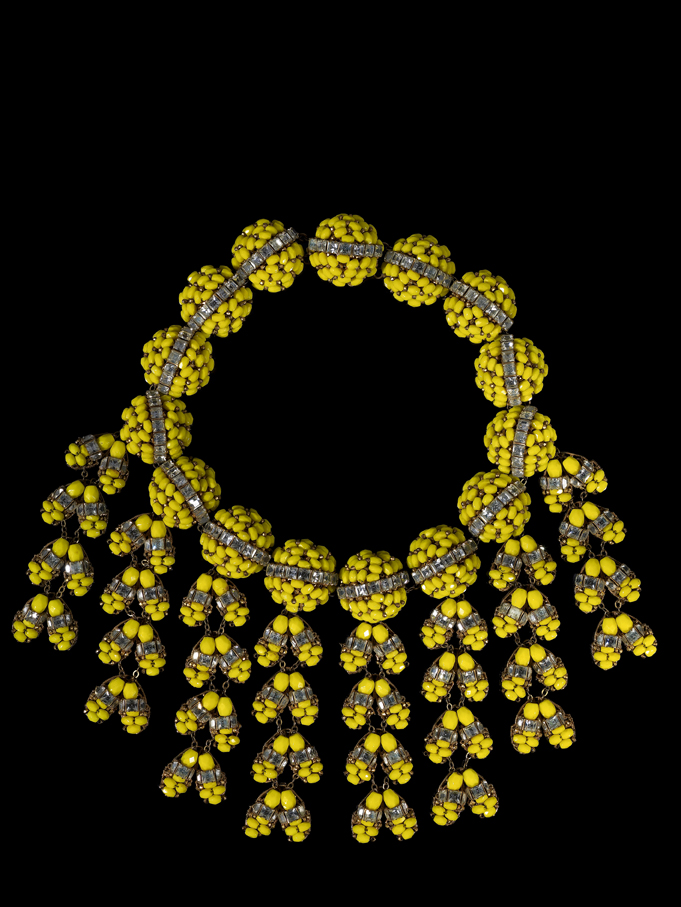
My innate curiosity led me to delve into its history, and I soon realized that these pieces are far more than adornment; they are a lens onto the social and cultural life of twentieth-century America. Costume Jewellery emerged in the 1930s amid the hardships of the Great Depression, and continued to thrive during the Second World War, when access to precious metals was limited. Designers responded with extraordinary creativity, crafting intricate forms in bakelite, celluloid, resins, vulcanized rubber, and acrylic. These materials gave them the opportunity to experiment, not merely reproducing the classic forms of jewellery, but creating entirely original ornaments, all at an affordable cost.
They were a gift that any woman could give to herself whenever she wished, without having to wait for a present from a father or husband on a special occasion; for this reason, they are considered “democratic jewels” and an expression of female freedom. These accessible jewels allowed women to dream, to feel glamorous even in lean times, and were embraced by Hollywood stars as well as ordinary women. Every decade left its mark: brooches for the inauguration of the Golden Gate Bridge, pins worn by the maîtres of New York’s Stork Club in the 1950s, or charming Christmas-tree pins sent to soldiers in Korea. I am particularly fond of Trifari’s Black Amour, depicting a Baroque figure holding a flag that doesn’t exist, which was likely a prototype.
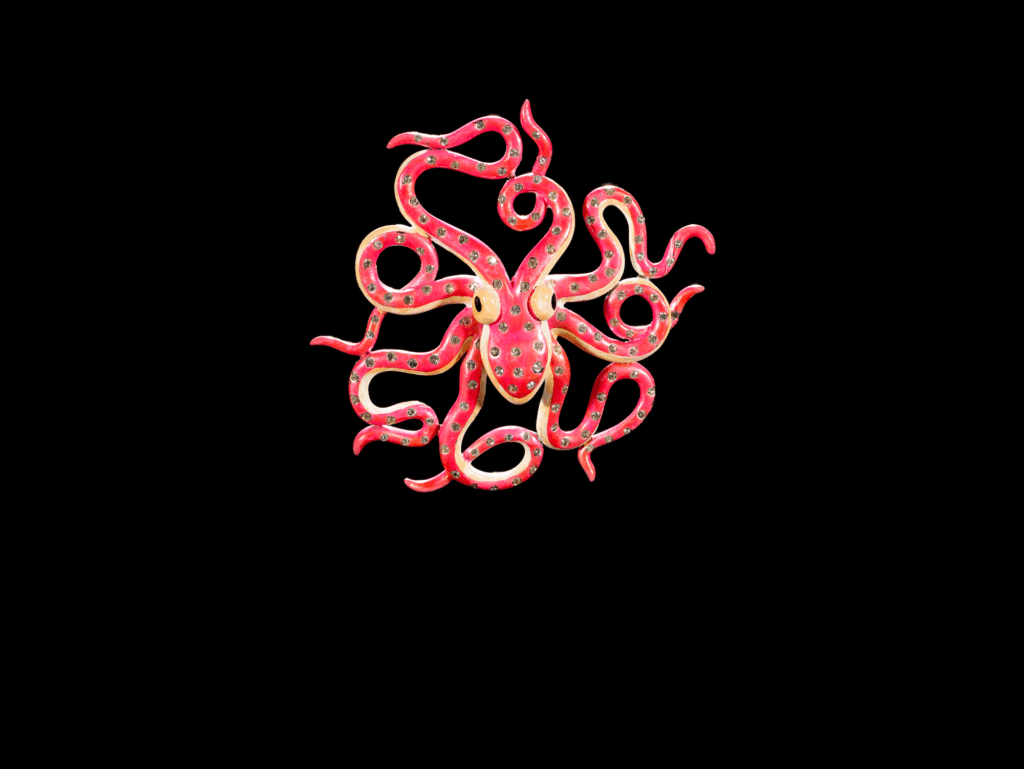
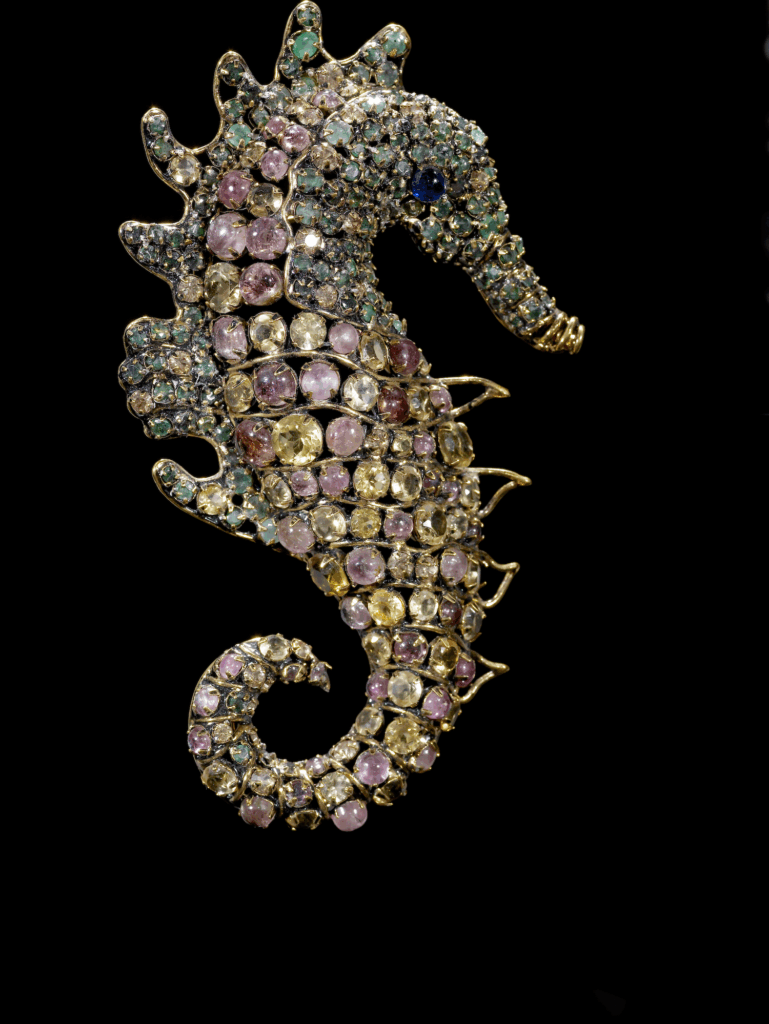
I wear these jewels daily, letting the brooch or necklace dictate my outfit. I enjoy choosing them according to my mood and the commitments of the day. In summer, I favour Coro’s fish, Moini’s seahorses, or Boucher’s pink enamel octopus; in spring, the butterflies of Trifari or the flowers of Eisenberg; in autumn and winter, compositions by Hobé, De Rosa, or Haskell. In the evening, I usually wear a necklace by De Lillo. Collecting Costume Jewellery, like contemporary art, combines emotion, knowledge, and instinct. I choose pieces that resonate, whether rare prototypes or widely produced ornaments. Each brooch, necklace, or bracelet in my collection preserves a moment in history and carries cultural significance, a testament to the enduring allure of these democratic, imaginative creations.
It is with great joy that I see this passion now finding form in a Taschen monograph dedicated to my collection, a book that allows these jewels to shine beyond my personal story, carrying their beauty and meaning into the wider world.

Articles you also might like

We are pleased to announce our 2027 Annual Edition TLmag 42- Why we Build Institutions: How Private Initiatives Shape the Future of Art with Guest Editor Patrizia Sandretto Re Rebaudengo. Release date: January 2027.

For TLmag41: The Art of Collecting, Simon de Pury spoke to Jean Pigozzi about his gift for throwing such legendary parties, his obsession with collecting art, most recently contemporary Japanese Art, and how he is essentially the inventor of the selfie.

Miami-based art collectors Mera and Don Rubell talk to Simon de Pury about how their love of art turned into a decades-long passion for collecting, why they still get excited about visiting artist’s studios and how collecting has become a true family affair.

For TLmag41: The Art of Collecting, Christian Levett, founder of FAMM (Femmes Artistes de la Musée de Mougins), writes about how he came to create one the largest collections of art by women artists.