

Christian Levett on Collecting Art by Women Artists
For TLmag41: The Art of Collecting, Christian Levett, founder of FAMM (Femmes Artistes de la Musée de Mougins), writes about how he came to create one the largest collections of art by women artists.
I’ve been collecting art since I was twenty-five, for around thirty-years. For twenty of those years, I collected old masters, antiquities and classically-inspired modern artworks, which culminated in me opening the Mougins Museum of Classical Art in France in 2011, to display the collection to the public. The museum won the Apollo Magazine ‘new museum of the year award’ and was a nominee for ‘European Museum of the Year’ in 2013. However, in 2014, I decided to change direction and focus entirely on buying modern art, in part because finding great old masters and antiquities with acceptable condition and provenance was becoming increasingly difficult.
At first, I was buying artworks by both male and female artists – the gender didn’t make any difference to me. I just wanted to buy important works of art by the major artists of 20th century including: Picasso, Basquiat, Keith Haring, Wayne Theibaud, David Smith, early Willem de Kooning, Fontana, Calder,but also Joan Mitchell, Helen Frankenthaler, Cecily Brown and Tracey Emin, for example.
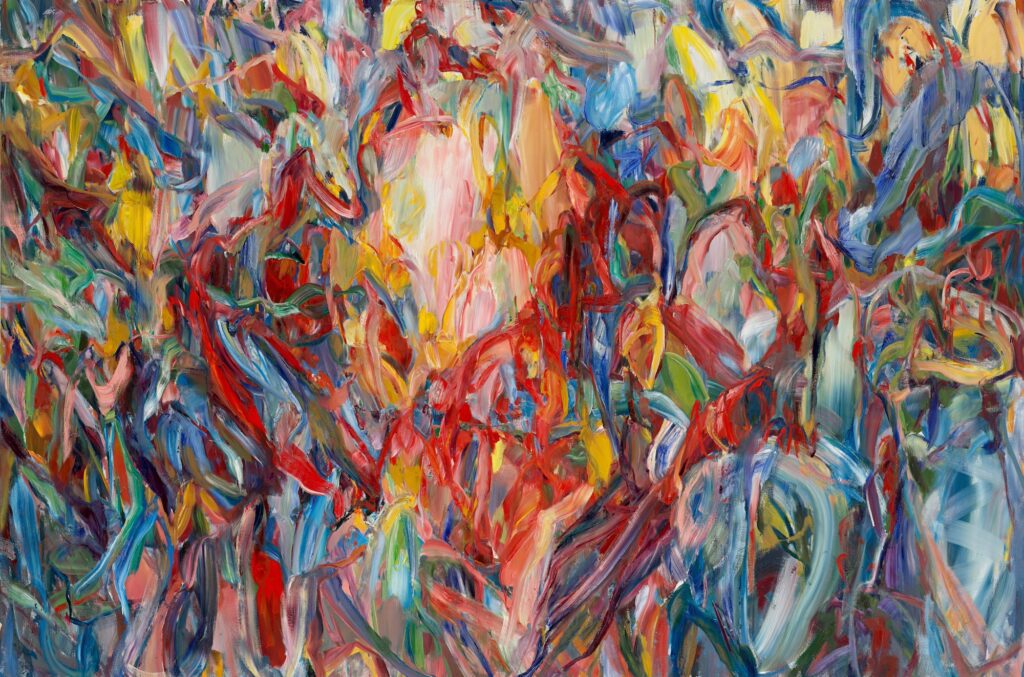
After a couple of years, I began to realise that one could buy works by the greatest women artists of the 20th century, and buy their very best paintings and sculptures in a way that just wasn’t possible when sourcing works by men. The male works were either impossible to find, or were between ten times and sometimes a thousand times the price of their female counterparts. I initially focused on Abstract Expressionism. At the time, you could buy an important painting by Lee Krasner and Joan Mitchell for $3-$5m, Frankenthaler for $800,000, 1950’s pictures by Elaine de Kooning and Grace Hartigan for just $300,000 and other pioneering women of the movement such Miriam Schapiro, Ethel Schwabacher, Deborah Remington and Yvonne Thomas, for just $100,000. I was finding original description labels on the back of paintings from exhibitions at major galleries of the 1940’s and 1950’s, and which had been exhibited at MoMA and the Guggenheim, New York, during the same period. It occurred to me, that if these pictures, with this kind of proven provenance, were by Franz Kline or Robert Motherwell they would be $20m, and if they were by Willem De Kooning or Jackson Pollock they would have been $100-$200m. In fact, I was watching fairly insignificant works by Pollock trade through the market at $50-$100m, and I quickly realised that for a fraction of the cost of one male picture, I could put together an entire museum-quality collection of absolute top-level Abstract Expressionist art by women artists, and create something unique, educational and of significant art historical importance. It would also work well to aiding the enormous counterbalance between art by men and women.
I was also inspired by the increasing number of museum shows happening around the country: Modern Women at MoMA, NY; Elaine de Kooning’s 2015 retrospective at the National Portrait Gallery in Washington D.C., and Women of Abstract Expressionism, in 2016, at the Denver Art Museum, in 2016. There also fantastic books coming out on the subject such as Mary Gabriel’s 2018 “9th Street Women”. The research involved was just as exciting as the thrill of the purchase. I was discovering new information all the time. While it wasn’t difficult to source individual books about even the lesser-known women artists of the period, women artists had been completely written out of the generalist art history books of the late 20th century, leading them to drop out of the art history curriculum of schools and colleges, and therefore, seemingly removed from the radar of being exhibited in virtually all public museums. By carefully and meticulously sourcing a large and significantly important collection of the very best female works of the period, it allowed me to curate and publish in this area too. Thus, once again, giving these women artists a voice and a platform to exhibit their works in a way that hadn’t happened in many decades, and to really bring them back into the eye of the public. By the end of 2020 I had amassed around 150 works by female abstract expressionists, including Lee Krasner’s Prophecy, the work that she was painting just before Jackson Pollock died, and which [it is said] predicted the car accident. It’s been in around 70 museum shows and is one of America’s most important 20th century canvases. Two major Joan Mitchell paintings in my collection came with stories about them written by Mitchell. I bought a rare portrait of JFK by Elaine de Kooning, as well as her most important and largest ever painting, The Burghers of Amsterdam Avenue, which is 4.5m wide.
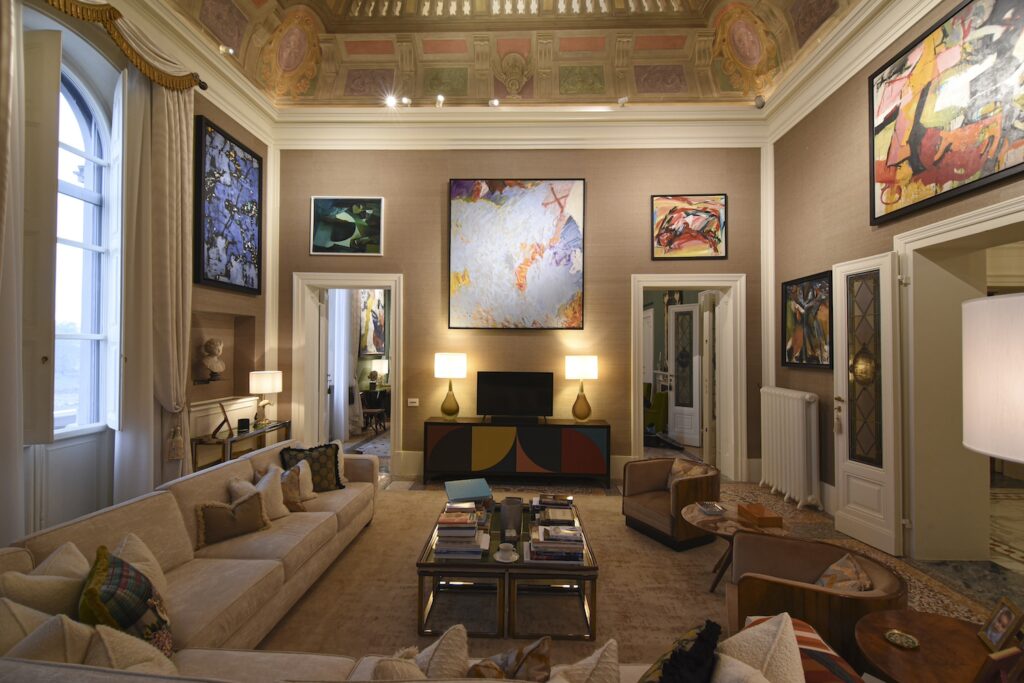
These important paintings were filling up in storage, so in March 2021, I entirely rehung my palazzo in Florence with works only by women artists and I opened it for private tours for museum patrons, academic and collectors’ groups. The numbers of tours exploded, I couldn’t believe the popularity of them among leading global curators and researchers, or their enthusiasm for the work that I’d done. It became clear that the works needed to be made available to the wider public and to be published. I hired Merrell Publishers and engaged the preeminent scholars, Ellen Landau (who wrote Lee Krasner’s catalogue raisonné) and Joan Marter (editor of the American Women’s Art Journal), to write a book called “Abstract Expressionism; The Women”, using my collection as the basis for it. On a recommendation from Eleanor Nairne, then curator of The Barbican London, I also contacted Iwona Blazwick OBE, 22 years director of The Whitechapel Gallery, and she and I put together the exhibition “Action, Gesture, Paint: Women Artists and Global Abstraction 1940-1970”. The show included 150 paintings, approximately 50 of which came from my collection. It opened in London, in February 2023, and then travelled to The Vincent Van Gogh Foundation in Arles, France, and to the Kunsthalle Bielefeld in Germany. By now I had also been collecting female Impressionist artists, including Berthe Morisot and Mary Cassat, and Surrealists, including Leonor Fini, Leonora Carrington and Dorothea Tanning, where prices were also a small fraction of their male contemporaries, and yet the paintings often much better, rarer and more detailed.
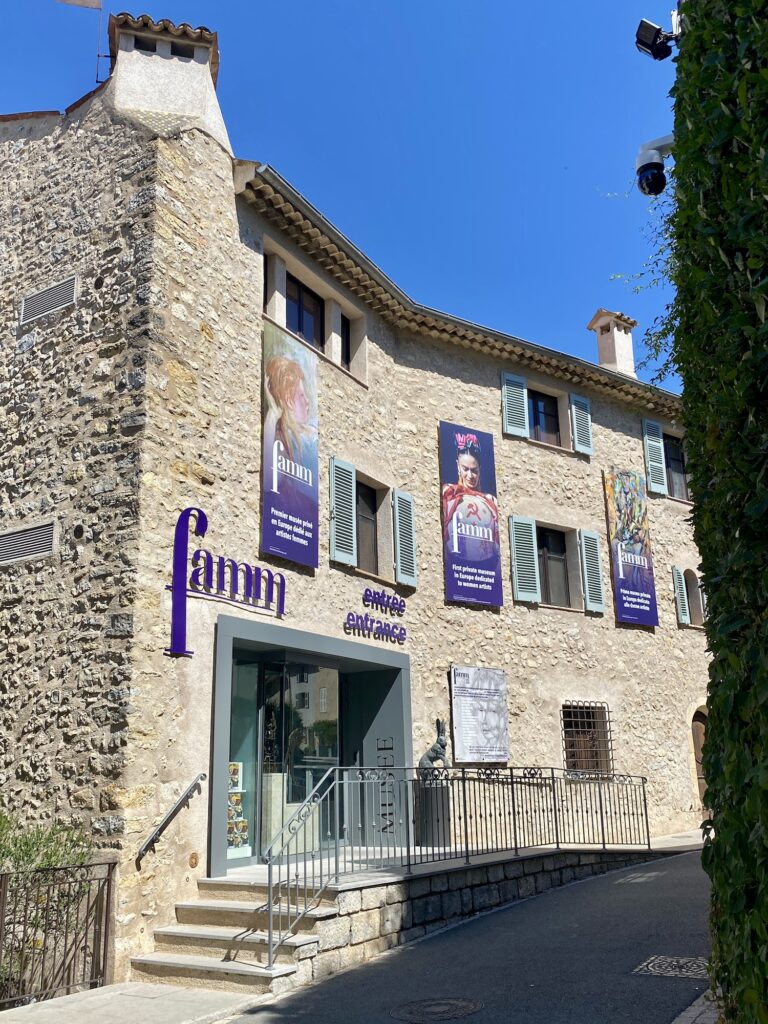
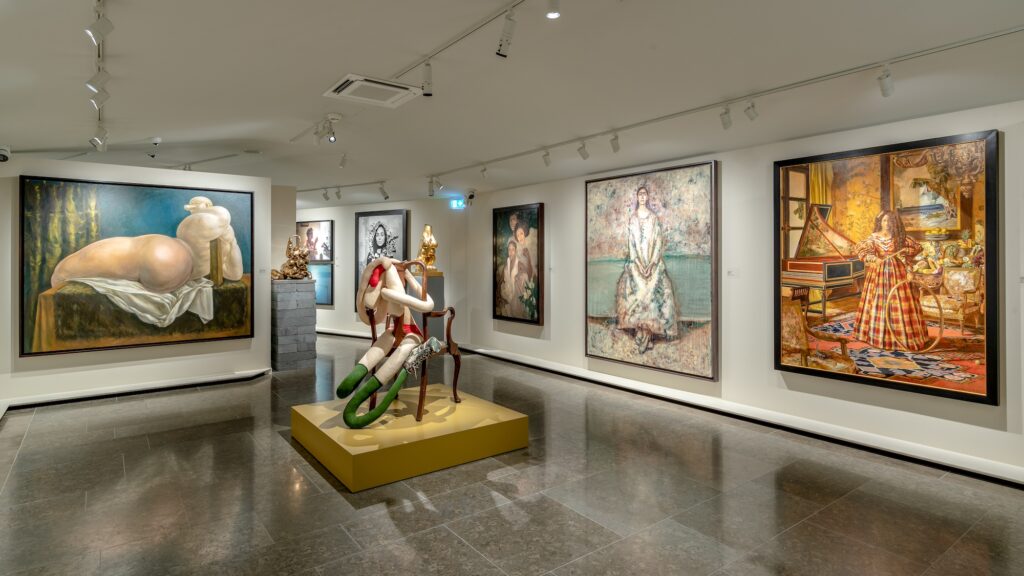
By spring 2023, my collection of women artists had increased to 300-400 works, with a majority of them important oil paintings, so I made a momentous decision to renovate my museum in Mougins and completely reinvent it as FA MM (Femmes Artistes de la Musée de Mougins), exhibiting only artworks by women. After a 9-month transformation we reopened in June 2024 as a museum showing a history of 160-years of artworks by women, from Impressionism to Contemporary. I also published the FAMM catalogue with Merrell Publishers, written by seven leading female scholars, which doubles as an excellent research book for those investigating the modern history of women artists. The media attention surrounding the opening of the museum was breath-taking. In summer 2024, we were covered multiple times on French TV, including on the 9 o’clock news and the breakfast shows of the major French TV stations. We had multiple-page features that summer in Harpers Bazaar, Marie-Claire and French and Italian Vogue. Fifteen months on, we have now been covered by French TV seven times. Our loans programme — loaning artworks from my collection to other museum exhibitions around the world, also exploded. I regularly have up to 100 artworks out on loan to other museums. The Abstract Expressionist part of the collection in particular, continues to garner enormous interest. The American Federation for the Arts has arranged a travelling exhibition of the top 50 AbEx pictures from the Levett Collection, which goes to six American museums over two years, and which opened in Kansas in August 2025.
In addition, I just published a third book with Merrell Publishing, “Women Artists in Their Own Words”, a book dedicated to 100 women artists, talking about their practice from Impressionism to Contemporary. Reflecting more on the financial side, despite the steeply rising prices for women artists in recent years, they still remain at a small fraction of the price of their male equivalents. The all-time auction record for a male artist (excluding the ‘Salvatore Mundi’ by Leonardo da Vinci) is approximately $200m held by Picasso and Warhol, whereas, the all-time record for a female artist is $40m. There are hundreds of works by male artists that have traded above the record for a female.
For living artists, it is even wider. The record is jointly held by Jeff Koons and David Hockney at around $90m, but the record for a living woman is $13.5m, by Marlene Dumas. In every art-history period, except emerging contemporary, records for women artists are anywhere between one fifth and one fifteenth of that of the men. Therefore, the gap is still absolutely gigantic. In response to this, in summer 2025, I established The Levett Letter and Levett Lounge. A subscription-based art-advisory catering to a community of collectors, exhibitors, dealers and researchers interested in the market for women artists. Each month we take three modern women artists who we think are highly undervalued and go into statistical detail about how many paintings they made, which periods are the most important, what pieces by them are in the market, and the pricing compared to their male and female contemporaries. Using this, readers can gauge a comprehensive idea of their supply versus demand situation. In addition, we highlight works that we think are highly investable that are coming up at auction, or about to show at art fairs or are in current gallery exhibitions. We also invite people to Florence once a year for a viewing of my collection and also to Mougins to see FAMM and have lunch at my house. There is also a once per month online webinar with me, where you can ask me questions in person about the art market for women artists directly. All subscription fees go to FAMM, therefore aiding the exhibiting and publishing of women artists and their work. We don’t accept commissions from auction houses or galleries, thereby maintaining impartial advice. We give a 50% discount to museums, foundations, under 30’s and artists. It’s ideal for anyone who is serious about collecting, exhibiting and researching art by women.
www.theLevettLetter.com
www.famm.com

Articles you also might like
For TLmag41: The Art of Collecting, Simon de Pury spoke to Jean Pigozzi about his gift for throwing such legendary parties, his obsession with collecting art, most recently contemporary Japanese Art, and how he is essentially the inventor of the selfie.
Miami-based art collectors Mera and Don Rubell talk to Simon de Pury about how their love of art turned into a decades-long passion for collecting, why they still get excited about visiting artist’s studios and how collecting has become a true family affair.
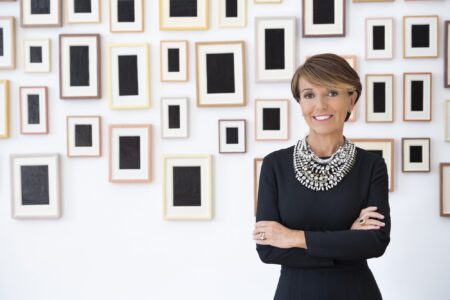
For our 2026 print issue: TLmag41: The Art of Collecting, Patrizia Sandretto Re Rebaudengo writes about her discovery of American costume jewellery over 40 years ago, sparking a passion for the jewellery as much as the history behind each piece. In 2025 she published a monograph with Taschen documenting her collection.
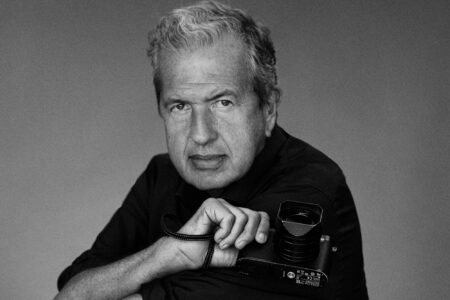
For TLmag 41: The Art of Collecting, Mario Testino writes about how collecting art and collaborating with contemporary artists was influential in his long career as one of the world’s top photographers. This is an edited version of the article which appeared in our 2026 print issue.