


Amor Immeuble: Anastyloses
Amor Immeuble is an architecture practice based in Paris and Brussels that develops projects at the intersection of research, site-specific experimentation, and construction. This is an edited version of a Carte Blanche feature they contributed to TLmag40:The Ideal Home.
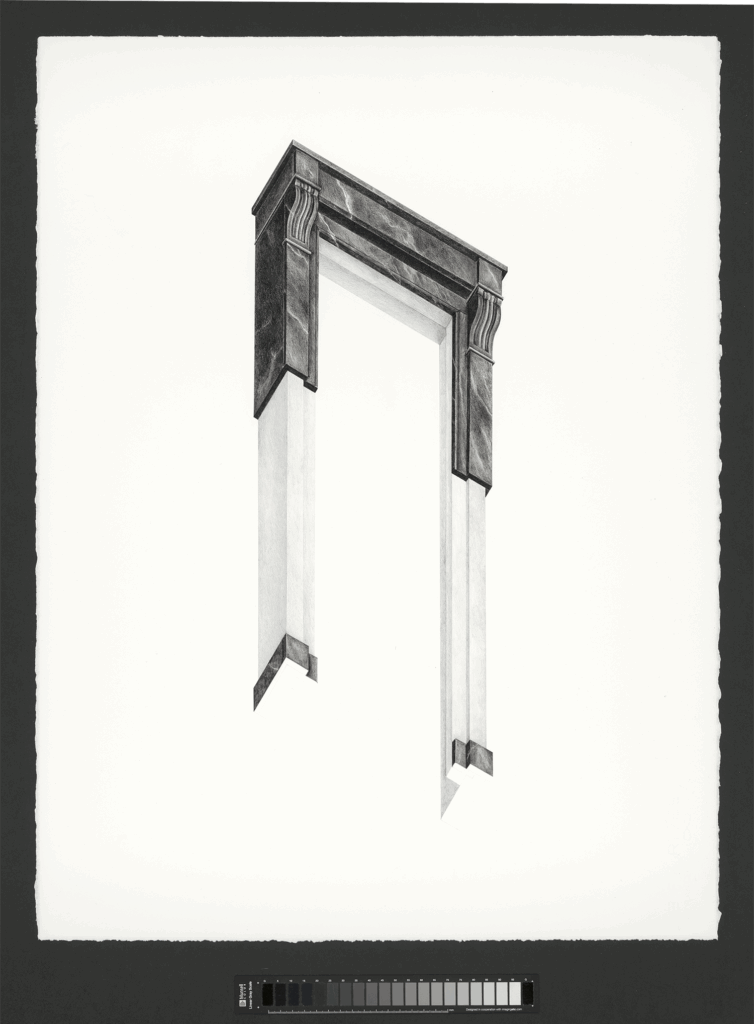
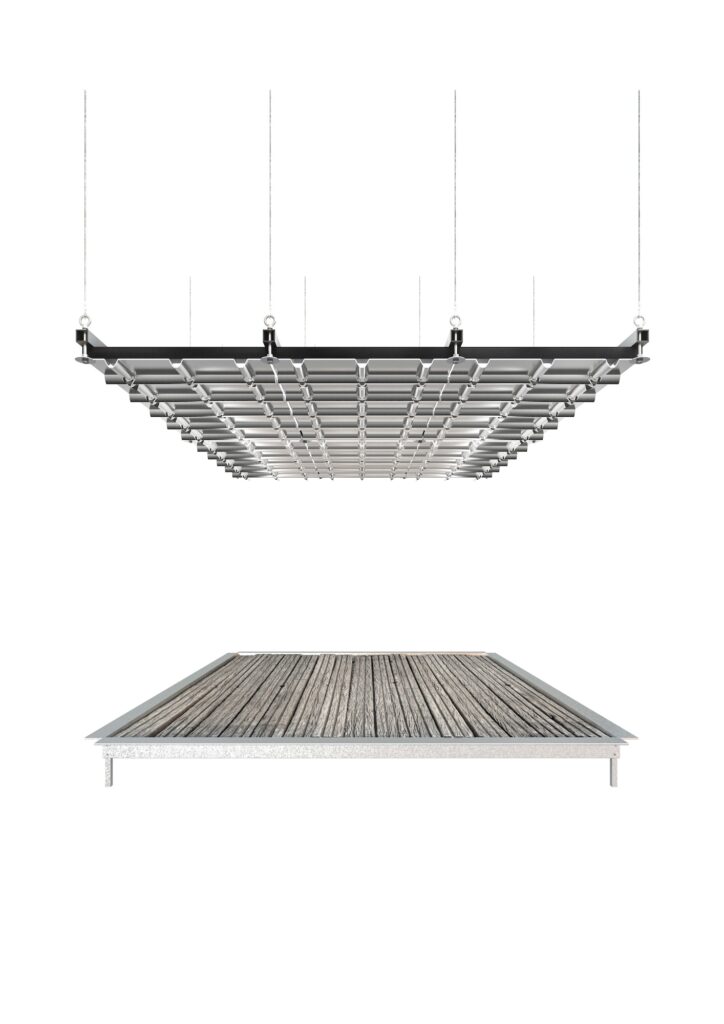
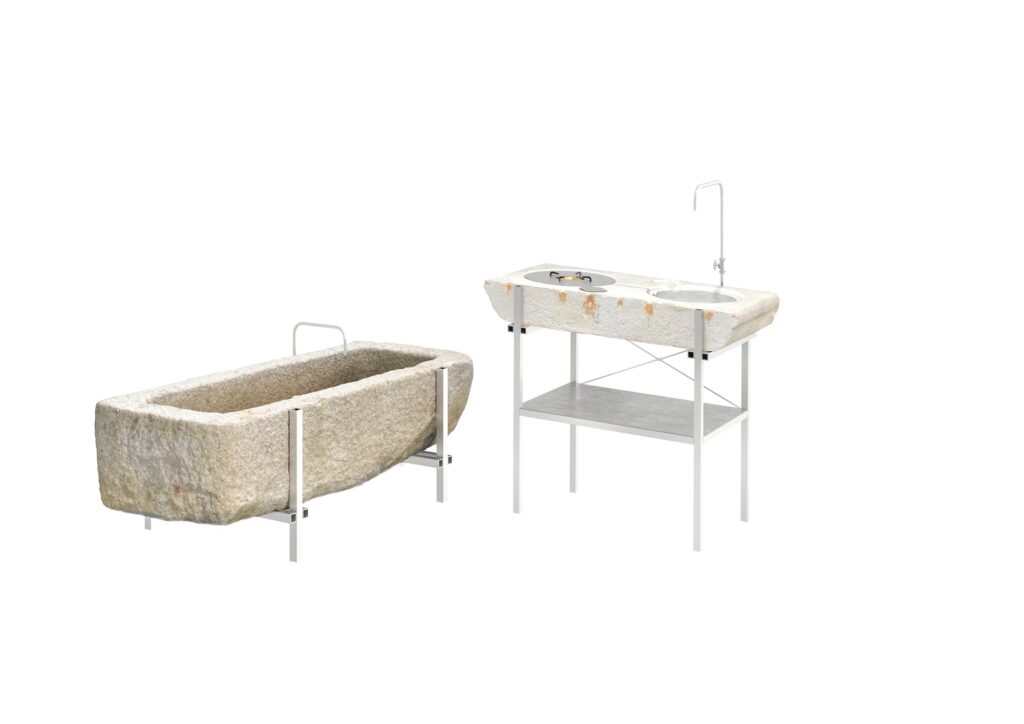
Can a house be ideal? Can we live in an idea, an abstraction? Far from the deep-rooted architectural tradition of the house as ‘ideal mathematics’, as ‘a total work of art’ or as the ‘outlines of a better world’, an enclave of perfection conquered from the chaos of reality, the architects of Amor Immeuble are more concerned with the material conditions of the world as it is: fragmented, senseless, saturated by the innumerable objects we produce and, above all, discard. Their awareness of the inexorable scarcity of raw materials is matched by the vertigo they feel in the face of unsuspected piles of distressed, disused, forgotten and abandoned materials, which appear in their path by chance or through investigation. Warped moulded doors, marble fireplace mantels from demolition or conversion sites, blackened and wrinkled wooden planks from the renovation of the Pont des Arts, Carrara marble basins rescued from the restructuring of a technical high school, granite troughs cluttering up village flea markets… ‘resource-objects’ rather than ‘found-objects’, they are less unique pieces than a series of objects, signs not of rarity but of the bygone abundance of our modern, industrial past.
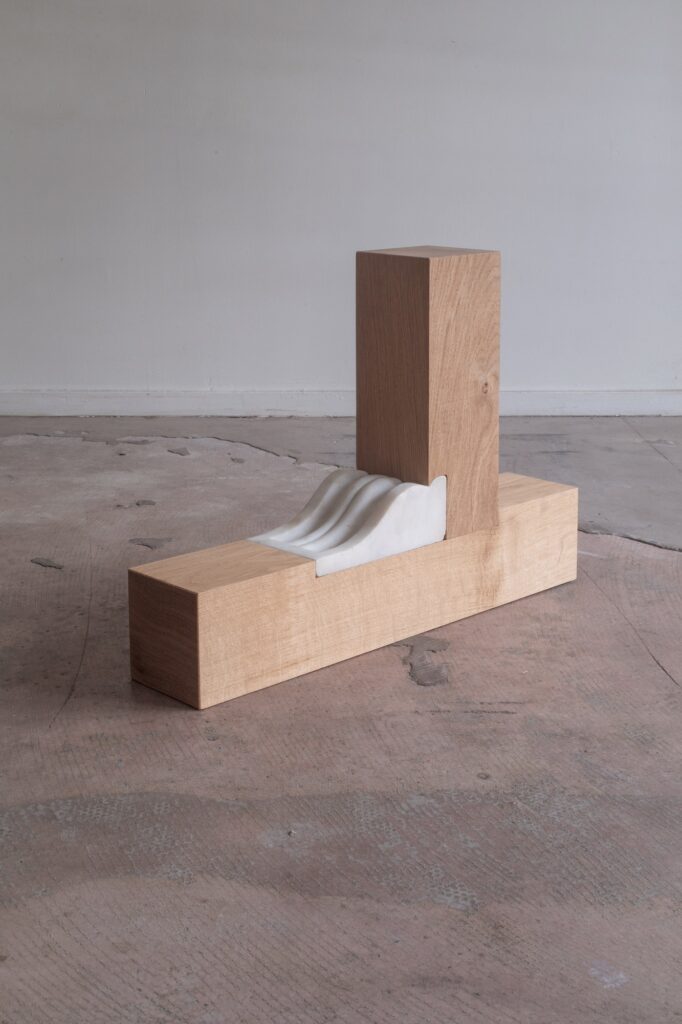
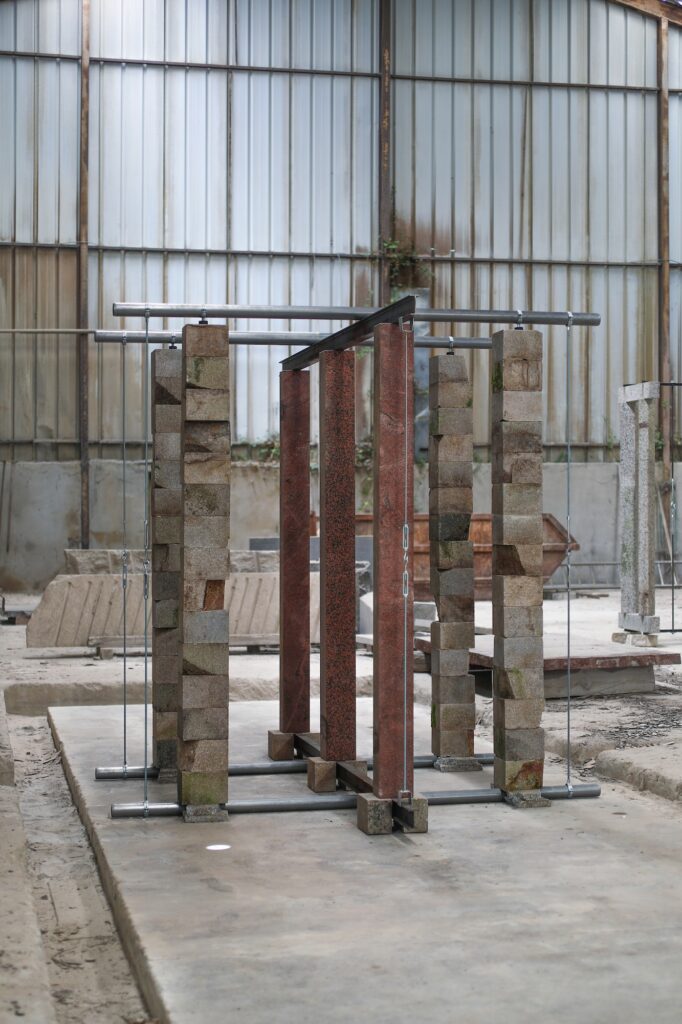
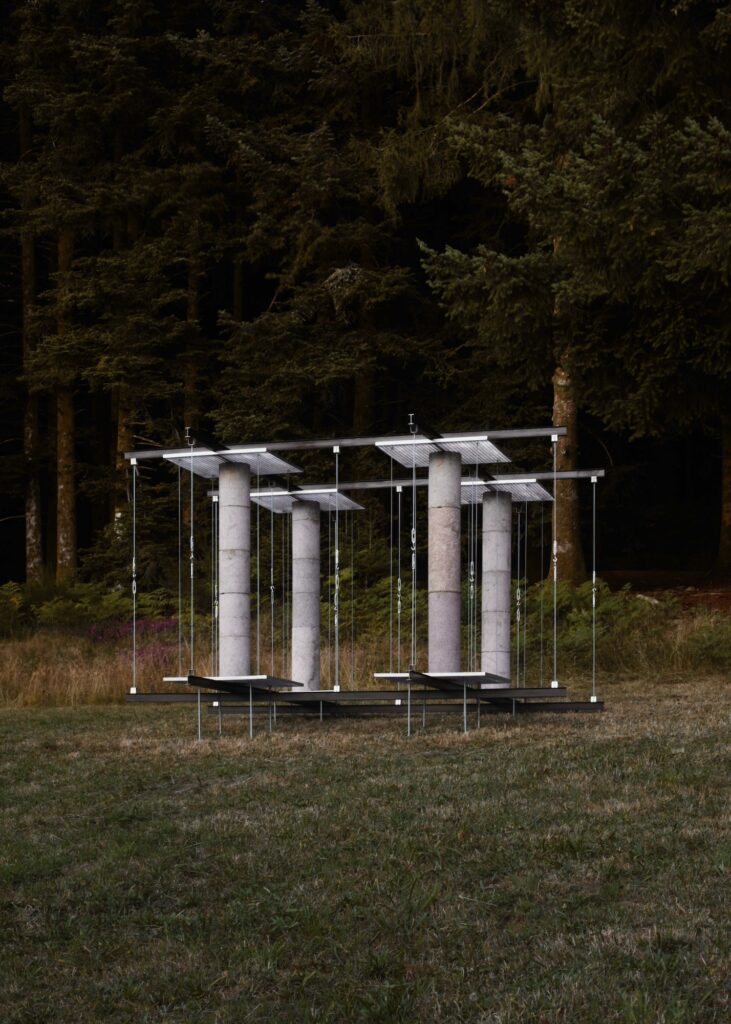
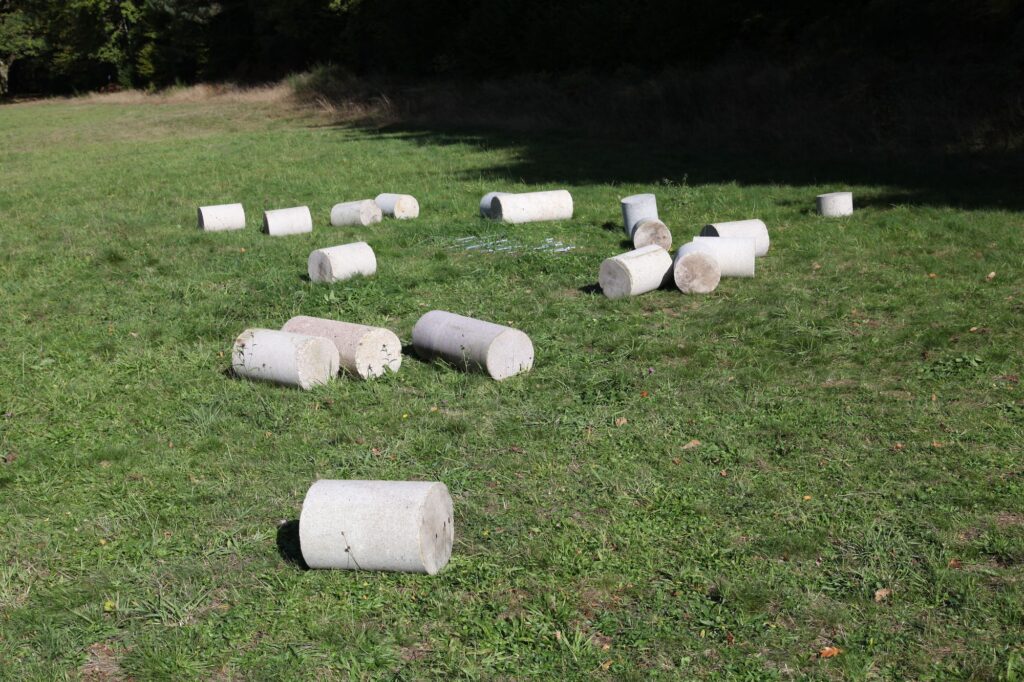
At the edge of a garden, metal sheets are propped against a shed, placed on old wooden pallets; The scene intrigues Amor Immeuble as much for the haphazard arrangement of materials as for its potential use as architecture. From this moment, two endless horizons, two intertwined paths, opened up to them, one archaeological, the other architectural: on the one hand, the systematic and compulsive investigation of the genealogy of these anachronistic things, mute witnesses of other times, uses, modes of production or know-how; on the other, their use in original installations. First and foremost, to wrest them from the inertia of their discarded state, to set them in motion, to move them elsewhere. Then, through photography, drawing or video, to take charge of their strangeness, their connotations, their singular geometry. Finally, to engage them in new, necessarily hybrid and composite, arrangements, both a hijacking and a rebirth. At a distance from current doctrines of reuse, recycling or up-cycling, which often reduce resources to their mere technical abilities, verging on exploitation, Amor Immeuble’s proposition combines the poetic and political, cultural and aesthetic dimensions of the fragments they manipulate in order to unleash their full architectural power. The purely ornamental modillions of serial chimneys, for example, embedded in a wooden framework, take on a constructive function they never had, in a kind of inverted anastylosis whose aim is not to restore a lost architecture but to compose a new one. If, from one installation to the next, a potential ‘home’ takes shape in Amor Immeuble’s work, it is less the product of a total project, of an abstract utopia, than the fruit of this restless, groping reverie on the making of the world, on the paradoxical trajectory of the things that cross it and inhabit us.

Articles you also might like
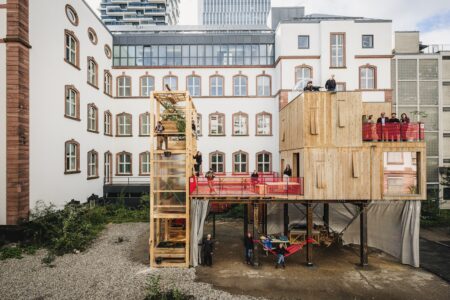
Together with a group of students from Harvard’s Graduate School of Design, Dr. Niklas Maak helped develop a prototype of tiny home housing for refugees living in Frankfurt. He wrote about the experience and the tiny home movement for our 2024 print issue: TLmag40: The Ideal Home.
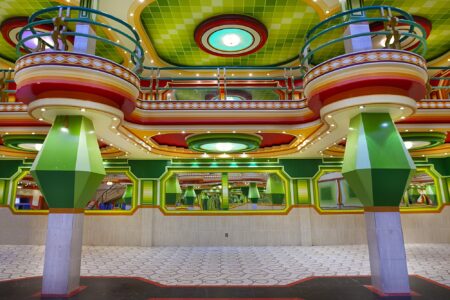
For the 2024 issue of TLmag40: The Ideal Home, Bolivian architect Freddy Mamami Silvestre wrote about his architectural practice based in the Neo-Andean Style, including his singular ‘Cholets’, multi-purpose, public and private buildings that embrace the country’s layered culture and past.

This summer, the Palais Galliera opens a major exhibition dedicated to the work of avant-garde fashion designer Rick Owens. For our 2025 print issue: TLmag40: The Ideal Home, Marie Honnay spoke to Michèle Lamy, artist, performer, fashion icon, and partner of Owens about the hybrid home they share.

For the 2024 issue: TLmag40: The Ideal Home, curator Romy Cockx wrote about the relationship between fashion and interiors in an essay titled: Wearing the Home in Times of Anxiety. This is a subject which she explores more deeply in the current exhibition: Fashion & Interiors: A Gendered Affair, currently on view at MoMu, the Fashion Museum in Antwerp. Fashion & Interiors: A Gendered Affair explores the interaction between fashion and interiors, with a focus on complex gender dynamics. The exhibition also examines the responses of several influential designers, with a particular emphasis on the visual fusion between these two forms of expression. Herewith is Cockx’s essay reproduced in full with images from the exhibition.