


Åsa Jungnelius: A Verse Written with Earth, Fire, Water, and Air
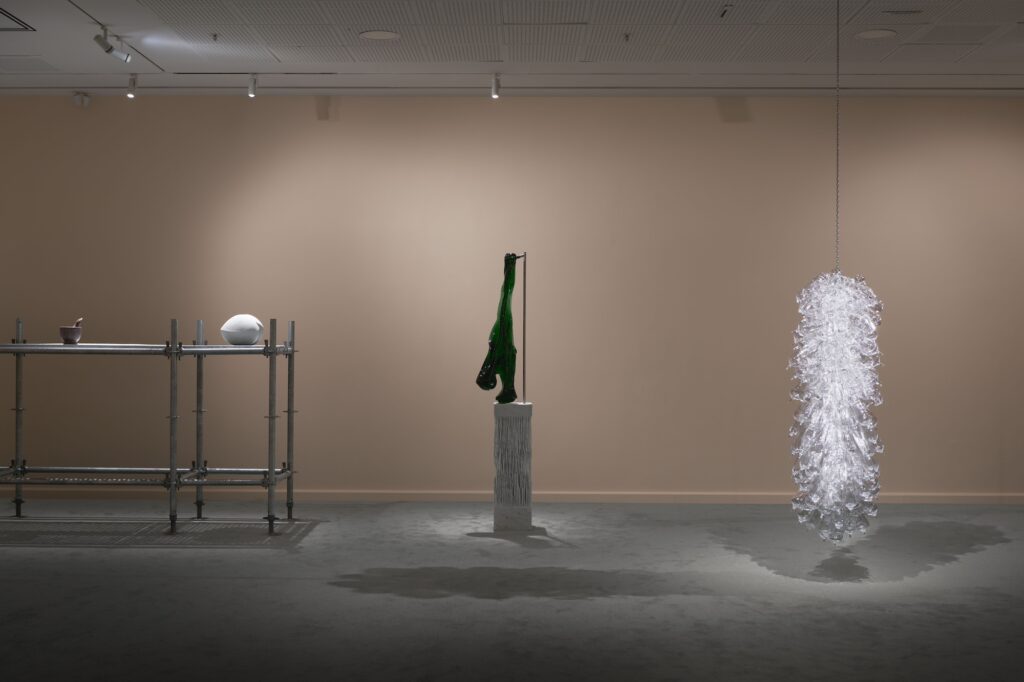
At Istanbul’s Pera Museum, Swedish artist Åsa Jungnelius presents A Verse Written with Earth, Fire, Water, and Air, an exhibition curated by Elif Kamişli. Known for her boundary-pushing glass works and feminist approach to craft, Jungnelius invites visitors to experience matter as both medium and message — where glass breathes, marble listens, and obsidian remembers.
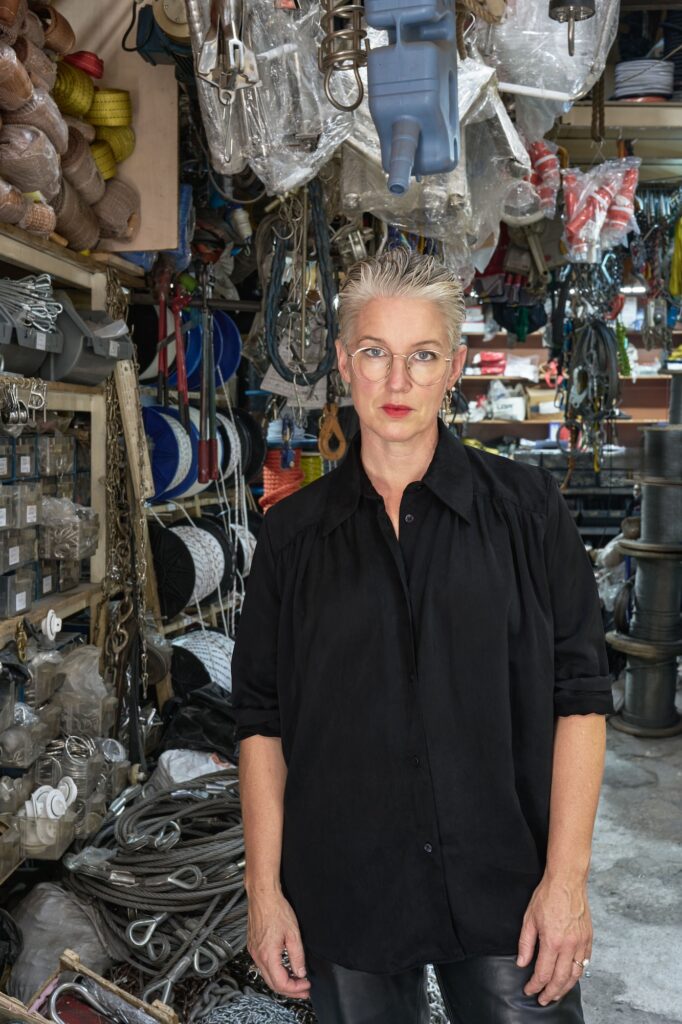
For more than two decades, Åsa Jungnelius has been one of Sweden’s most distinctive contemporary voices, reshaping the legacy of Scandinavian glassmaking. Trained in the famed glass region of Småland and at Konstfack University in Stockholm, she rose to prominence in the early 2000s with bold, feminist works that used the seductive surface of glass to question gendered ideas of beauty and desire. At the Pera Museum, Jungnelius applies her critical sensibility with an elemental curiosity about the natural world and humanity’s place within it. The exhibition unfolds through two intertwined journeys: one across Turkey’s volcanic terrain and another through the fiery heart of its glass industry.
Jungnelius was invited by the Swedish Cultural Institute, in Istanbul, to develop an exhibition. She was introduced to the curator Elif Kamişli and the team at the Pera Museum, and from here began a nearly 18-month journey that brought the artist close the Turkish landscape, the history of glassmaking and a unique collaboration with local glassmakers.
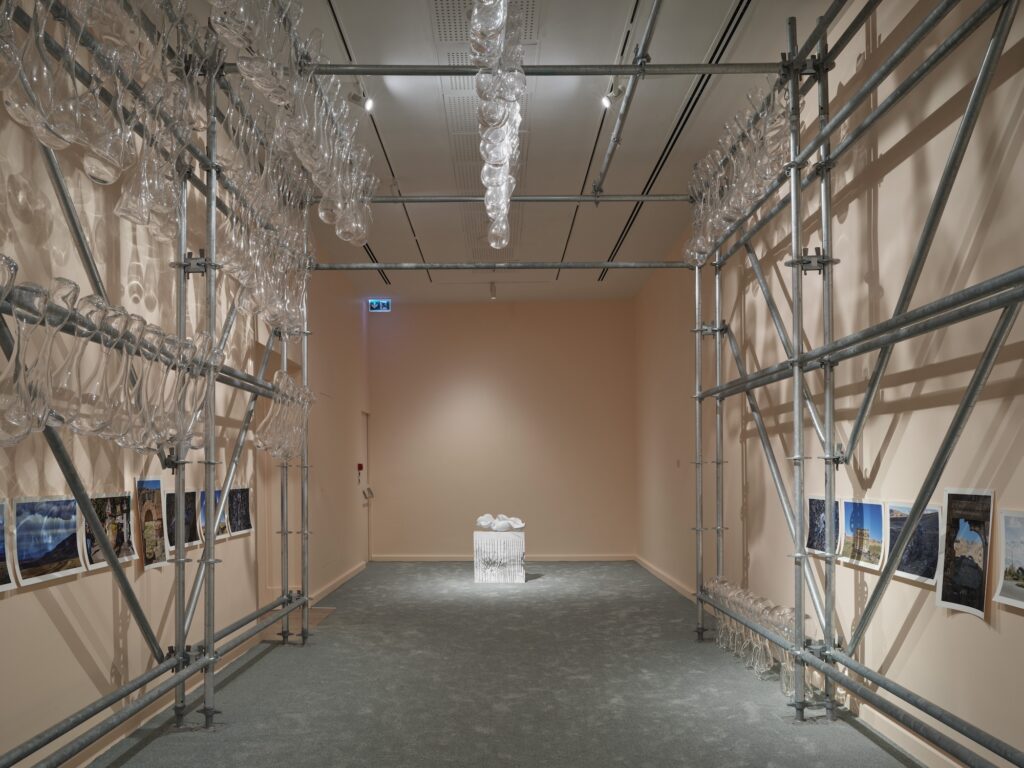
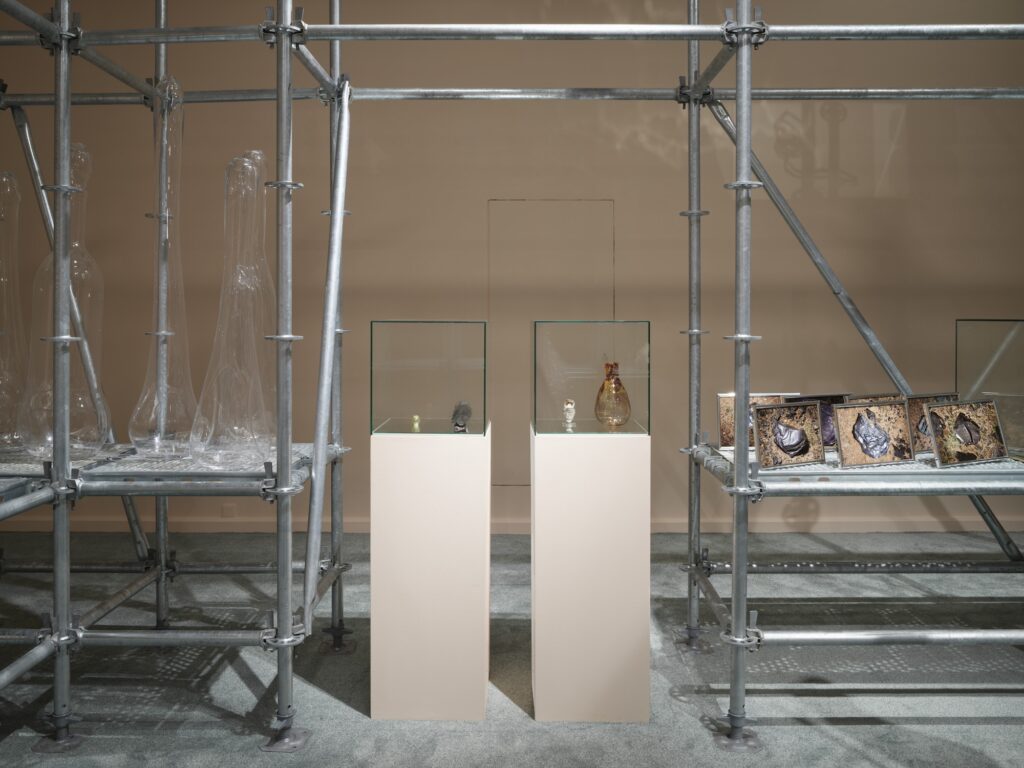
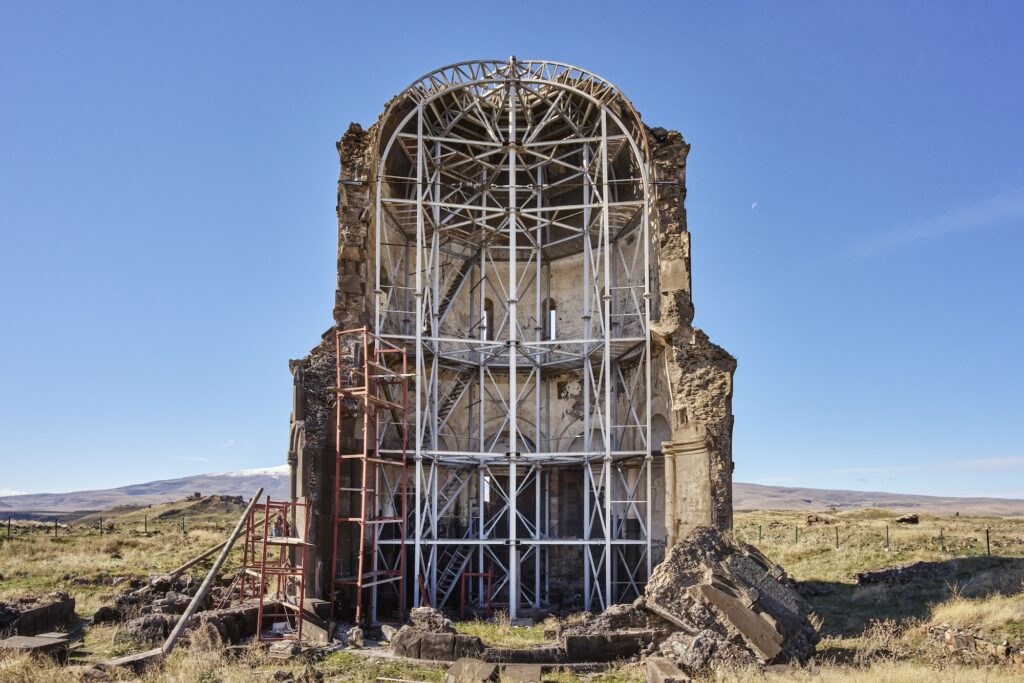
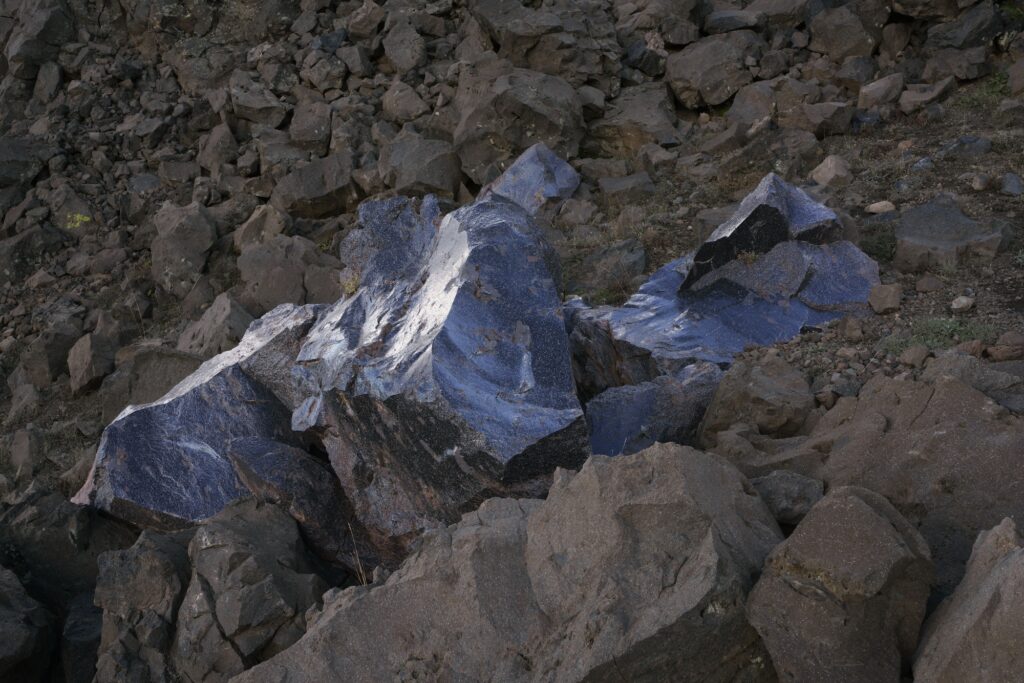
She visited specific regions include Lake Nemrut and the plains of Kars, where obsidian is found. Jungnelius and the photographer Peo Olsson, along with Kamişli and a local guide, explored the area and she collected pieces of the dark volcanic glass – “Mother Earth’s own glass,” as she calls it. These rocks, shaped by the rapid cooling of lava, have been used by humans for millennia, from prehistoric tools to ritual objects. Displayed in the museum’s vitrines alongside bones and other relics, they become portals into deep time, evoking the traces of nomadic lives that once moved through these landscapes. “I prefer to work this way, to follow where the process leads you and how it can unfold. The people you meet and the material you find. It was a very emotional experience,” says Jungnelius.
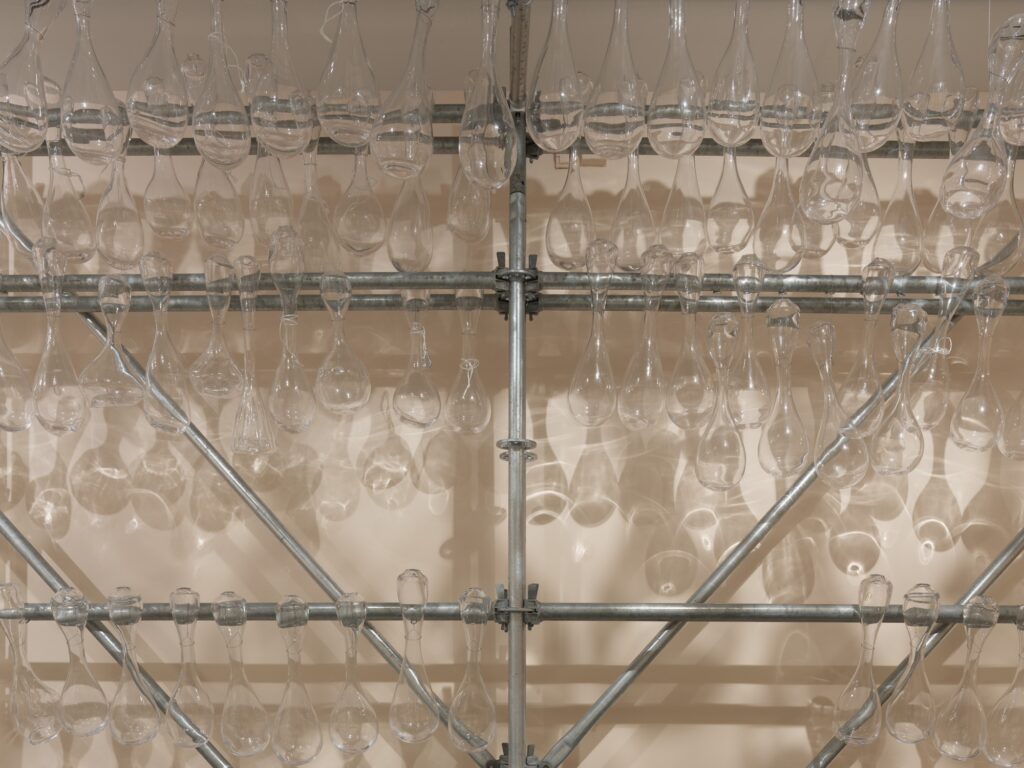
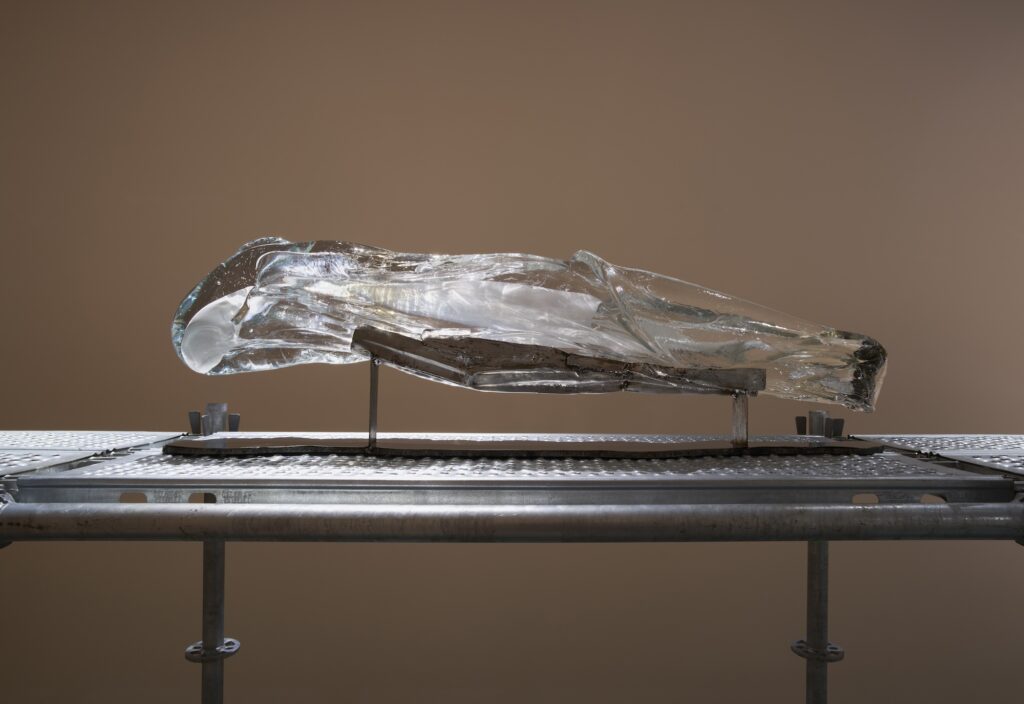
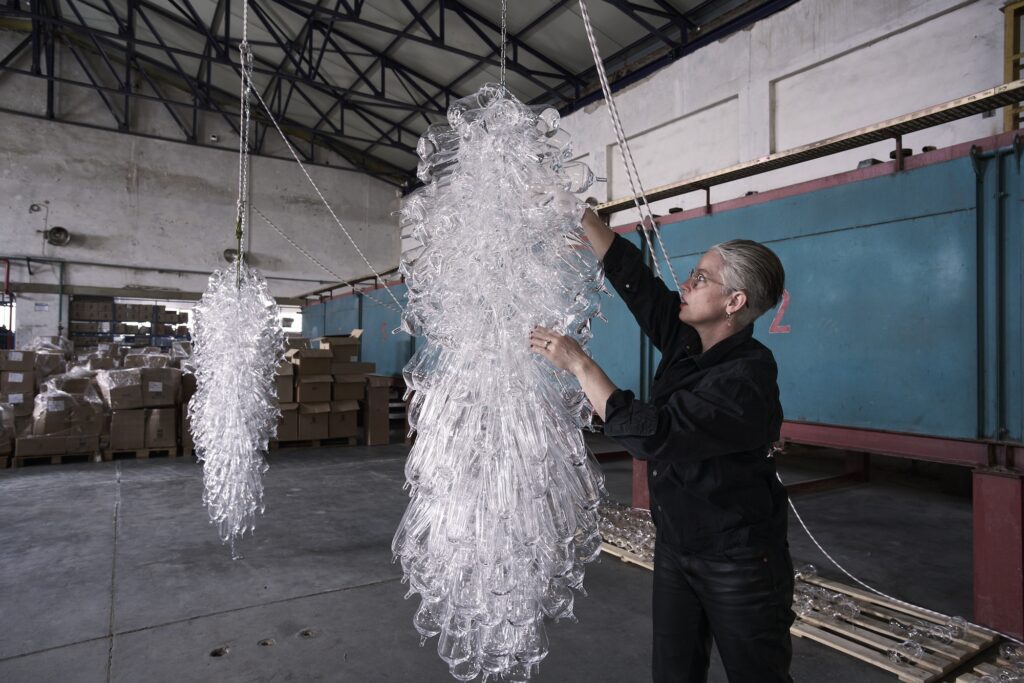
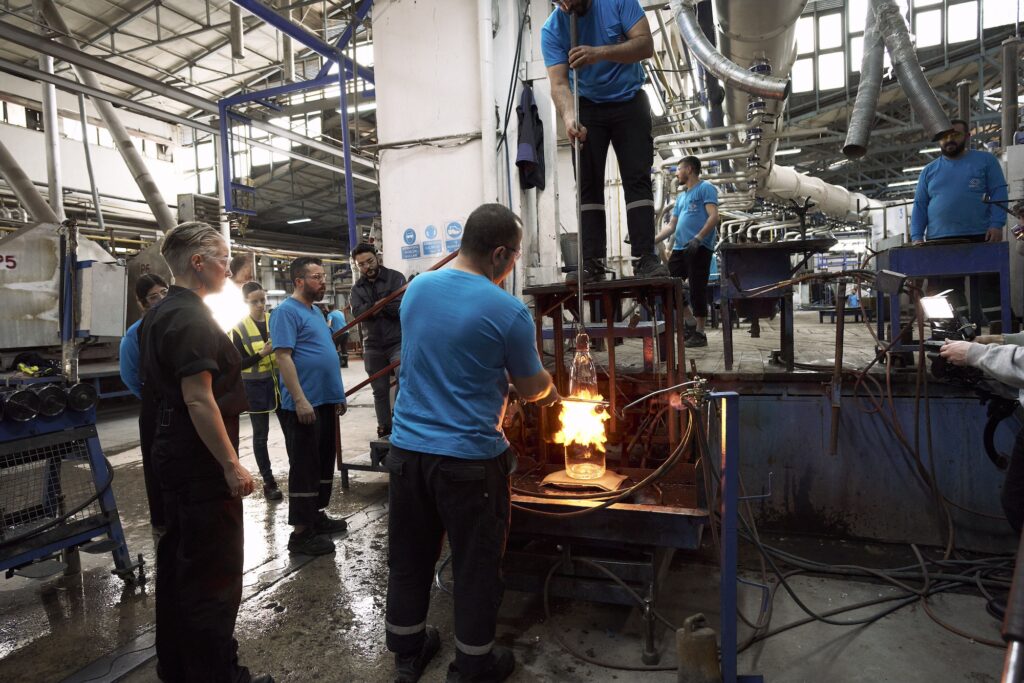
The second part of The Elements centres on Jungnelius’s collaboration with master glassblowers at the Şişecam factory in Denizli, Western Anatolia. There, she challenged the craftspeople to move beyond repetition and perfection. “It was a joint improvisation,” she explains. “By adjusting how the body moved during the process, the expression of the material changed.” The result — four large-scale sculptures titled Mother, Affirmation, I Can Carry You, and I Can Also Carry You — captures the tension between control and surrender, between mastery and the unknown. The pieces seem to breathe with the rhythm of those who made them, embodying what Jungnelius calls a “collection of breaths.”
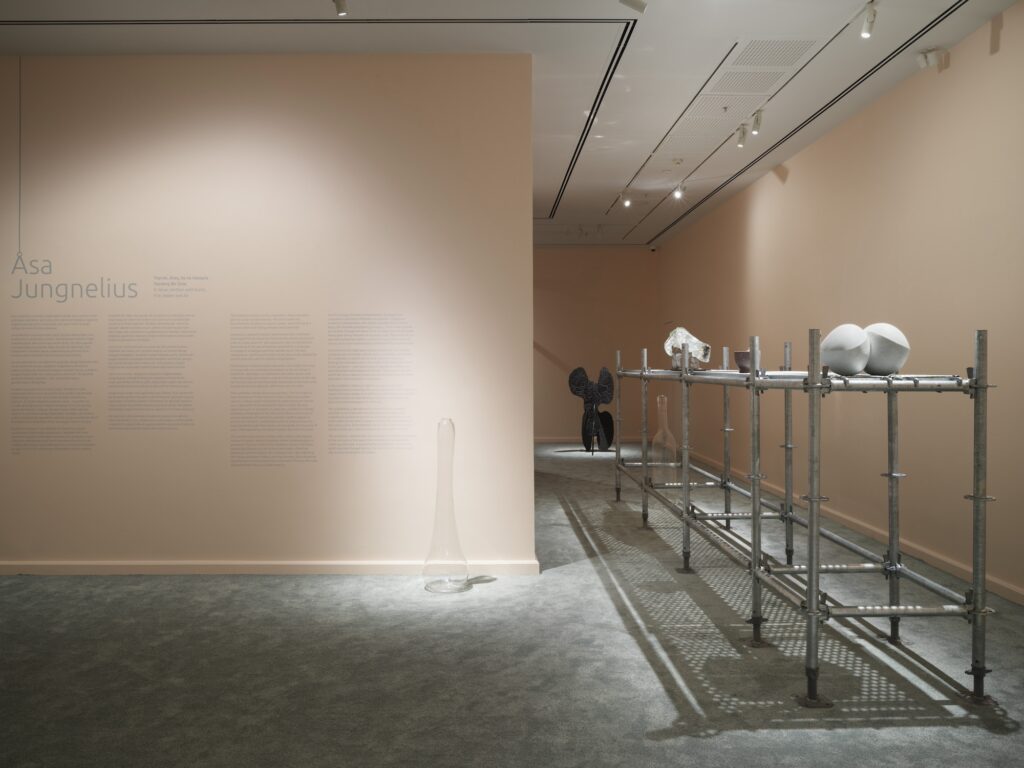
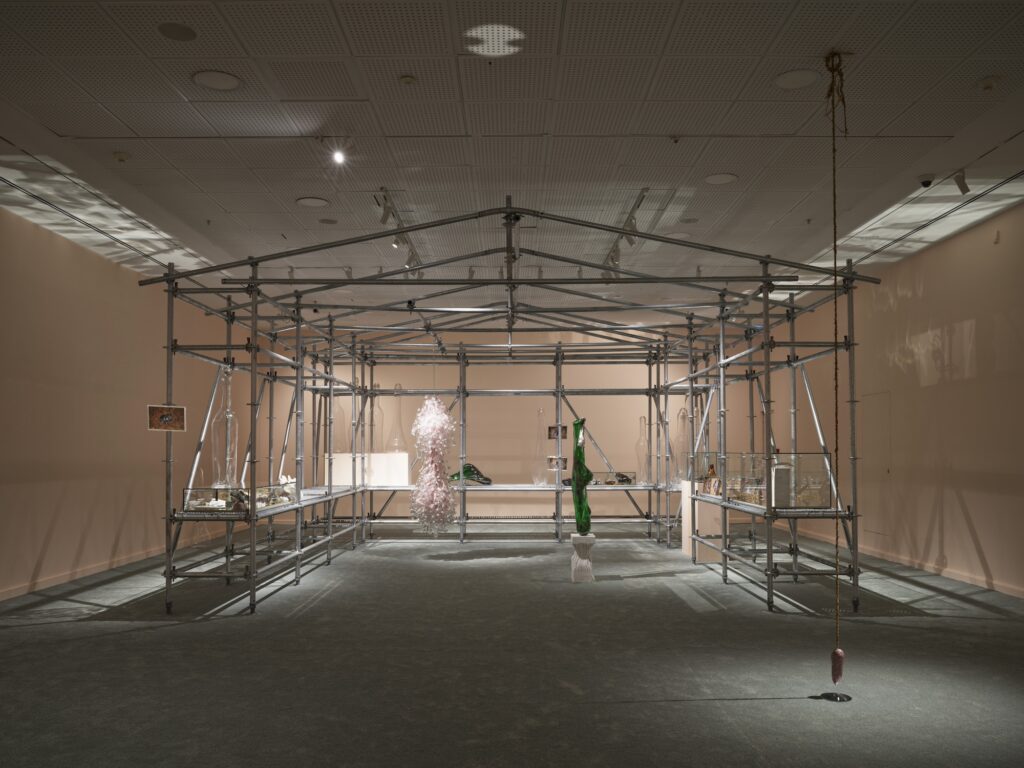
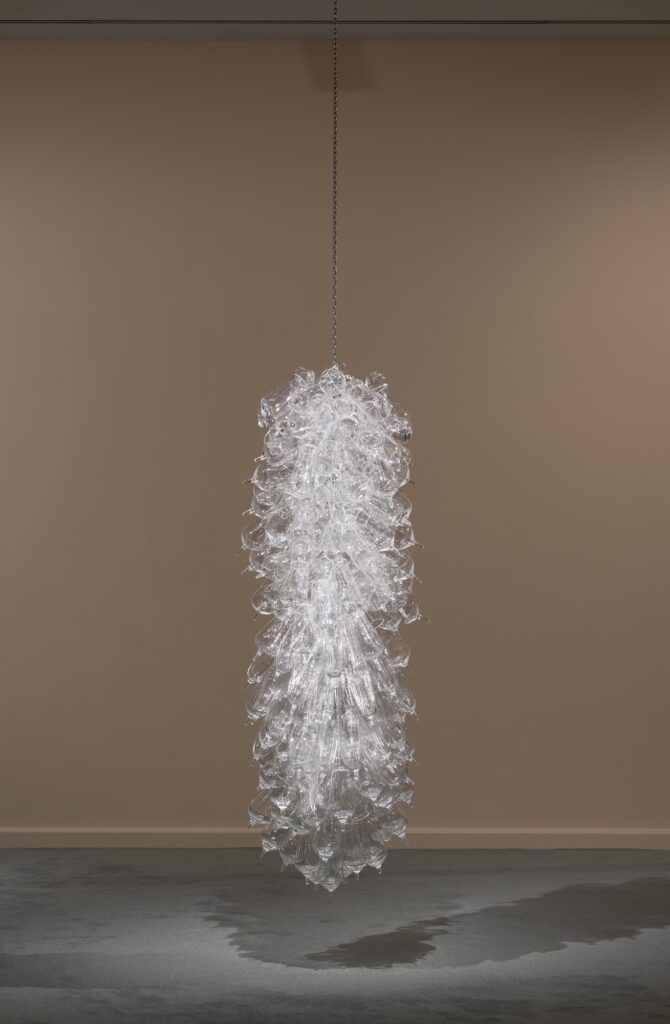
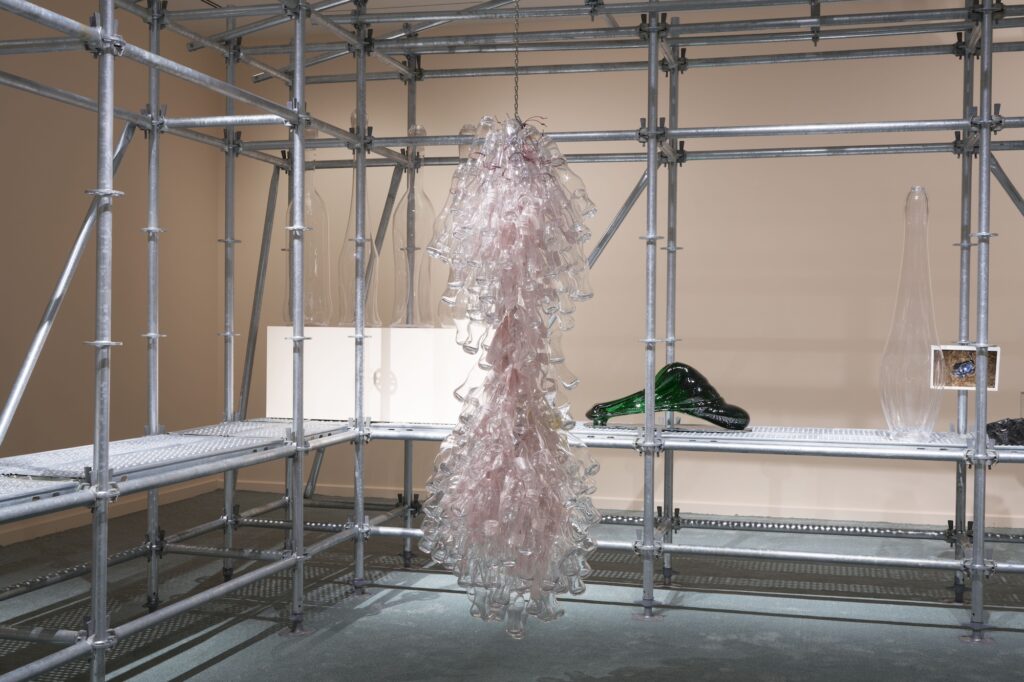
The exhibition also includes glass works produced with long-term collaborators at Kosta Boda glassworks. These pieces are formed by allowing heavy molten glass to fall freely, shaped only by gravity — a physical manifestation of Jungnelius’s trust in material agency. In contrast, the show’s marble sculptures, painstakingly carved over a year, reflect stillness and introspection, serving as counterpoints to the immediacy of glass. Scaffolding structures throughout the exhibition hold and frame the works, suggesting both excavation and construction — a dialogue between past and future. The scaffolding, Jungnelius explains, is found everywhere in our culture – from archaeological digs to urban city-centres, where buildings are constantly in different phases of transformation from old to new. Jungnelius also placed functional vessels and historical objects on the scaffolding, a reminder that we are all participating in this process – despite wars, politics, destruction, we still need and use these simple vessels which have not changed throughout time. “It reflects our humanity, and gives some hope,” the artist says.
“Spending time in Turkey, being present here and listening to the places, the material and the people I met has shaped this exhibition,” Jungnelius reflects. That sense of listening — to history, to matter, to human collaboration — runs through the entire show.
With A Verse Written with Earth, Fire, Water, and Air, Åsa Jungnelius continues her long-standing project of redefining what craft can mean in contemporary art. By treating materials as collaborators rather than instruments, she reminds us that making is never a solitary act. It is, as she puts it, “a joint knowledge that opens a door to humanity.” The exhibition is on view through January 18, 2026.
@asajungnelius

Articles you also might like
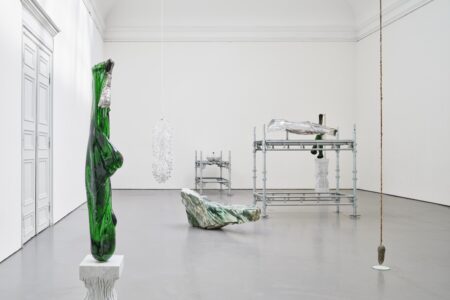
The Bittersweet is a solo show by Åsa Jungnelius at The Royal Academy of Fine Arts in Stockholm. The exhibition is on view between August 22-October 3, 2026.
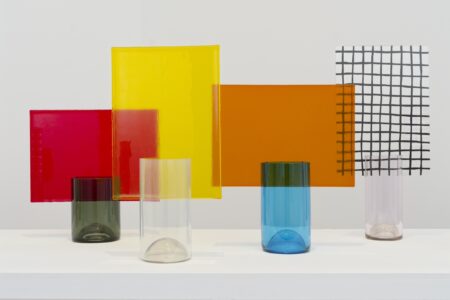
Running from November 8, 2025 to March 15, 2026, Glass: Transcending Matter. The Cirva Collections at the Musée d’Art Moderne et Contemporain de Saint-Étienne Métropole (MAMC+) offers an ambitious presentation of Cirva’s collections to date. The exhibition draws a rich dialogue between design, visual arts, and scientific inquiry through the singular lens of glass.
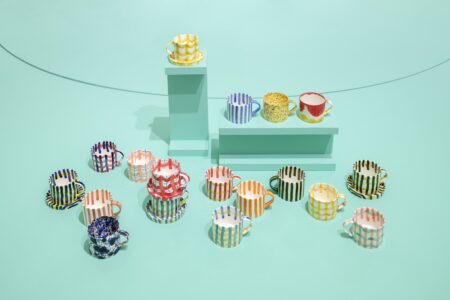
From January 24-May 5, 2026, the Vandalorum presents Tales of the Hand, a dynamic exhibition of work by Masayoshi Oya.
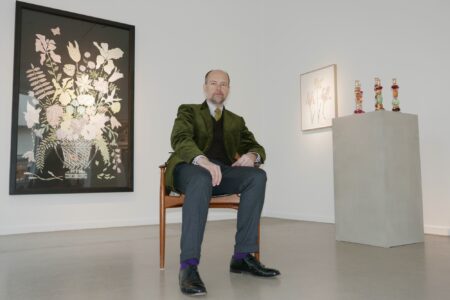
Carling Dalenson Gallery recent presented an exhibition of watercolour collages and sculptural candleholders by Swedish artist Lars Nilsson in their Stockholm gallery. The exhibition was on view between November 19-December 17, 2025.