

Collecting and Legacy: Staffan Ahrenberg in Conversation with Simon de Pury
For our 2026 print issue: TLmag41: The Art of Collecting, Simon de Pury interviewed Steffan Ahrenberg, owner and publisher of Cahiers d’Art, the iconic publishing house and gallery that celebrates 100 years in 2026. As part of their 100th anniversary, there will be a host of exhibitions and events in various institutions including the Peggy Guggenheim Museum in Venice and MoMA, NY.
Simon de Pury: Staffan, it always fills me with joy whenever I see you, as we have known each other for many years and it brings me back to my very first days in the art world. When I was a little greenhorn at Sotheby’s, Peter Wilson — then chairman and a brilliant visionary — came to Geneva and asked me to be his driver so that we could visit a very, very important collector Theodor Ahrenberg. During the drive from Geneva airport to Chexbres, where your father was living at the time, he explained to me that your father was a key figure: a passionate collector. He emphasized how important it was that we made the best possible impression. Perhaps you can tell me what it was like to grow up as the son of someone who devoted his passion not only to art, but to living art.
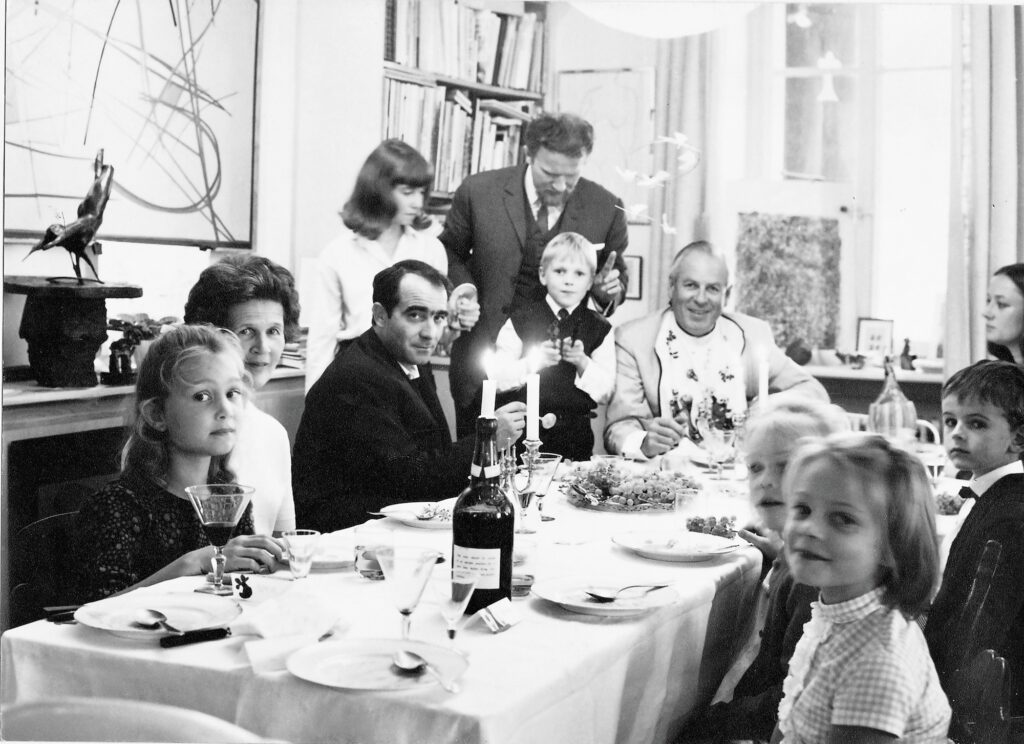
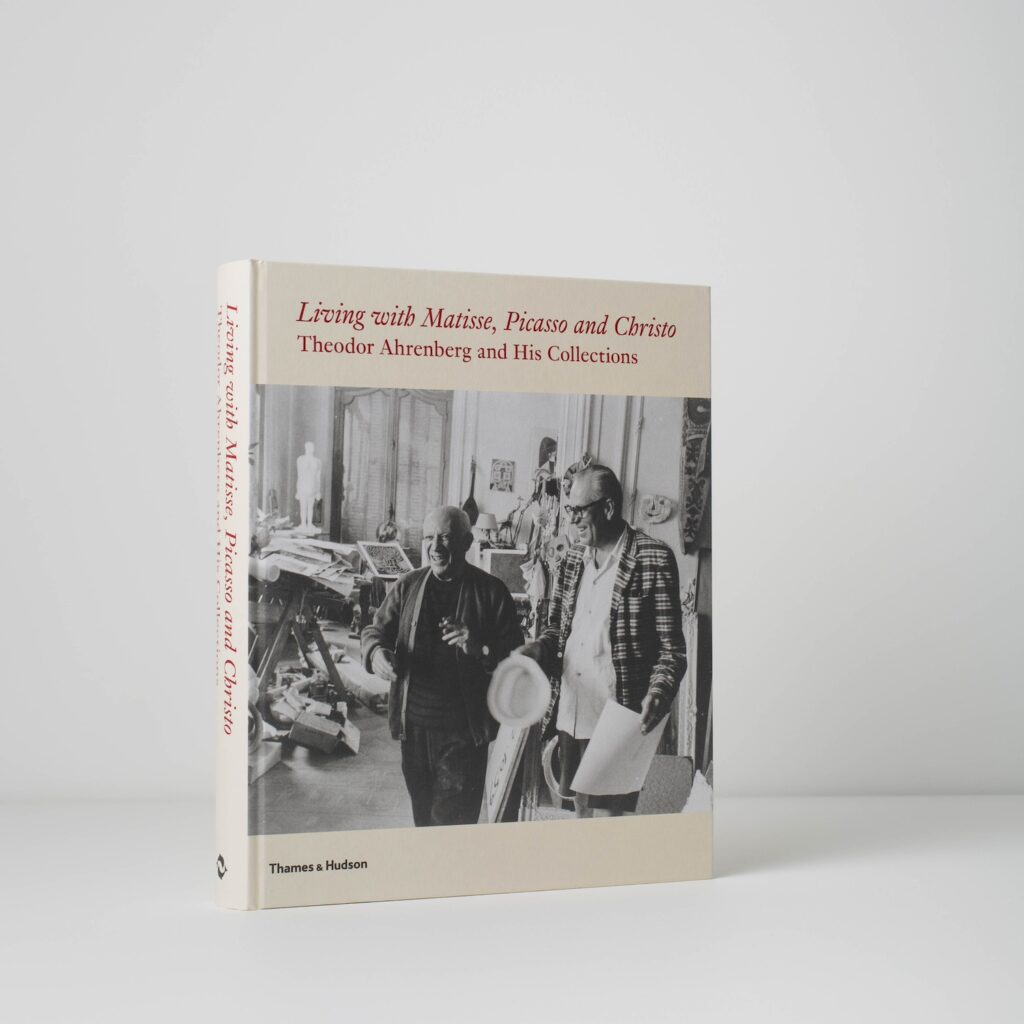
Staffan Ahrenberg: I will — but first, a small anecdote. My father never did any business with Christie’s. It was only Sotheby’s and Peter Wilson. For his entire life, that was the only option that mattered to him. There was a very strong bond between these two men. Growing up in that environment was very special. I was truly inside an “art kitchen,” in a way. From the age of five or six — by which time we had already moved from Sweden to Switzerland — my father established an artist residency on our property. He invited artists to live and work there, which was what made him happy at that time. Over fifteen years, more than 120 artists stayed there, whether for a day, a week, or several months. There was always an artist on the property, along with visiting artists, museum directors, curators, auctioneers — all kinds of people from the art world. My mother used to call it le buffet de la gare, because we were never fewer than ten people at lunch.
The house was full of art, and the art was constantly changing. New works were created, others were acquired, things came and went. As a very young boy, my job was to move and hang artworks. I became an art installer at an early age — without white gloves, I should add. It was incredibly exciting. It felt like a creative research laboratory, and I was right in the middle of it. The exchanges between all these artists and creatives clearly shaped my childhood and influenced what I later became. Books also played a huge role. I loved them. From around the age of fifteen, I began opening those artbooks, reading, and studying. I never formally studied art — everything I learned came from what I absorbed at home. It was a profoundly enriching experience, and I think it shaped my life forever.
S.D.P.: What did you do academically and after school?
S.A.: I studied at HEC Lausanne and then at the Stockholm School of Economics. After that, I decided I wanted to step completely away from my parents and their world. I had the chance to meet an extraordinary film producer of Russian origin, based in Paris and London: Alexander Salkind. He became one of the biggest producers in the world after acquiring the rights to Superman and producing Superman I, II, and III. I got a job with him when I was twenty-three. It was the only job I ever had.
I worked for him for three years. That was my apprenticeship in life. If you were a banker, you’d be a slave at Goldman Sachs — I was a slave to Mr. Salkind for three years. It was a fascinating experience, and it later led me to Hollywood and to producing my own films.
S.D.P.: So cinema was your first calling?
S.A.: Yes. What interested me was the business model. In art, once you sell a work, it’s gone. In cinema, you license films. You retain ownership and license the rights, generating attention and revenue over time. That discovery was decisive for me.
S.D.P.: I remember attending the Paris premiere of Summerlove a Polish Western. Claude Berri was there, along with many people from the film world. I was fascinated by the film, especially knowing it was directed by Piotr Uklanski, who is also a major contemporary artist.
S.A.: Yes — it wasn’t a spaghetti western, but a vodka western. Everyone was drunk in the movie. I produced two films directed by artists. The first was Johnny Mnemonic with Keanu Reeves, directed by Robert Longo and written by the renowned author William Gibson, released in 1994. We did a premiere in Paris and did an exhibition with Thaddaeus Ropac. I asked Robert to create a print portfolio from the film, and he printed twenty-four video stills — one second of film — which became a remarkable edition. (there are 24 frames /second) We titled it Mnemonic Pictures.
Among the other films were The Quiet American, starring Michael Caine which I co-produced with Sidney Pollack, for which Michael Caine was nominated for an Academy Award, and Total Eclipse, written by Christopher Hampton and directed by Agnieszka Holland, starring twenty-year-old Leonardo DiCaprio playing Arthur Rimbaud. After Polish Western, I stopped producing films.S.D.P.: Johnny Mnemonic is a film I would love to see.
S.A.: You should. It’s very special. We recently colourised it in black and white and re-premiered it at MoMA in NY.
Cahiers d’Art
S.D.P.: Let’s move to Cahiers d’Art — one of the most historically charged art publications in existence. How did you come to acquire it?
S.A.: It happened entirely by accident. One day in 2010, walking on the Rue du Dragon in Paris, I noticed the physical space of Cahiers d’Art. These were the books I had studied when I was fifteen — we had them at home. I was surprised that there was still a gallery space and a publishing house that no longer published. I rang the bell to ask why they were still operating. When the door opened, I asked who owned it. The man said his brother. I then asked if his brother would sell it. Two days later, I met him, and he said, “You’ve come at exactly the right time. I was thinking of selling.” That’s how it happened.
S.D.P.: What were your first steps once you became the owner?
S.D.P.: The first step was to relaunch the Revue. I created an editorial board together with Sam Keller, Hans Ulrich Obrist, and Isabela Mora, together we decided that Ellsworth Kelly would be the right artist to relaunch it. He had lived in Paris between 1948 and 1954 — a formative period for his work. Sam called him, and his answer was simply, “Oh yes.” That response is typical. Cahiers d’Art carries such weight that artists immediately want to be associated with it. It’s a wonderful platform.
Catalogue Raisonnés
S.D.P.: At what point did you decide to republish the Zervos catalogue raisonné?
S.A.: That was step two. I met Claude Picasso in New York and asked for his agreement. He said, “It’s not that I authorize you — you must do it.” We translated it into English and published it in 2014, in partnership with Sotheby’s as distributor. From there, I understood how essential catalogue raisonnés are, even if they are rather unprofitable and incredibly demanding in terms of work, time and commitment. I asked Ellsworth Kelly whether he had a publisher. He didn’t. I suggested Cahiers d’Art. We published volume 1 and 2, Vol 3 will come out fall 2026, in total it will be 5 volumes. As a great reward, for Volume 1, we won the Prix Pierre Daix, created by Francois Pinault.
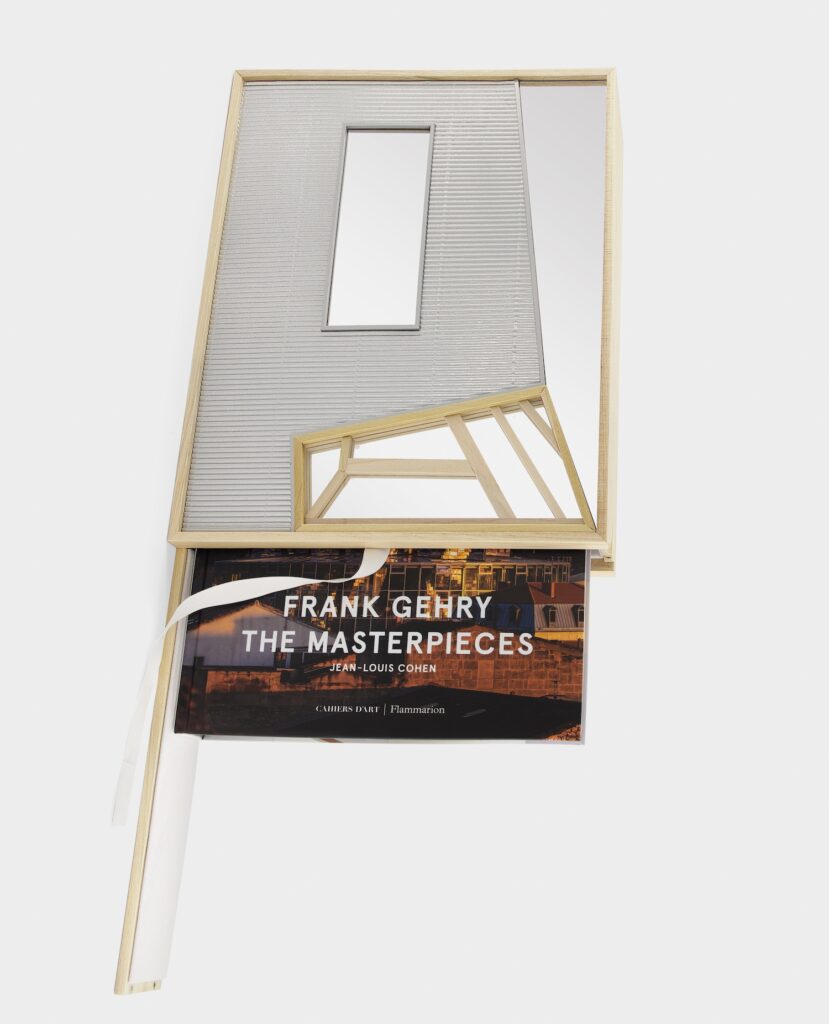
Later, I asked Frank Gehry if he would like to do his. He said yes, and that project will ultimately consist of eight volumes. Volume I is published; Volumes II and III will appear in 2026 and 2027. After Frank’s passing, the work continues through his archives at the Getty Research Institute and in collaboration with Gehry Partners, with an architecture professor as editor.
Frank Gehry: The Boxes
S.D.P.: You also created artworks with Frank Gehry to accompany the catalogue raisonné.
S.A.: Yes, working together, we became very close. When you undertake a catalogue raisonné, you are essentially married for life and beyond. I asked him if he could make some small boxes as a playful edition. Months later, at his studio in Los Angeles, he showed me twelve extraordinary handmade boxes — book slipcases recreating facets of his first house in Santa Monica, built in 1978. The that house made him world famous.
During the 2025 fires, Frank and his wife moved back into the original house. The house now lives on through these boxes, which we are making available to the public. We presented the edition for the first time at Art Monte-Carlo in 2025. The first buyers were Bernard and Almine Picasso, as well as Maja Hoffmann. I donated an edition to the Fondation Beyeler yearly gala for their charity auction (which you conducted) and it sold for three times the initial price, the buyer was a museum in the Netherlands.
Collecting and Legacy
S.D.P.: Your father clearly suffered from the incurable disease of collecting. How has that affected you?
S.A.: It’s hereditary — and contagious. My father collected almost exclusively artists he met personally. I collect actively, though I don’t need to meet the artist to do so.
Collectors are not only passionnés, they are passionnants. Being with people who share that passion is one of life’s great pleasures.
Le Corbusier: An Unbuilt Dream
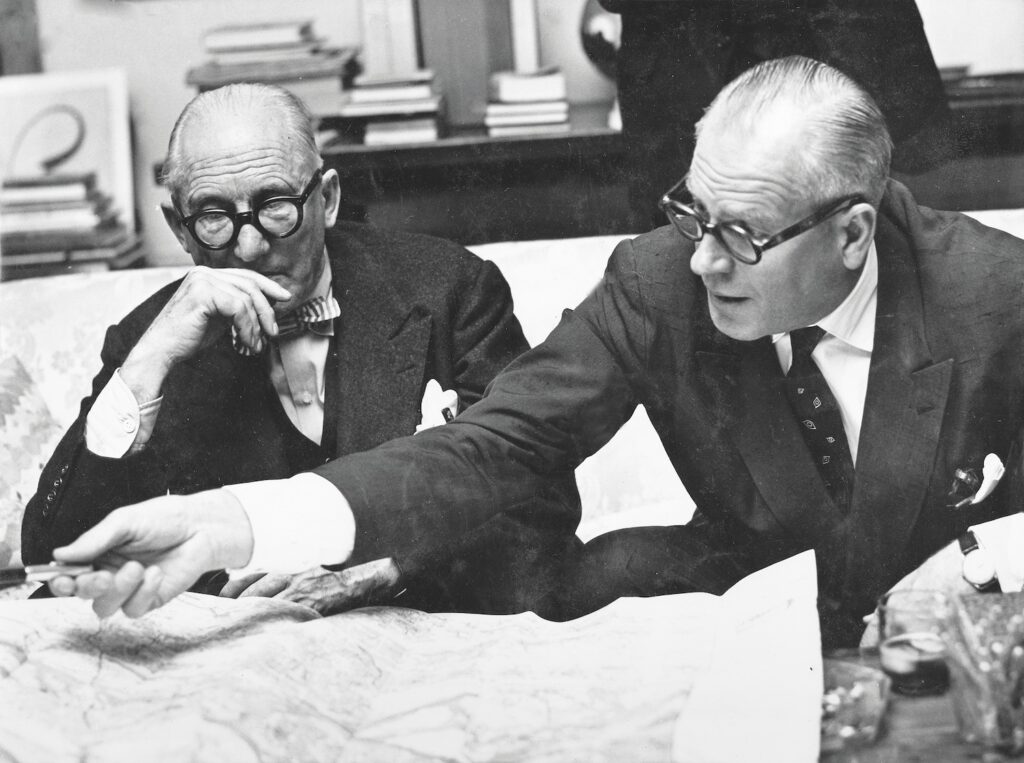
S.A.: Before we finish, I should mention one more thing. My father commissioned Le Corbusier to design the Ahrenberg Museum for Stockholm in 1961 — one of his last projects. The plans were completed, the site chosen, but it was never built for political reasons. I own and have the original plans. One of my dreams is to realize that building somewhere — in Sweden, Switzerland, or elsewhere — working with a living architect to bring it into the present.
S.D.P.: That is the most exciting thing I’ve heard. I had no idea. I would love to help make that happen. It would be extraordinary to realize an unbuilt Le Corbusier project.
S.A.: The Heidi Weber Pavilion in Zurich proves it can be done. It remains utterly contemporary. That gives me confidence.
S.D.P.: Let’s work toward it. Thank you, Staffan.
S.A.: Thank you, Simon.

Articles you also might like
Our 2026 print edition: TLmag41: The Art of Collecting, guest edited by Simon de Pury, is now available on newsstands and online. Have a look!
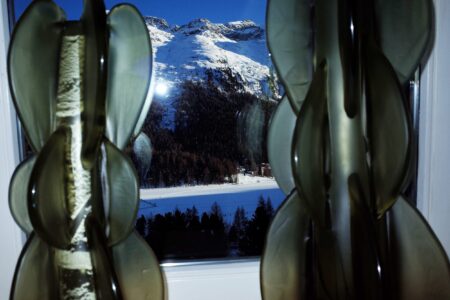
From February 12-15, NOMAD design fair returns to St. Moritz for its ninth edition, transforming the recently renovated Villa Beaulieu—formerly Klinik Gut—into an intimate showcase for contemporary art, collectible design, and jewellery.
TLmag spoke with Gunia Nowik about the gallery’s 3rd anniversary and its recent move to a former palace, as well as the upcoming fall art season in Warsaw, including the 14th edition of the Warsaw Gallery Weekend.

For our 2023 issue: TLmag39: The Culture of the Object, legendary auctioneer and art world figure, Simon de Pury, writes an engaging essay about the mysterious and intuitive appeal of objects, which doesn’t necessarily stem from their value but from something deeper.