


Ornamental by Lameice Abu Aker
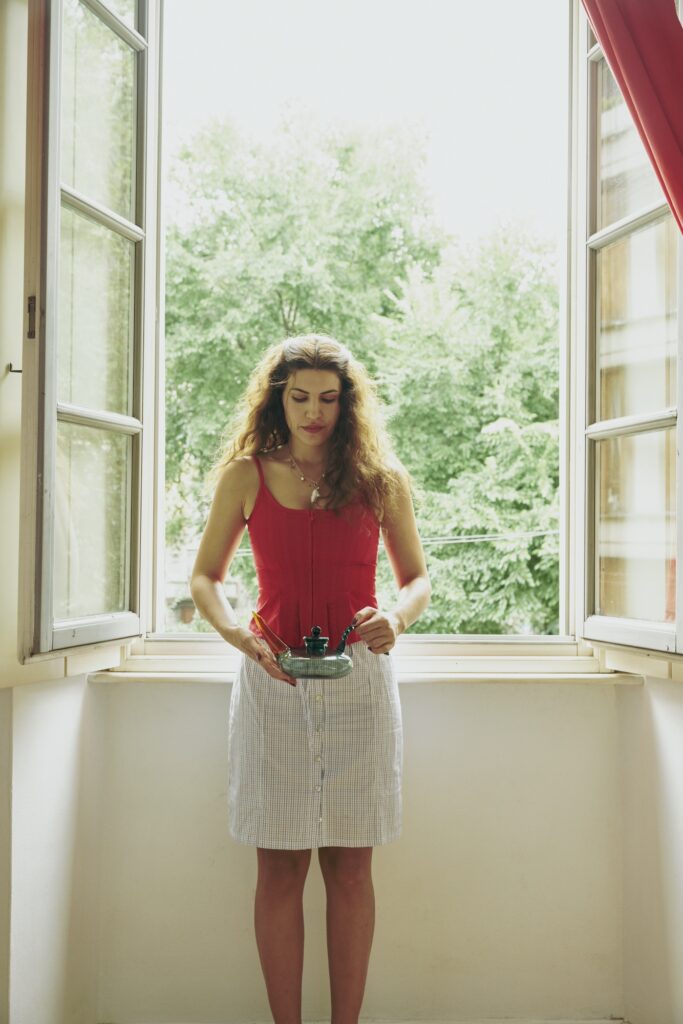
Lameice Abu Aker is a designer living between Jerusalem and Milan. She studied furniture design at the Politecnico in Milan, but a chance encounter with a generations-old family glass workshop in the village of Jaba, Palestine, inspired her to create Ornamental by Lameice, a wildly creative collection of glassware and tableware. TLmag spoke with Abu Aker about her creative practice, her fascination with the alchemy of glass and the history of glass-making in Palestine.
TLmag: Talk a bit about your background. When did your interest in pursuing design and craft develop?
Lameice Abu Aker: It began with looking at butterfly wings under a microscope. I was a child utterly transfixed by these intricate architectures, where chaos revealed itself as exquisite order, and I became interested in what made objects. But truly, Jerusalem made me a designer before I knew what design was. That city teaches you to inhabit contradiction with grace, beauty, and tension breathing in the same space. The scent of kaek bread at dawn threading through incense from houses of worship, limestone worn smooth by centuries of prayer and protest, the particular cadence of church bells weaving into the call to prayer. I became someone who searches for emotion within these layered sensorial experiences, who sees patterns where others might see only noise.
I pursued formal training later along with a Master’s in Furniture Design at the Politecnico di Milano, but my true education was at home. My family practiced creativity quietly: my mother taught art, and our home pulsed with rituals of gardening, storytelling, the careful arrangement of everyday objects. They weren’t “designers” in any professional sense, yet they possessed this instinct for making the mundane sacred, and they always opened room for curiosity. This attention to sensation over mere aesthetics shaped me more profoundly than any curriculum. I learned that design isn’t simply about objects it’s about orchestrating moments, experiences, the invisible connections between people and the things that surround them. About creating objects that can hold memory, feeling, and warmth far beyond their material form.
TLmag: When did you launch your brand Ornamental by Lameice? What was the inspiration behind it?
L.A.A.: In 2021. I was deep into research on narrative inheritance in Palestinian villages when I wandered into the Twam family workshop in Jaba’ and everything crystallized.
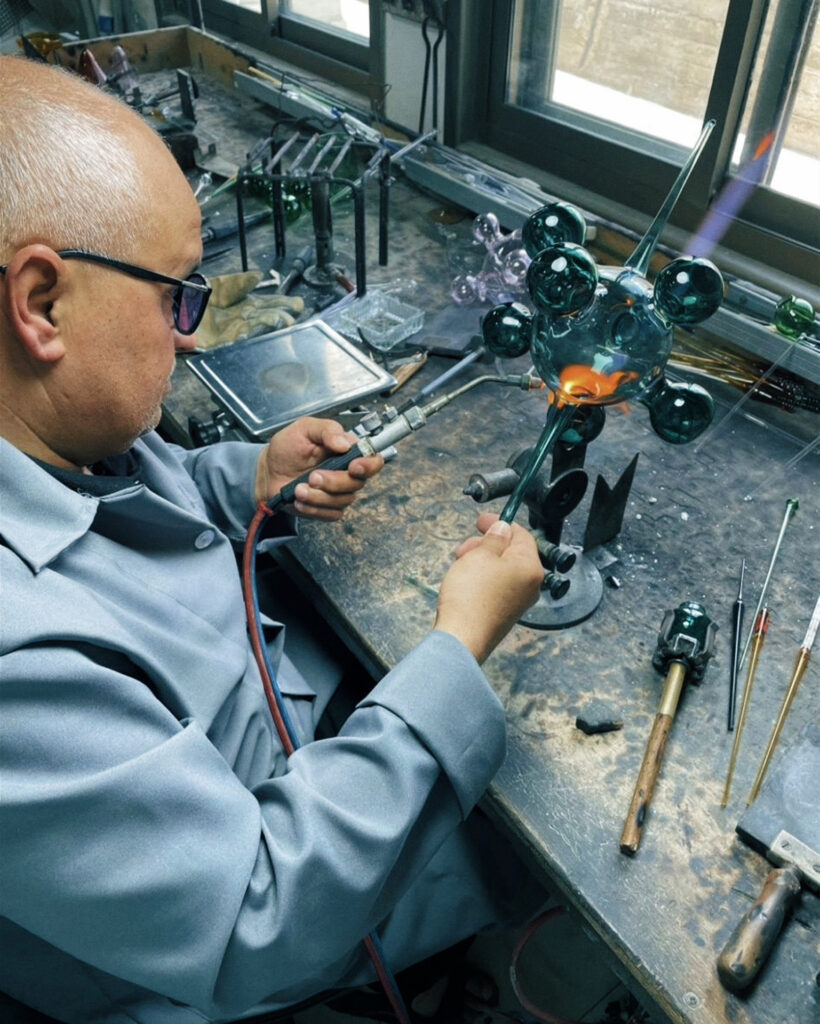
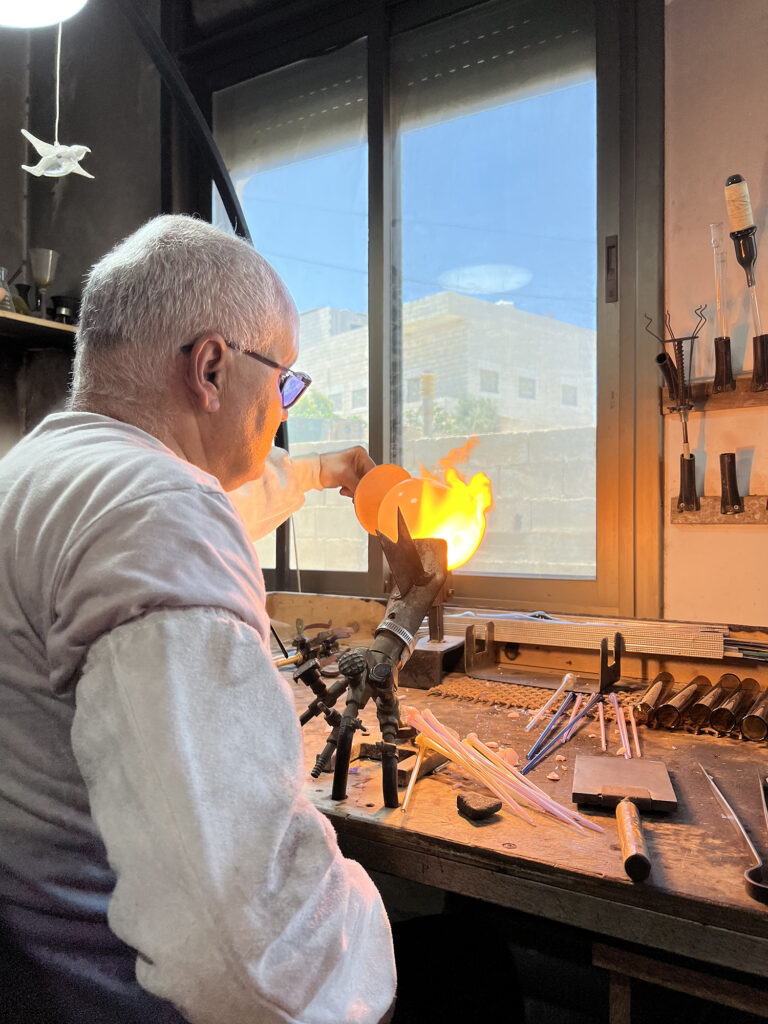
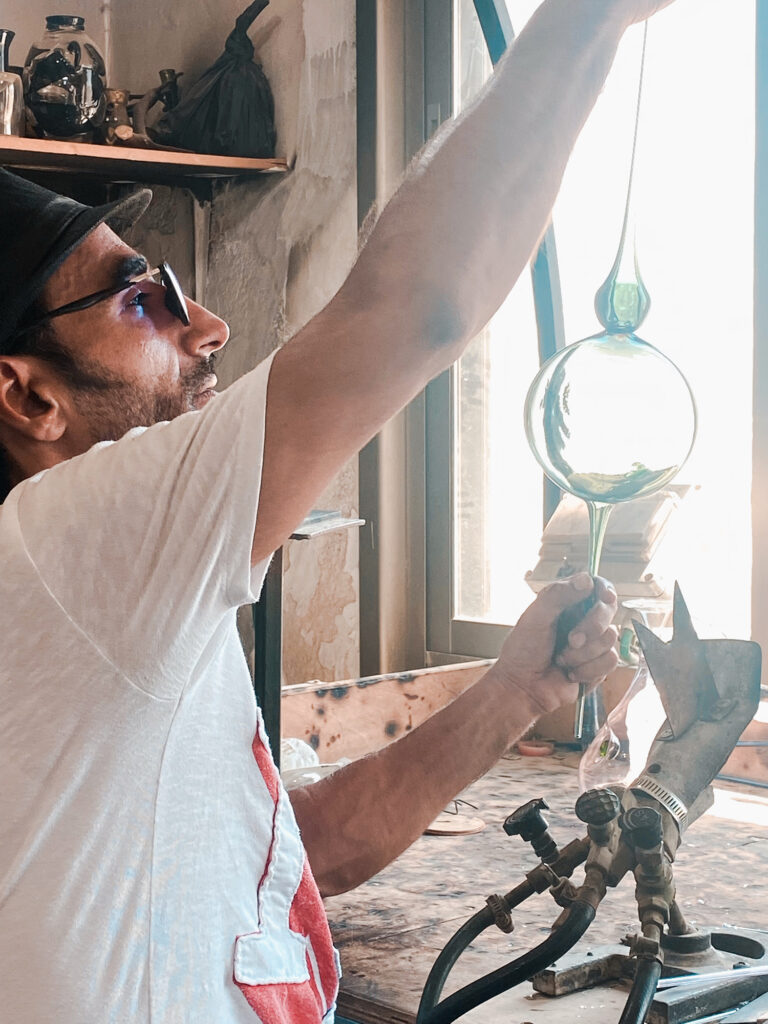
Picture this: a modest two-room space they call “the factory,” but what unfolds inside is pure alchemy. Breath becoming form, a dance of liquid light. They told me “glass speaks.” Everything we made together is hand-blown without moulds; we let fire, breath, gravity, and beautiful imperfection guide each form. I watched this ancient choreography between human lungs and molten glass, and something fundamental shifted into place.
Glass has been stitched into Palestinian DNA for four millennia, yet like so many of our crafts, it teeters on the edge of extinction. Standing there, observing the Twams work with such virtuosity in their improvised atelier, I realized I wasn’t merely witnessing preservation, this was defiance made manifest. Here were artisans creating beauty under impossible circumstances, keeping something precious alive through sheer obstinacy and skill. That’s when Ornamental truly emerged, not from curiosity alone, but from recognition. I saw an opportunity to channel my contemporary sensibilities through this ancient medium, to demonstrate that Palestinian creativity doesn’t merely survive, it evolves and plays.
We spent months in dialogue adding unexpected chromas, testing the material’s tolerance for audacity. The Twams considered some of my propositions completely mad, but that was precisely the point; to make work that is joyful, deliberately wonky, brimming with caprice. Each piece declaring: ‘Observe what we can conjure. See how we play with fire and make it laugh.’
TLmag: Why do you think you connected so deeply with the process of glass blowing? Did you have experience with the medium prior to walking into the workshop?
L.A.A.: I entered that Twam workshop with no intention of becoming a glass designer. But observing molten glass move breath, fire, and gravity conspiring to conjure form I recognized something of myself in its behaviour. We’re both transparent, yet we distort what others perceive through us. We’re both adaptive, yielding under pressure, yet ultimately faithful to our essential nature.
Glass possesses this exquisite stubbornness. You can guide it, seduce it, but it always claims the final word. It responds to your intentions but never completely capitulates. That tension felt familiar, like negotiating with any material that has its own distinct personality and agenda. What sealed my commitment was encountering the Twams themselves. This family, operating from a two-room space they call “the factory,” where everyone participates –husbands, wives, even children. They’ve constructed their own machinery from necessity, improvising with whatever materials they can procure. That ingenuity, that generous spirit, convinced me that we could create something exceptional together.
Glass became my medium because it mirrors my preferred method of working: you can harbour intentions, but the material, the fire, the artisan’s breath all contribute their own ideas. Every piece emerges as revelation when the kiln opens. That unpredictability, that collaboration between vision and serendipity – it’s precisely the kind of creative dialogue I was seeking.
TLmag: Would you talk about your process? Do you sketch ideas and work with the artisans to create the final form? How long does it typically take to make a piece?
L.A.A.: I begin with sketches, occasionally 3D models, but the moment I enter the workshop with the Twams, it transforms into collaborative problem-solving, sometimes a quite passionate problem-solving process. They’ll examine my proposals and inform me, with admirable directness, when something is impossible. The intersecting circles in the Eye Candy series, they thought it overly ambitious because the circles require temperatures far exceeding what the vessel can tolerate. They were correct. We failed repeatedly before discovering a solution.
There were moments when I questioned whether I truly comprehended the material’s language. But then one of the craftsmen would wake at three in the morning with an epiphany, scribble it down, and we’d attempt it the following day. That persistence, that willingness to remain curious despite failure is what ultimately succeeded.
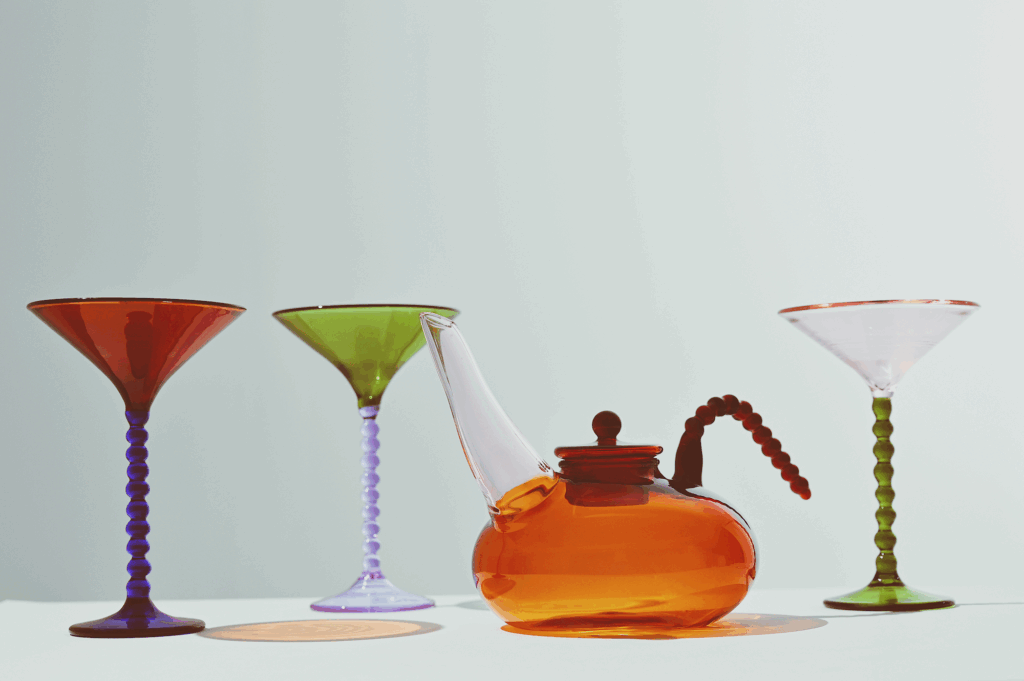
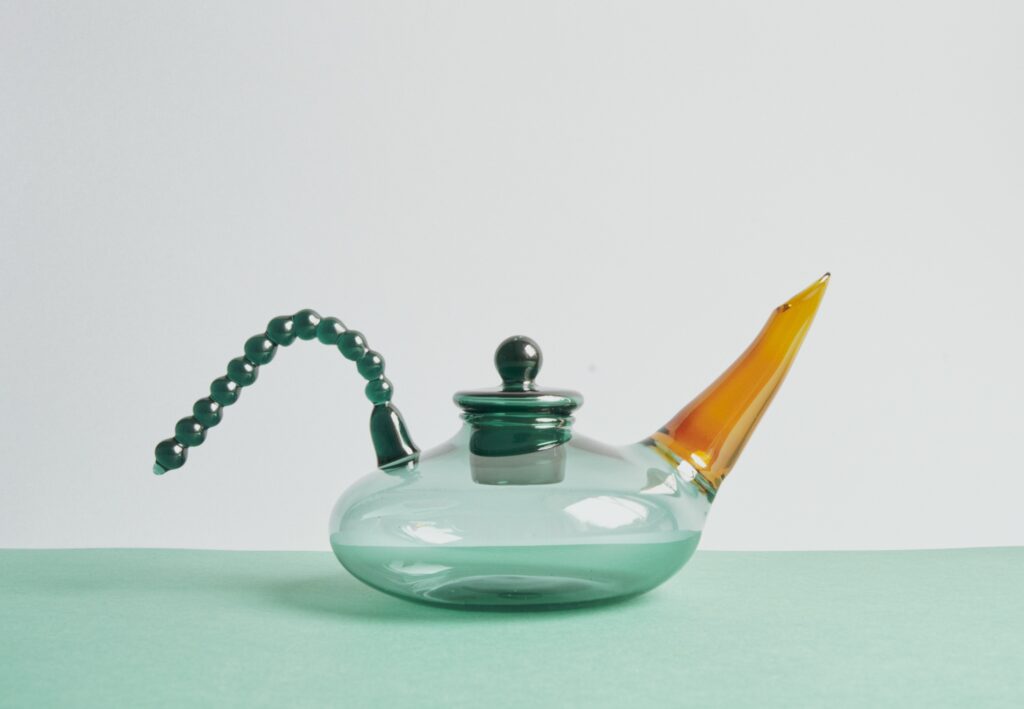
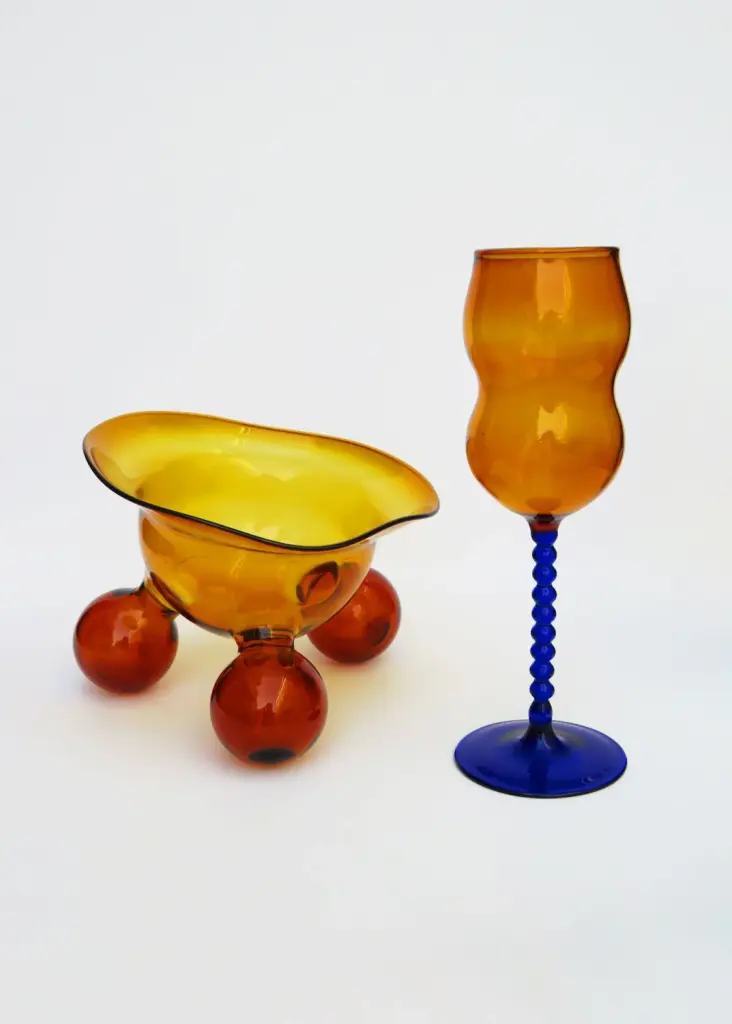
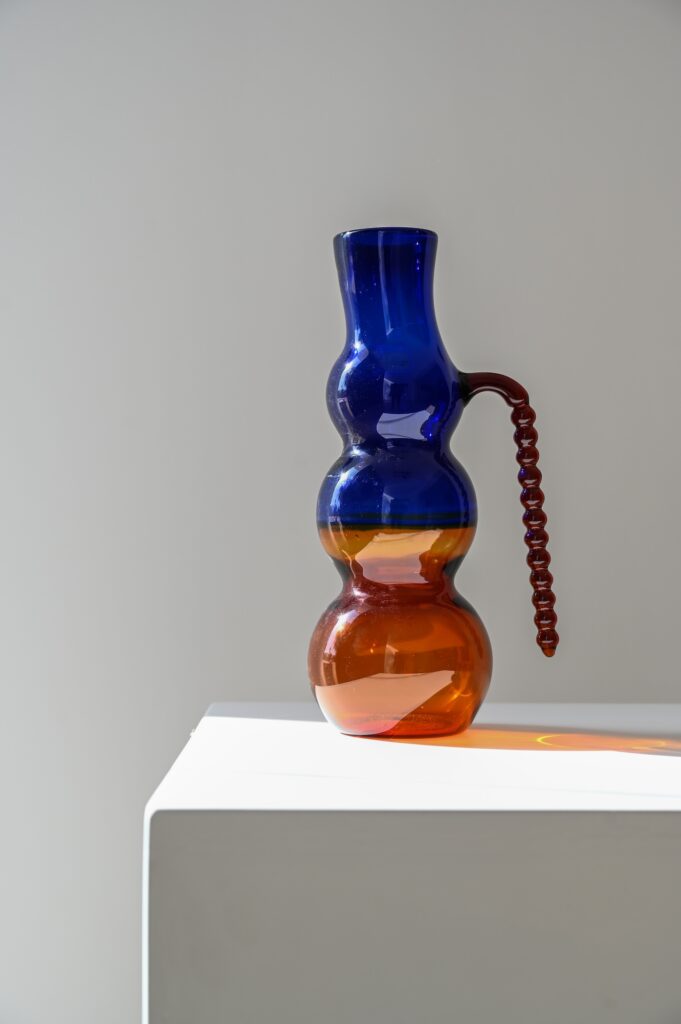
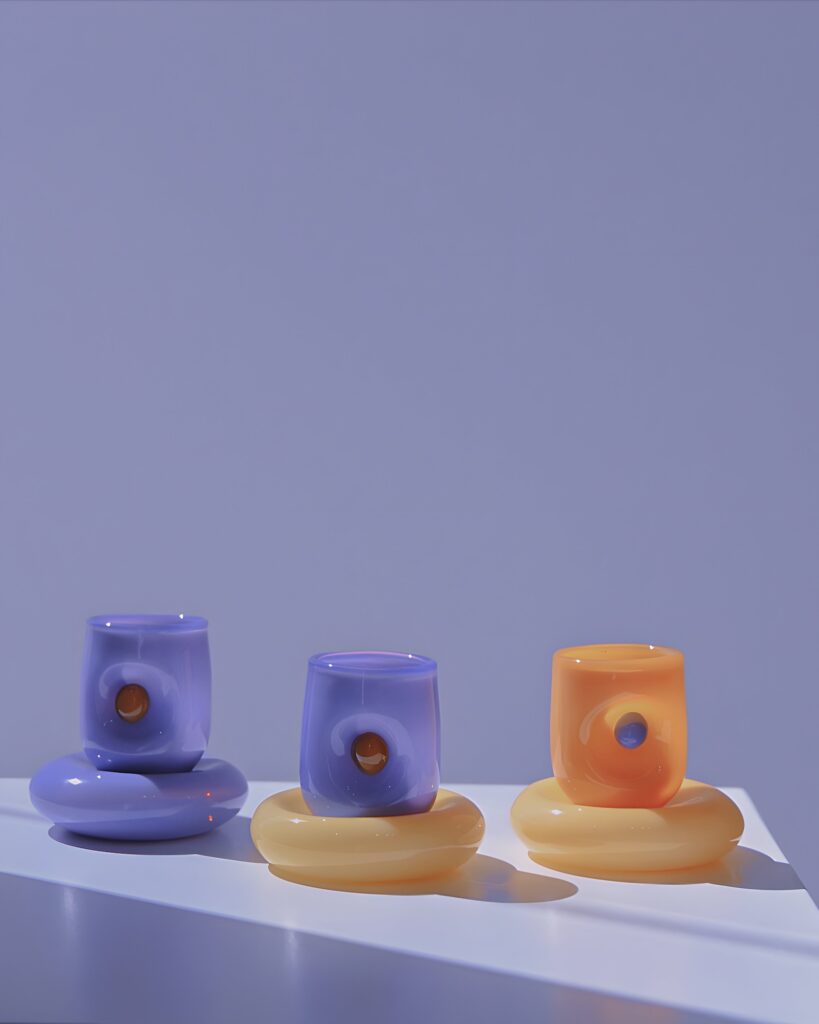
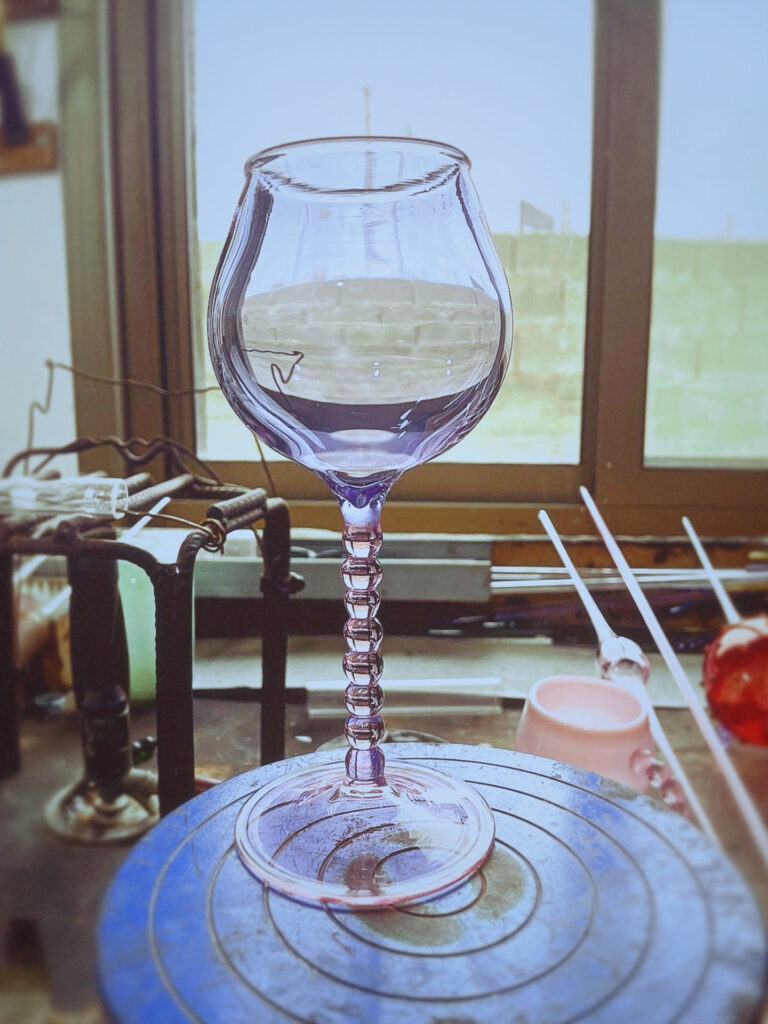
Everything is entirely hand-blown without moulds. Duration varies dramatically. The Chemistry Vase demands approximately seven hours of uninterrupted focus. The Dreamlike cup piece, for example, is intentionally simpler partly because I wanted to balance the artisans’ physical demands with other, more challenging pieces. We also discovered that glass beading on handles and stems creates this beautiful ‘adorned’ effect without technical complexity.
What captivates me is that the material always has the ultimate say. We can plan and sketch endlessly, but when you open that kiln, the piece has become what it chose to be through this conversation between my design, their craft, and glass’s own wilful nature. These objects represent memory, feeling, and warmth that extends far beyond aesthetics. They’re intended to participate in people’s daily lives, to become integral to how they drink their morning coffee or arrange flowers. That’s where the piece’s true life begins, really.
TLmag: I love the fluid mix between the contemporary and ancient in your work. Talk about your approach to designing the three collections and this play between past and present.
L.A.A.: The antiquity isn’t something I append, it’s already embedded in the material itself. Glassblowing has been inscribed in this land’s DNA for four millennia. I’m working with an inheritance deeper than any design trend. But here’s where it becomes intriguing: I’m not attempting to create replicas of historical vessels. Most glass workshops focus on traditional forms, which is beautiful, but I wanted to pose a question: What if this ancient craft could be playful? What if it could be deliberately wonky, whimsical, yet still carry all that historical weight?
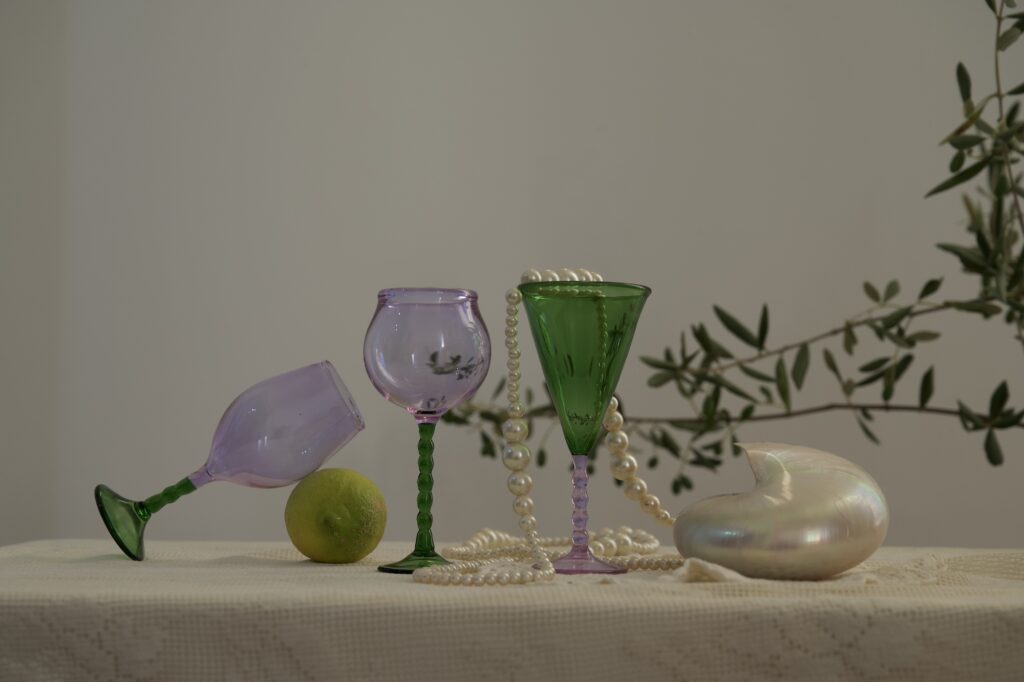
This is my quiet rebellion against the expectation that traditional crafts must be solemn, reverential, untouchable. Why can’t something be simultaneously ancient and mischievous? Each collection carries its own emotional narrative. Teta Edition emerges from jasmine afternoons and memory inspired by my grandmother’s world. Her glass vitrine, the particular sound of clinking tea glasses during family gatherings, those tender domestic moments that shape us. Dreamlike flows like silent dreams held in glass pastel, feminine forms that feel almost liquid, as though they’re still moving even when still. There’s something about the way light passes through these pieces that makes them feel alive, breathing but till light. Eye Candy is pure provocation those playful, intersecting circular forms designed to spark smiles, questions, conversation at first glance. They’re deliberately bold, almost cheeky in their refusal to behave properly.But always, there’s this conversation occurring between what was and what might be. I’m not preserving tradition as though it were trapped in a museum vitrine. I’m allowing it to breathe, to evolve, to remain vital in today’s world.
TLmag: Would you talk a bit about the current logistics of creating a glassware collection in Palestine? Have you been able to continue production?
L.A.A.: Production in Palestine is never straightforward, but that’s precisely what makes each piece precious. The Twam workshop is among the last of its kind, working with materials that sometimes arrive unpredictably, electricity that can vanish mid-creation, equipment they’ve had to construct and reconstruct themselves. Every piece that emerges from that furnace represents evidence of persistence, of people who refuse to allow this craft to disappear. We operate within constraints that would paralyze most studios, but rather than limiting us, they’ve taught us resourcefulness, compelled us to discover solutions we never would have encountered otherwise. The Twams have become masters of improvisation not by choice, but by necessity. And honestly, that ingenuity feeds directly into the work itself.
I prefer not to centre this narrative on politics or hardship that’s not the story these pieces want to tell. They want to speak about beauty, about joy, about the human capacity to create something magnificent regardless of circumstances. When someone holds one of our glasses, I want them to sense that resilience not as something heavy, but as something that makes the object more alive, more precious, and play with it.
TLmag: What are some upcoming projects or exhibitions for the collection?
L.A.A.: The Teta Collection is traveling to Fame Collective in London this October, Feminine Literacy will be in Edinburgh in November. It’s been shortlisted for the Design Intelligence Award 2025. But my genuine ambition isn’t about exhibitions or accolades. It’s about integration. I want these pieces to dissolve into people’s spaces, to become a part of how they serve dinner to friends, arrange flowers on an ordinary Tuesday afternoon, drink over intimate conversations, and celebrations. That’s genuine success: when the work stops being ‘Palestinian glass’ or ‘design object’ and simply becomes the piece someone reaches for because it expresses something within you or connected to something larger than themselves.
I want to continue pushing what glass can become; not precious museum artefacts, but living objects that participate in life. Things that hold secrets, spark conversations, make the everyday slightly more beautiful. That’s the real work creating companions, not merely collections.

Articles you also might like
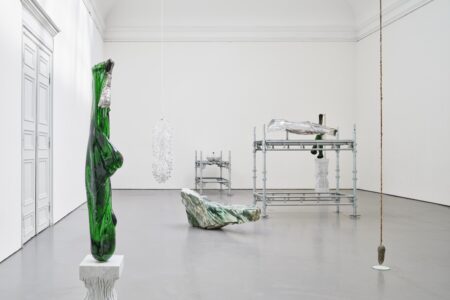
The Bittersweet is a solo show by Åsa Jungnelius at The Royal Academy of Fine Arts in Stockholm. The exhibition is on view between August 22-October 3, 2026.
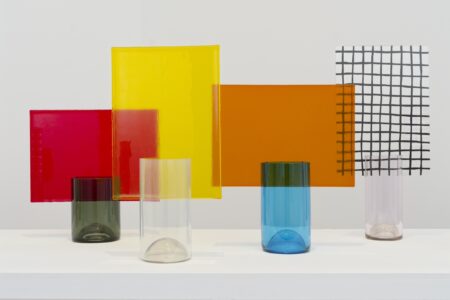
Running from November 8, 2025 to March 15, 2026, Glass: Transcending Matter. The Cirva Collections at the Musée d’Art Moderne et Contemporain de Saint-Étienne Métropole (MAMC+) offers an ambitious presentation of Cirva’s collections to date. The exhibition draws a rich dialogue between design, visual arts, and scientific inquiry through the singular lens of glass.
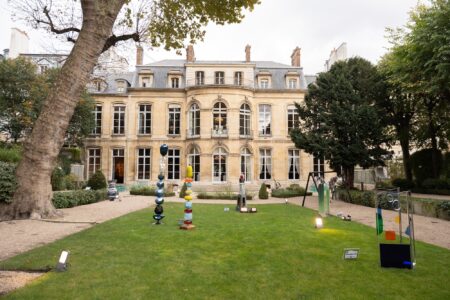
Featuring 23 French and international galleries, the inaugural Ceramic Art Fair takes places this week, between October 21-25, at the Maison de l’Amérique latine, including installations in the building’s elegant garden.
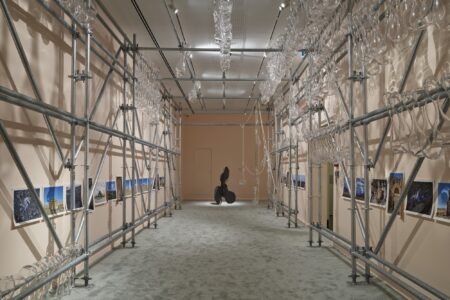
At Istanbul’s Pera Museum, Swedish artist Åsa Jungnelius presents A Verse Written with Earth, Fire, Water, and Air, an exhibition curated by Elif Kamişli. Known for her boundary-pushing glass works and feminist approach to craft, Jungnelius invites visitors to experience matter as both medium and message — where glass breathes, marble listens, and obsidian remembers.