

Homo Faber: An Island of Light
Between September 1- 30, Homo Faber: An Island of Light, presents its 4th edition at the Fondazione Giorgio Cini, featuring work by over 500 artists and a dynamic scenography by Es Devlin.
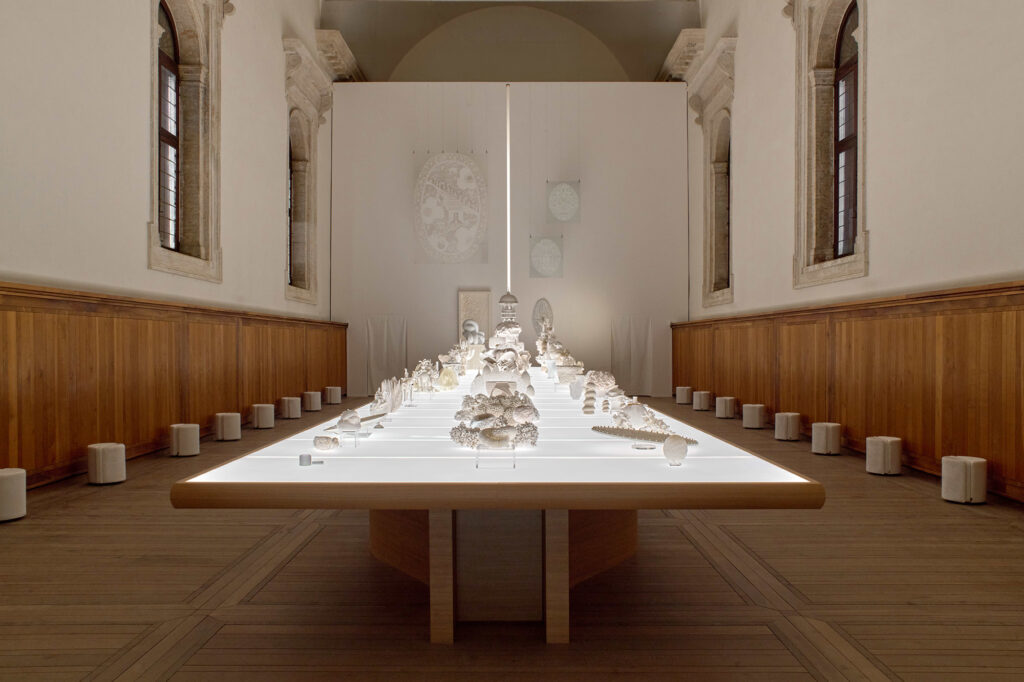
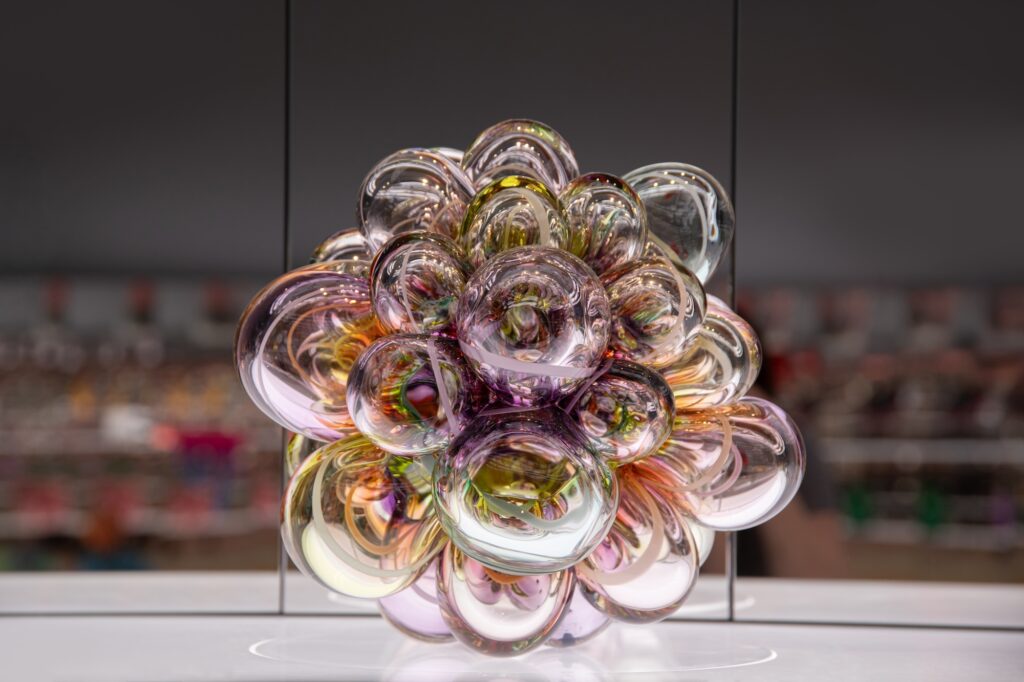
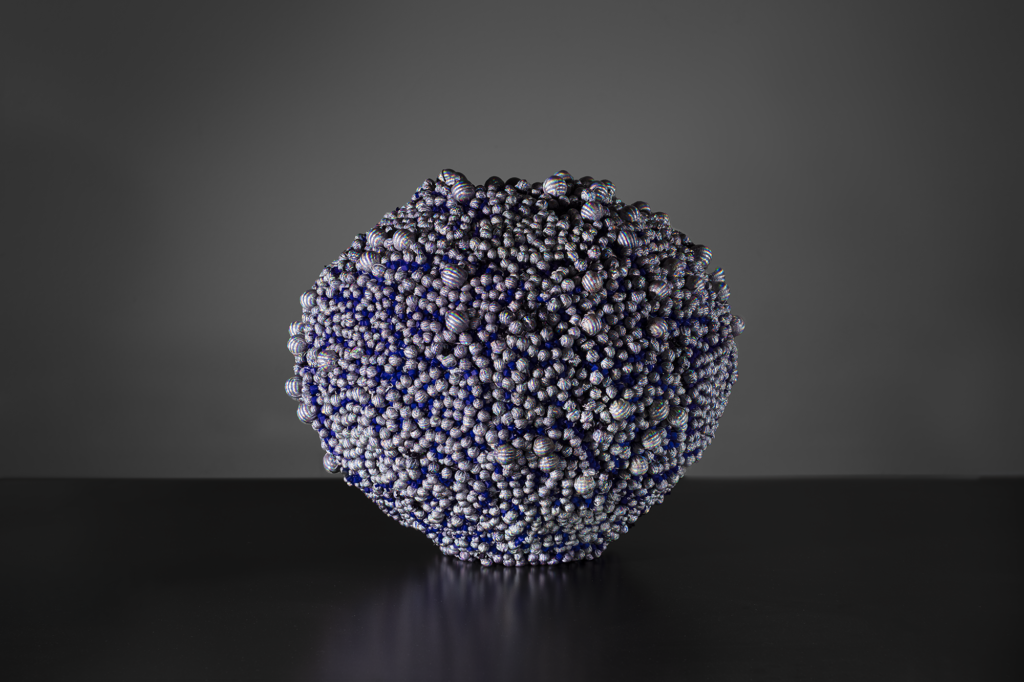
Venice is once again the destination for contemporary art and craft, with the opening of the Homo Faber Biennale. Between September 1-30, the Fondazione Giorgio Cini, on the island of San Giorgio Maggiore, is home to a celebration of craftsmanship, with over 700 works being showcased by 500 artists from 70 countries. Bringing it all together is the ambitious and engaging Artistic Direction by British artist Es Devlin that takes visitors on a sensorial encounter with contemporary craft through 15 immersive installations across the island.
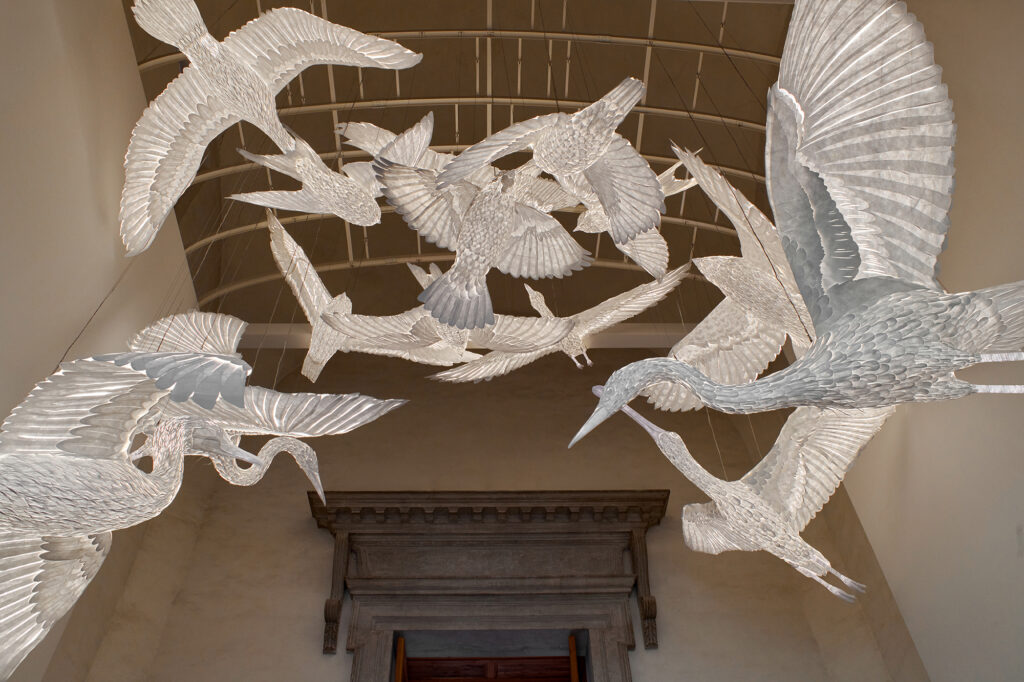
Homo Faber is curated by the Michelangelo Foundation for Creativity and Craftsmanship, and organized in partnership with the Fondazione Giorgio Cini and Fondazione Cologni dei Mestieri d’Arte. The 2026 edition is the foundation’s most expansive yet, from the range and quality of work through to the 15 individual installations. With titles such as “A Rainbow of Forms”, “A Full Moon Rising” and “An Infinite Birdsong,” Es Devlin takes us on journey that engages us with the artwork in unexpected ways.
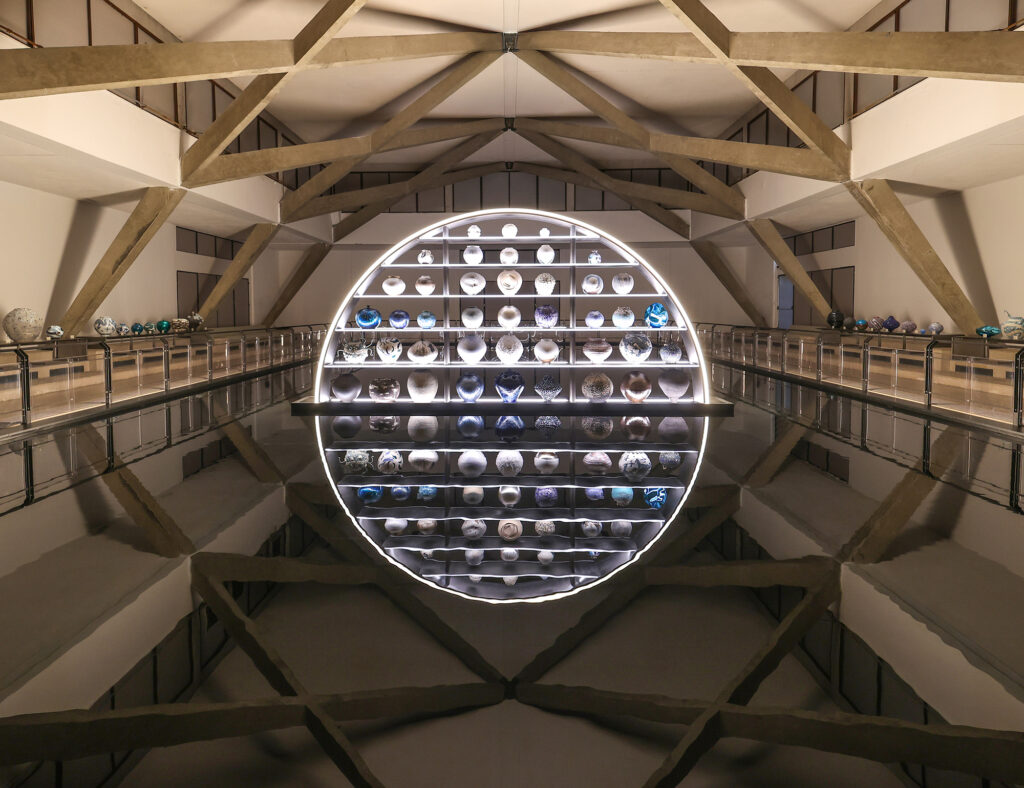
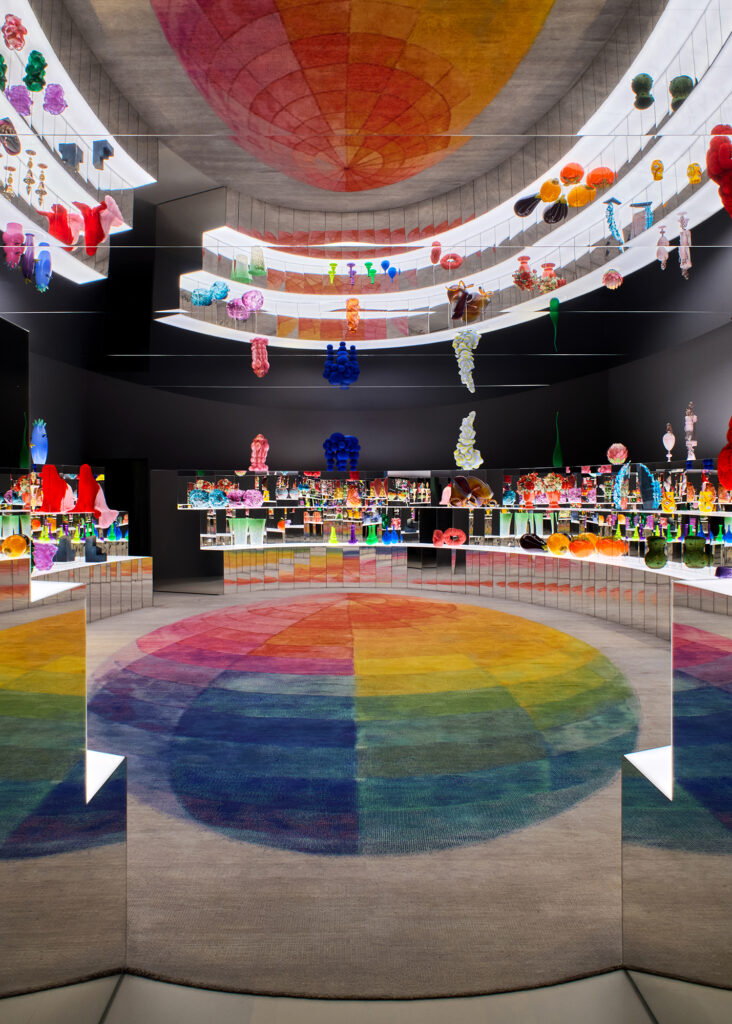
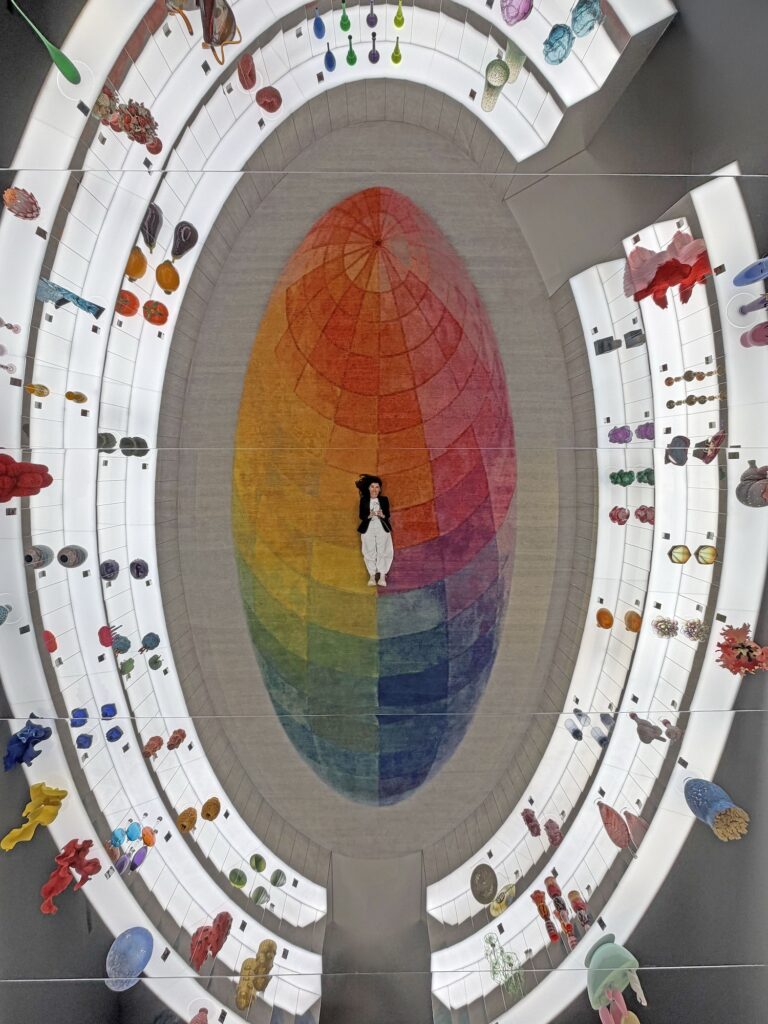
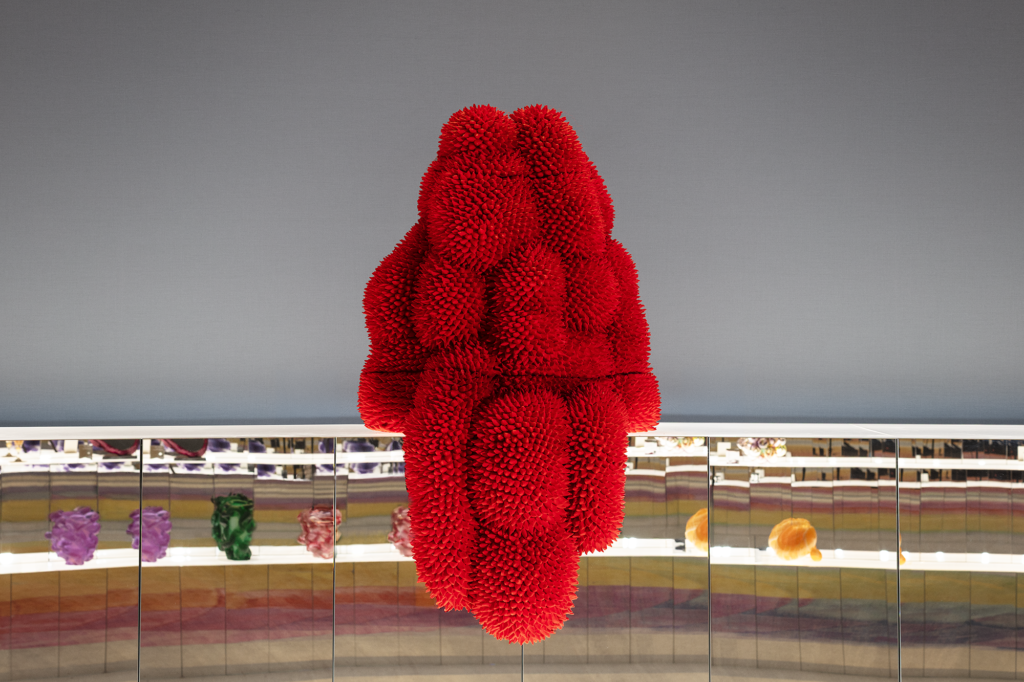
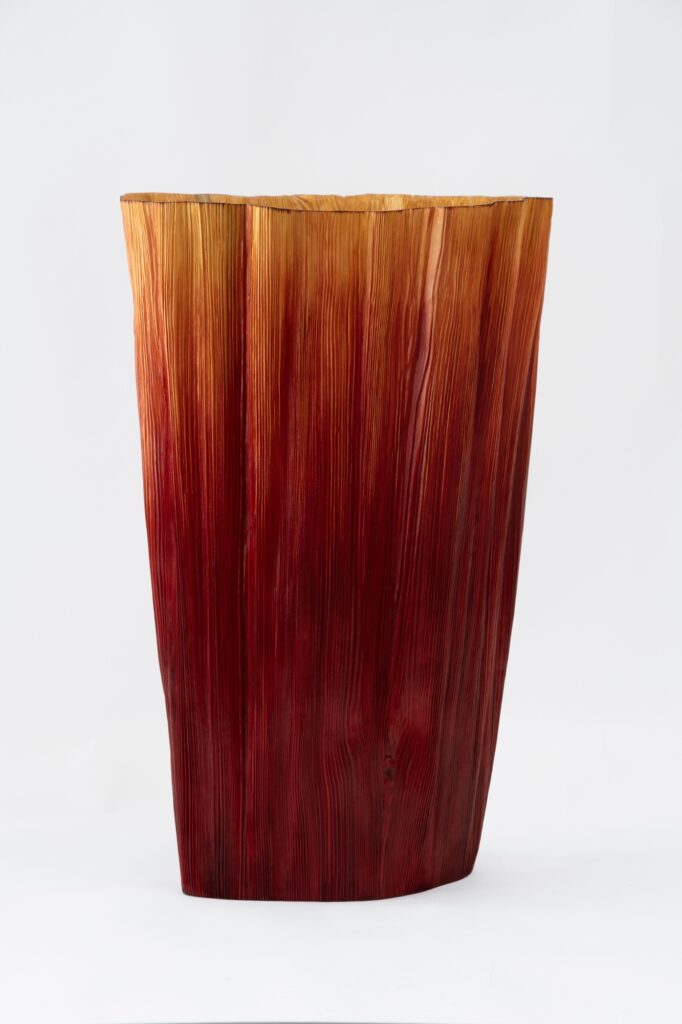
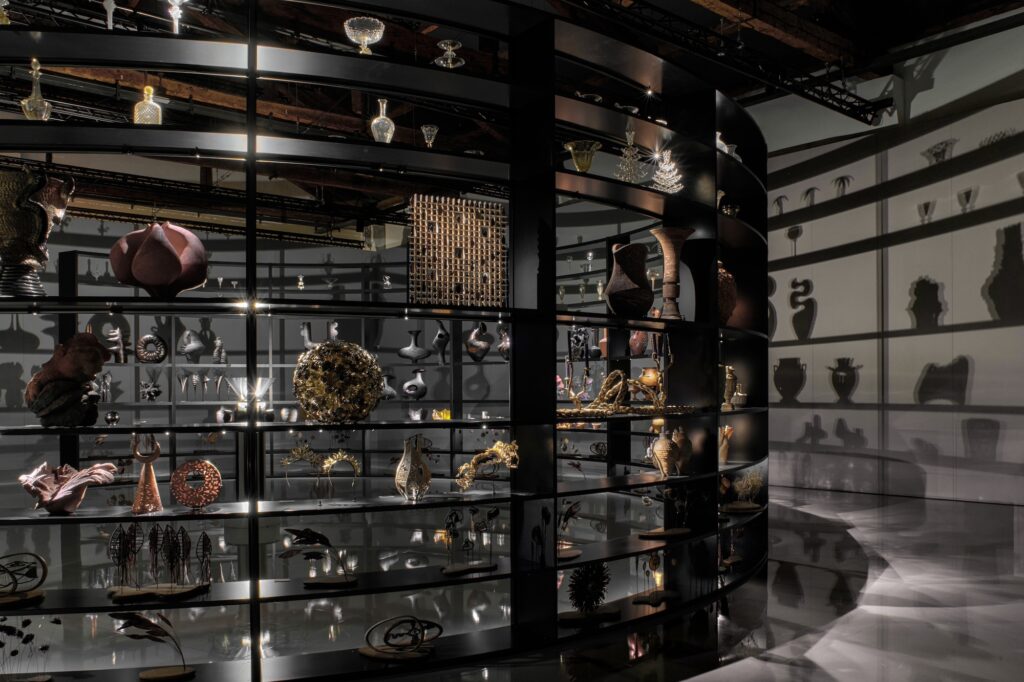
In “A Rainbow of Forms,” the space features a mirrored ceiling and three-tiered mirrored shelving, creating an infinity mirror effect, a spiral (rainbow) of beautiful pieces, in a range of bold colours, from bright red ceramics to purple glass. Included in this room is a “Pleats No. 19” vase by Didi Ng Wing Yin that features a red ombre-like colouring. On the floor is a large oval shaped rug designed by Es Devlin and inspired by Goethe’s theory of colour. The installation is not subtle, but it doesn’t take away from the artwork on view and this room feels welcoming and seems to encourage people to spend time. Other rooms feel tighter or condensed, not giving enough space to really take in the detail and handicraft that goes into each piece. While in some cases the installation itself becomes a work of art in its own right, such as the large rising circular moon jar cabinet that emerges out of a swimming pool, immersed in a soft blue light, it still delights and adds to the experience of the work on view. Es Devlin states, “My wish for Homo Faber 2026 is for visitors to shift their perspective. I hope they will come away with an understanding of the etymology of objects, the hands that make them and the conditions in which they are made. I hope they will be inspired to make things themselves, to support those who have devoted their lives to making things, and to never again pick up an object without thinking about the steps that brought it to their hand.”
There are a host of talks and workshops by artists throughout the biennial, including basketry, weaving and origami, and there are plenty of assistants on site, part of the “young ambassadors” program of the Michelangelo Foundation, who are there to talk about the work and answer questions. It is essential to take in the micro views of these installations as much as possible – to see as many individual works in detail, to learn about the story behind them, and about the artist’s practice, but of course, it remains impossible to do that for each piece. Off-site events connected to Homo Faber are happening across Venice, including the final month of “The Only True Protest Is Beauty,” at Fondazione Dries Van Noten, where works by Pao Hui Kao and Isaac Monte, among many others, are on view, and Fiat Lux at De Mains De Maîtres Luxembourg.
Overall, the biennial is illuminating and informative and a true homage to contemporary craft and the beauty of these artists who dedicate their lives to their work and passion.

Articles you also might like
Between May 4-30, 2026, the Palazzo Nani Bernardo presents Objects of Desire, an exhibition of work by Marie-Dominique Saramito installed in the Porcelain room of the historic palazzo in Venice.
From April 25 through October 19, 2026, the Peggy Guggenheim Collection presents Peggy Guggenheim in London: The Making of a Collector, the first large-scale museum exhibition dedicated to Peggy Guggenheim’s years in London and her first gallery, Guggenheim Jeune.
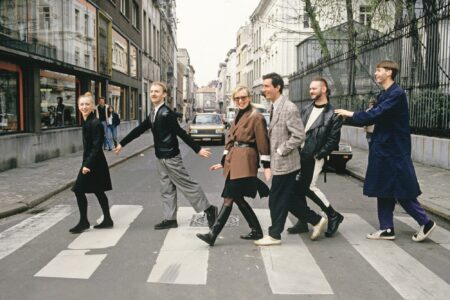
MoMu celebrates the 40th anniversary of the Antwerp Six with a comprehensive exhibition that reassess and reaffirms the global impact of the six avant-garde designers, each of whom made their own mark in culture and fashion.
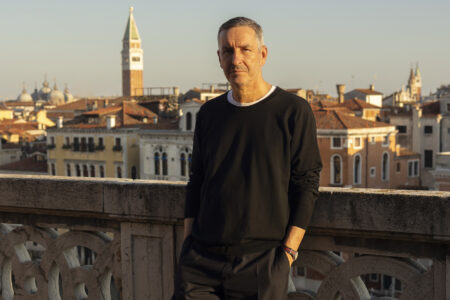
The Fondazione Dries Van Noten opens its inaugural exhibition “The Only True Protest is Beauty”, on April 25th. Curated by Dries Van Noten with Geert Bruloot, the presentation explores craftsmanship as a language of expression and a conduit for emotion. Marie Honnay spoke to the designer ahead of the event.