

Design Museum Gent Reopens: A Museum Redesigned
After four years of renovation, Belgium’s largest design museum reopens with a sustainable new wing, a reimagined collection, and a mission to put design and community at the center of everyday life.
On 3 October 2026, Design Museum Gent reopened to the public after four years of renovation and expansion. Belgium’s largest design museum now spans roughly 6,500 m², including 3,700 m² of exhibition space. It is built around a simple premise: everything is designed, and therefore everything can be redesigned.
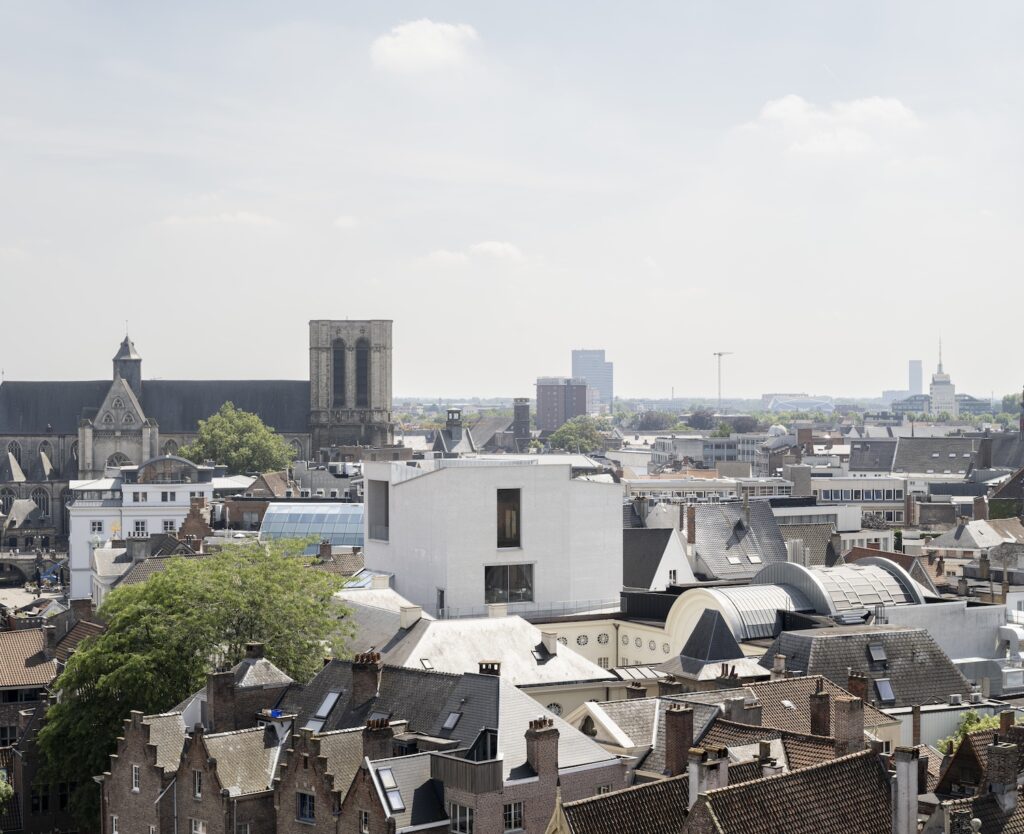
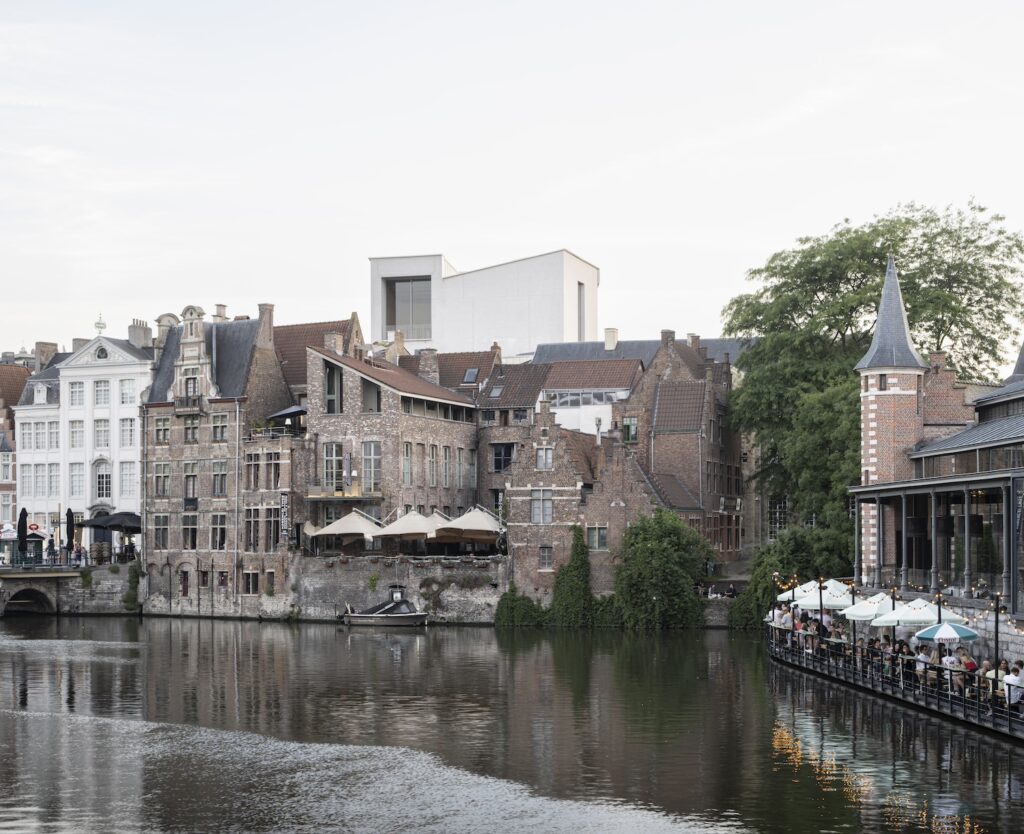
A highlight of the newly renovated Design Museum Gent is a new wing that connects past and present. Designed by Carmody Groarke and ATAMA, the new wing links the restored historic buildings, which date from the 16th to the 20th century, and gives visitors a new route through the galleries. The historic courtyard of Hotel De Coninck now functions as a garden and the museum’s point of orientation.
Sustainability shaped the design. The façade is made of Gent Waste Brick, a lime-cured brick produced from locally sourced construction waste, without kilns or high CO₂ emissions. More than 82,000 bricks were made in Ghent. The wing also houses a freely accessible Stadskamer (City Room), a lecture forum, workshop spaces and an event space with panoramic views over the city.
In addition to the renovation, there are a series of special design projects that have been curated by Siegrid Demyttenaere, and which are integrated throughout the building. These include furniture by Casimir and Bram Vanderbeke
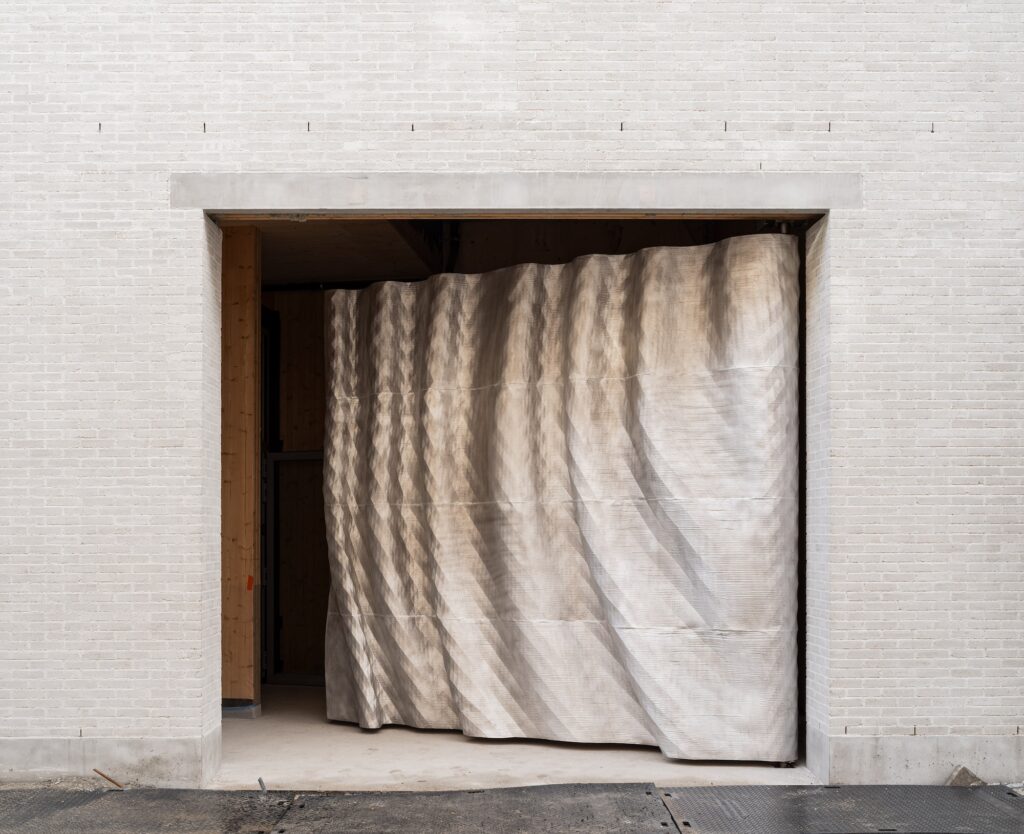
& Wendy Andreu, a cooling forest by Bas Smets, acoustic curtains by Chevalier-Masson and even a 3D-printed
aluminium entrance gate Freeze Frame 82.2 by Unfold.
As director Katrien Laporte puts it: “This expansion and renovation are not about creating more museum, but about creating more than a museum: a community sense-making museum with social relevance at the heart of a diverse and complex society.”
Rethinking how objects are shown
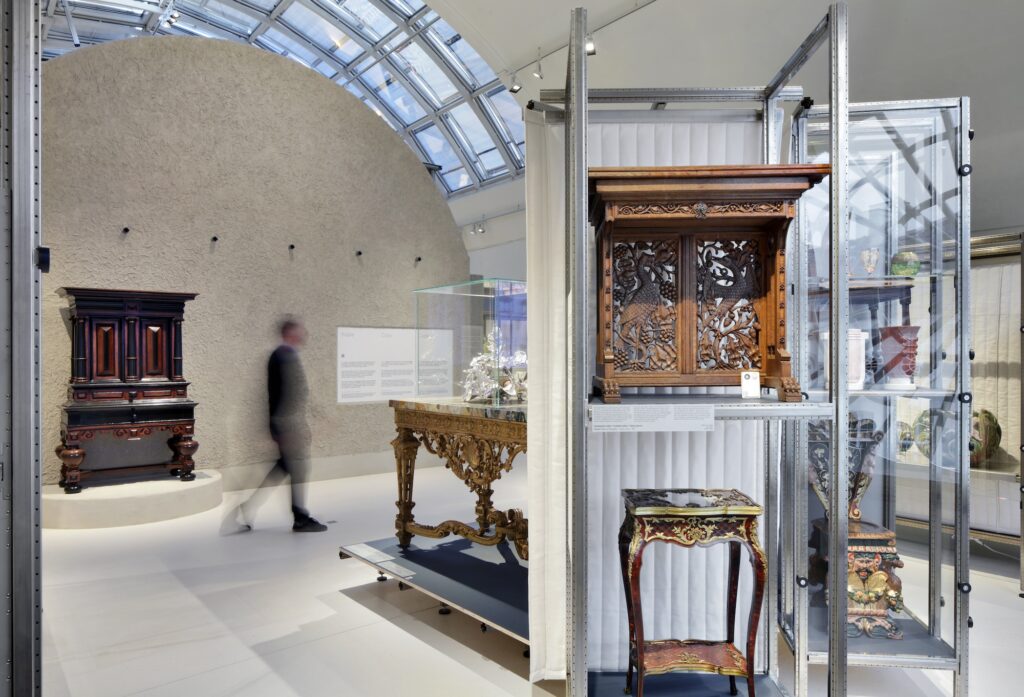
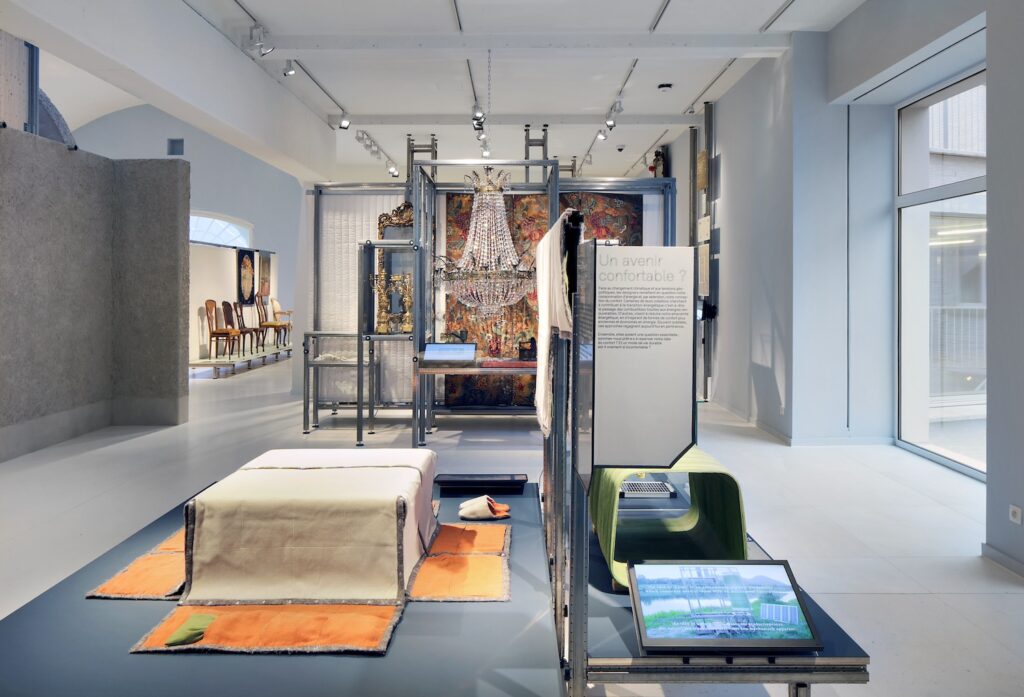
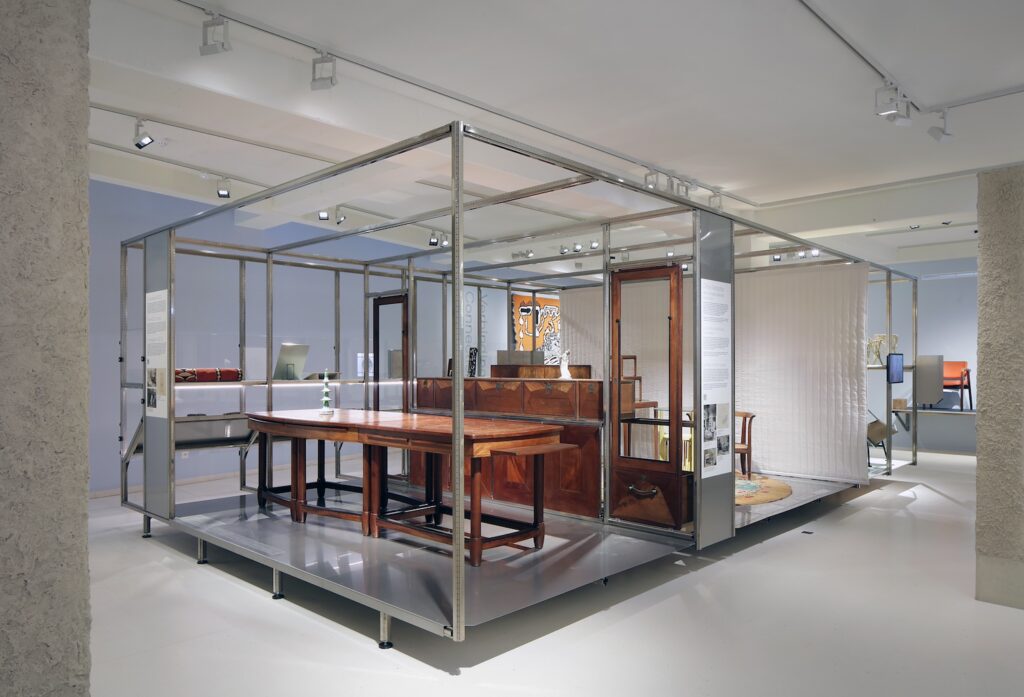
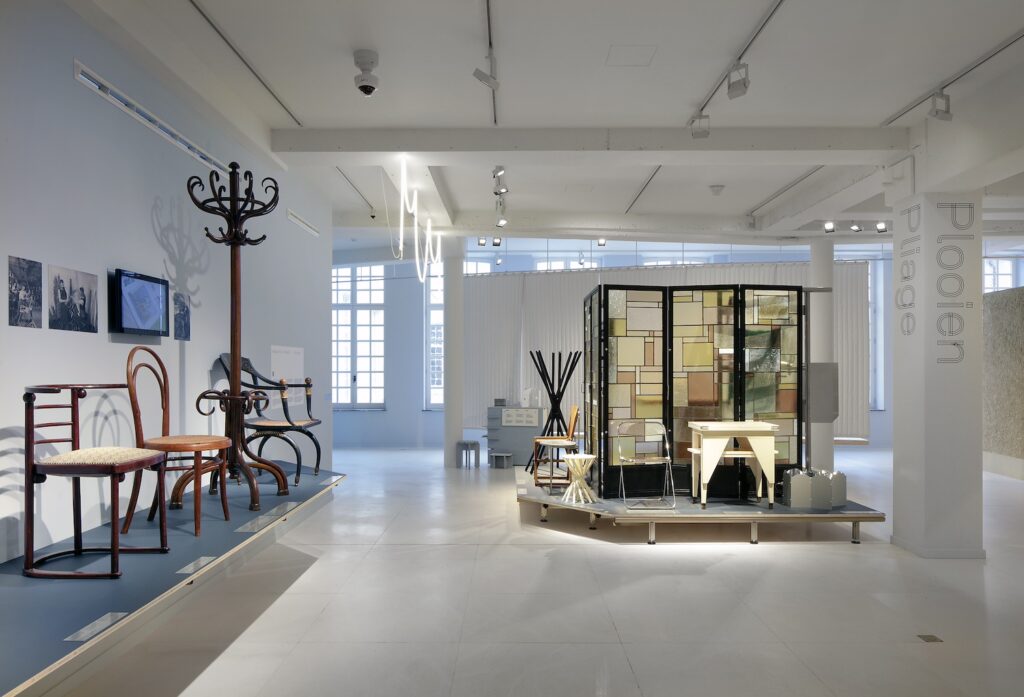
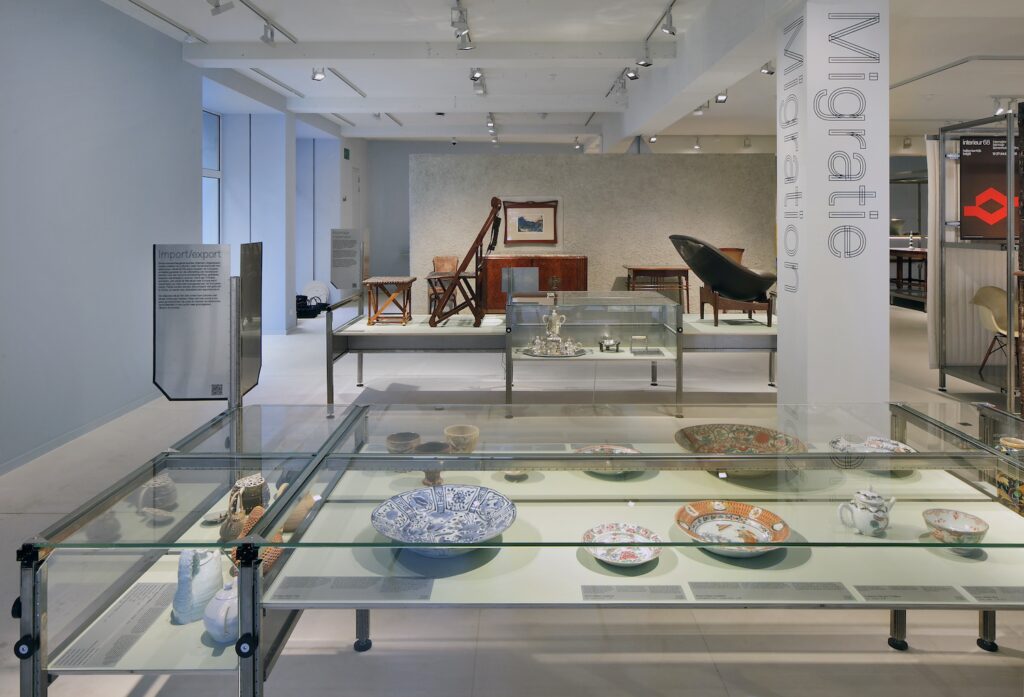
The new collection display, Models from the Past for the Future, returns to the museum’s origins as a “model museum” founded in 1903. About 500 objects, 40% never shown before, are grouped around five contemporary themes: copy, comfort, migration, folding and connections. The emphasis falls less on who designed an object and more on how it can be viewed today. Some pieces now invite criticism, while others prove surprisingly relevant. Contemporary designers also respond to historical pieces, so the collection acts as a living resource rather than a static archive.
Other spaces turn reflection into participation. The opening exhibition, Public Matter(s): Design and Democracy, argues that democratic systems are designed, and invites visitors to train their “democratic muscles” through the interactive Democracy Workout. Studio Digitaal offers Searcher, an AI-driven installation that lets visitors wander through the 24,000-object collection by similarities in form, colour and text. CONNECT breaks the “look, don’t touch” rule, while CO-LAB gives designers, students and citizens space to tackle social questions together.
Community involvement is central. The design process began with the question “Is this a museum for me?”, and in 2025 a citizens’ panel of 40 Ghent residents, DE40, made recommendations that now guide the museum’s operations. Around 15 Special Design Projects, from furniture to a cooling forest and a 3D-printed aluminium entrance gate, bring design into every corner of the building.
With an expected 125,000 visitors in its first year, the museum aims to be an open, barrier-free “third place” where designers and citizens meet. In addition to the permanent collections, the opening exhibition, “Public Matter(s): Design and Democracy” is on view through. April 11, 2027.

Articles you also might like

On Saturday, March 14th, Belgian textile designer Vera Vermeersch will open her studio between 12-20h, offering visitors the opportunity to see her latest work, works-in progress, and have a unique glimpse into this prolific artist’s process and vision.
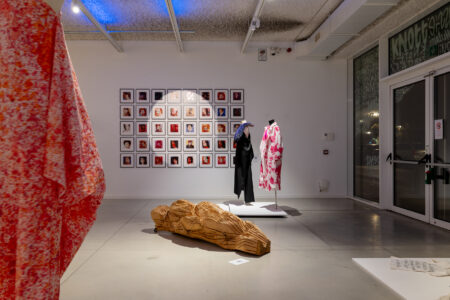
Jean-Paul Knott celebrates twenty-five years of creation, work and encounters with “KNOTT so MAD,” an exhibition on view at MAD Brussels through January 31st, 2026.
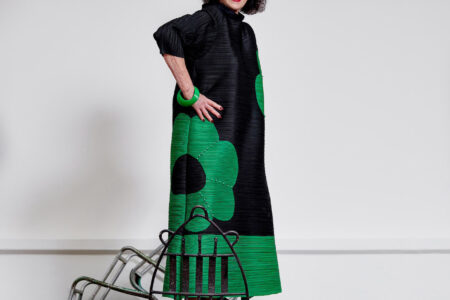
The final days to see Matching Seats, an exhibition of unique, handmade chairs and fashion accessories from the legendary collector Galila Barzilai Hollander. Matching Seats closes May 3rd.
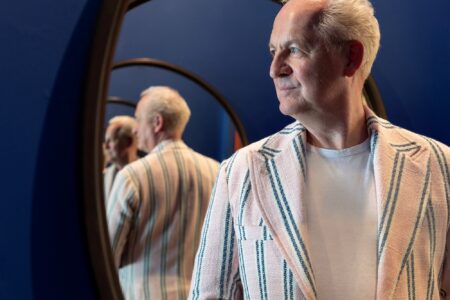
Gert Voorjans is an iconic Belgian tastemaker and maestro of the interior design firm Studio GV. From his renowned collaborations with Dries van Noten to his contemporary fabric collections, Voorjans has a distinctive East-meets-West aesthetic that is fresh, layered and truly timeless.