


Igshaan Adams: Between Then and Now
Mudam Luxembourg presents Igshaan Adams: Between Then and Now, a comprehensive exhibition that traces the South African artist’s distinctive practice, one that is shaped by care, healing and community. The exhibition is on through August 23, 2026.
Early in his career, Igshaan Adams made an important performance piece with his father. Titled Bismillah, 2014, Adams lay on a table while his father washed and prepared his body as if in death. The performance was a way for the artist to let go of things from the past that were not working, “to let go of the internal structure in order to move forward”, he says. It symbolized a killing of his younger version of himself, opening up a healing process to allow for change. It also opened the way for Adams to push forward in his artistic practice, to explore the unknown parts of his mind, his ideas, many of which are connected to his own identity, whether around domestic spaces, social realities, sexuality or religion.
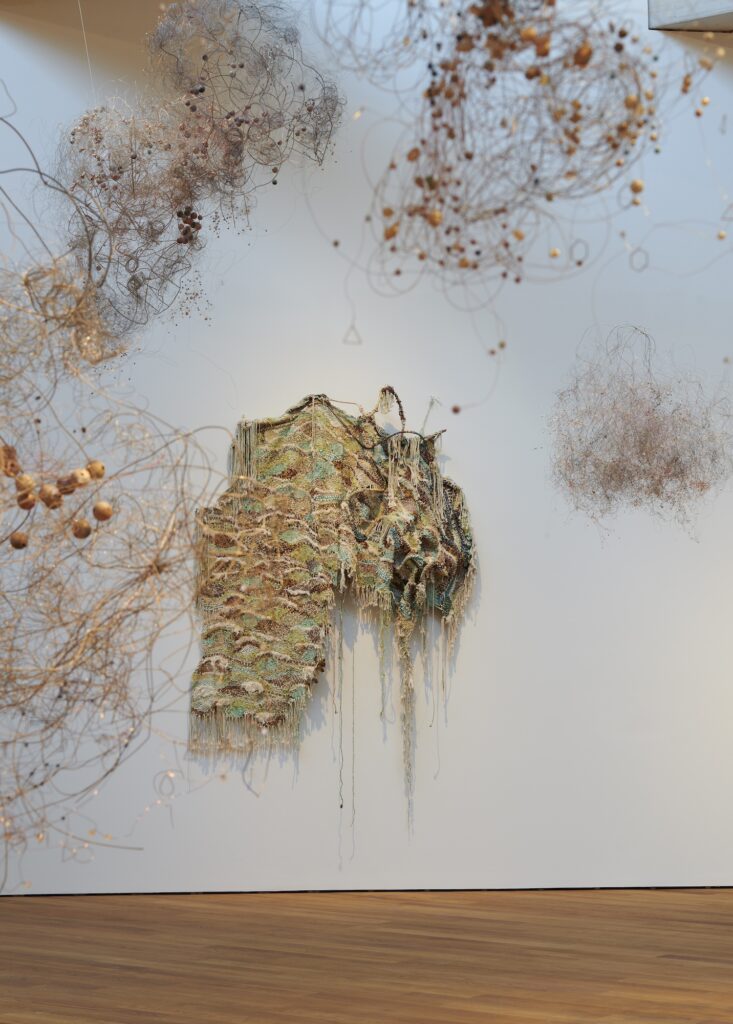
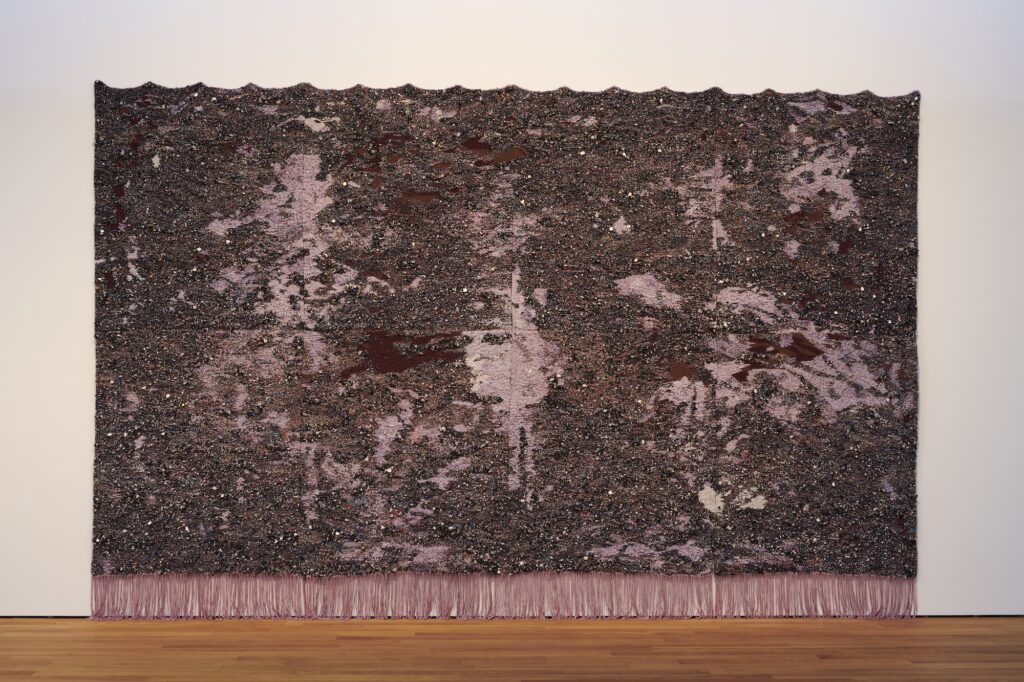
The artist, born in South Africa during Apartheid, has, in the last 20-years, steadily developed a body of work that moves within a space of healing and movement, whether in his own life or in his community, using fragile, often found, recycled and even ephemeral materials to convey his ideas. Fabric, beads and threads were a common tool for the artist as well, as he was often sewing or stitching or knitting as a child, whether fixing clothes or making small objects. He began weaving, without any training, preferring to learn by himself, saying: “I’ve built my career on improvising the weaving. I deliberately avoided getting weaving training so as not to know, and to operate from that not-knowing. I taught myself and figured things out for myself.”
The exhibition at Mudam opens with an installation of textile samples that visitors are invited to touch. He has often included pieces that can be touched in his exhibitions, but this is one of the larger encounters – allowing people to feel and sense his work and process in a more intimate way.
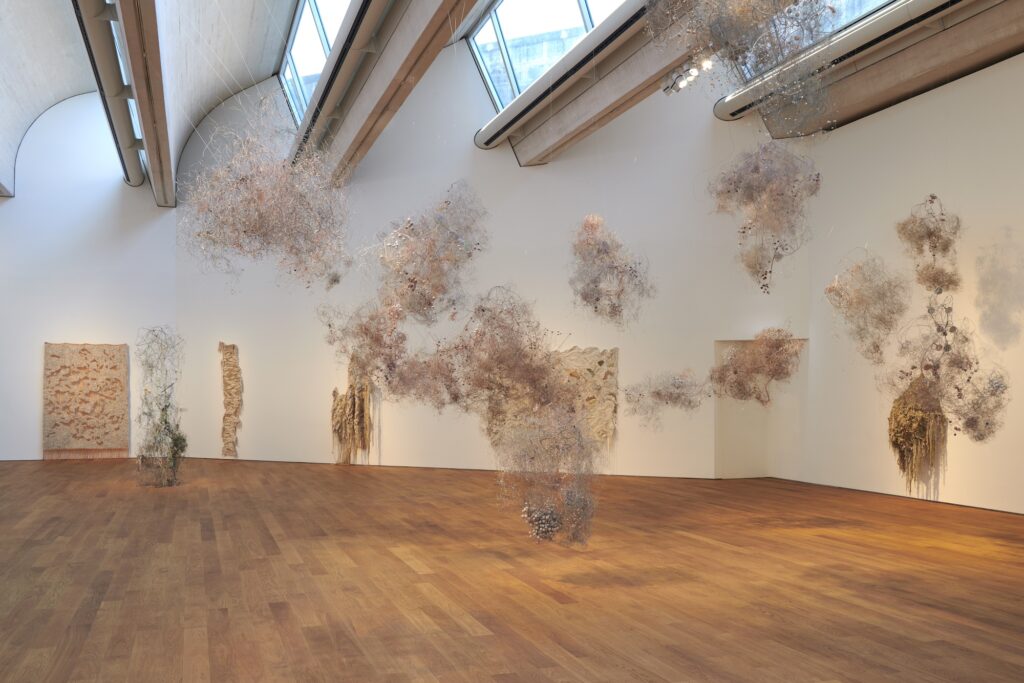
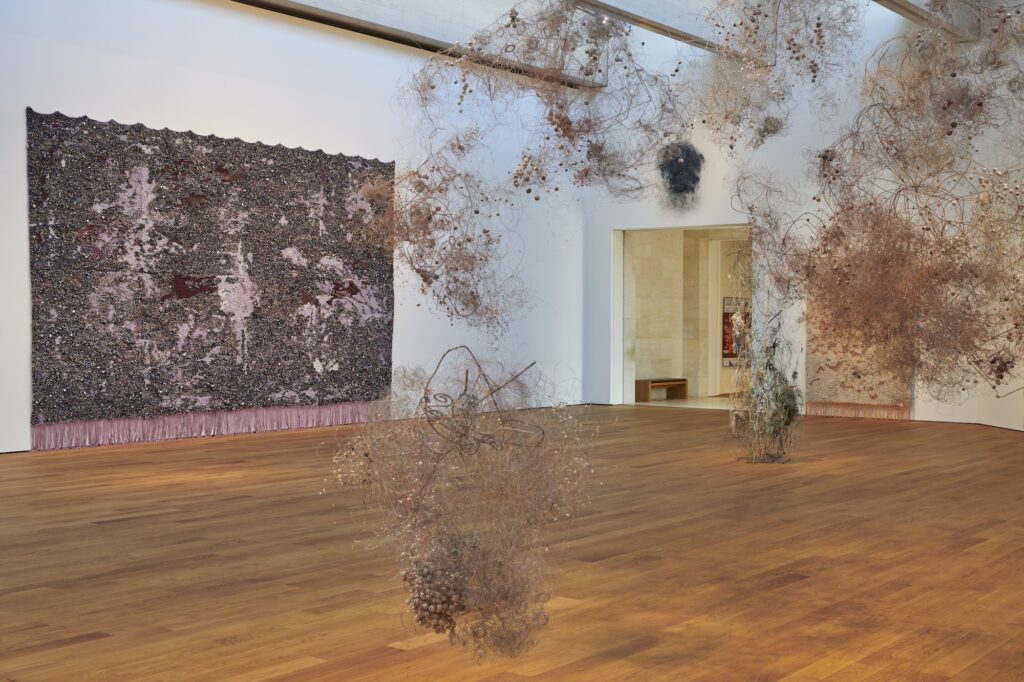
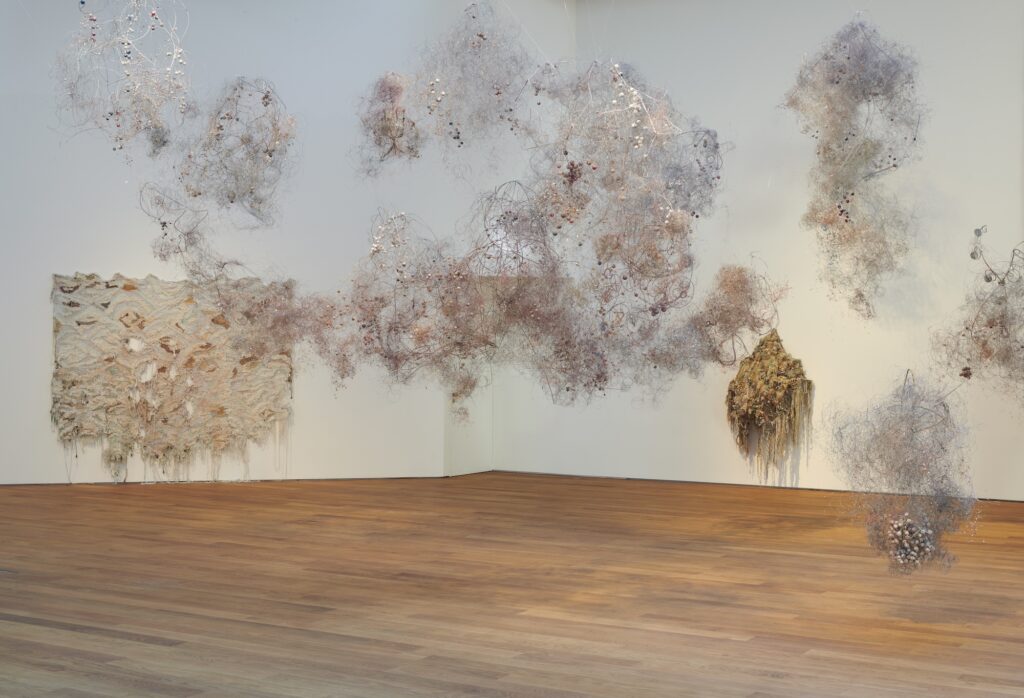
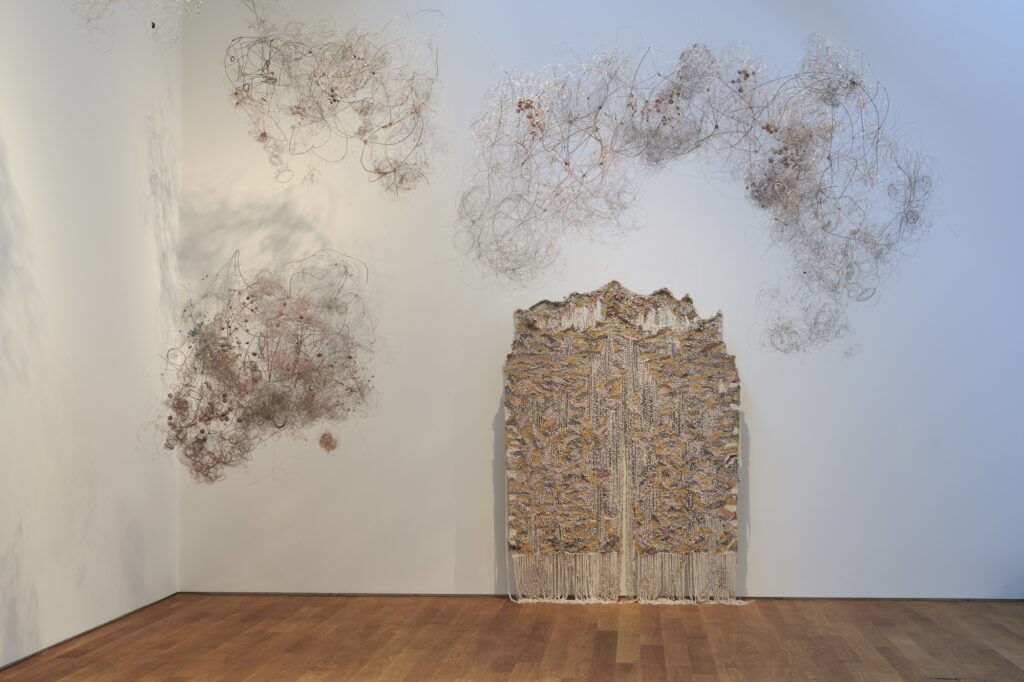
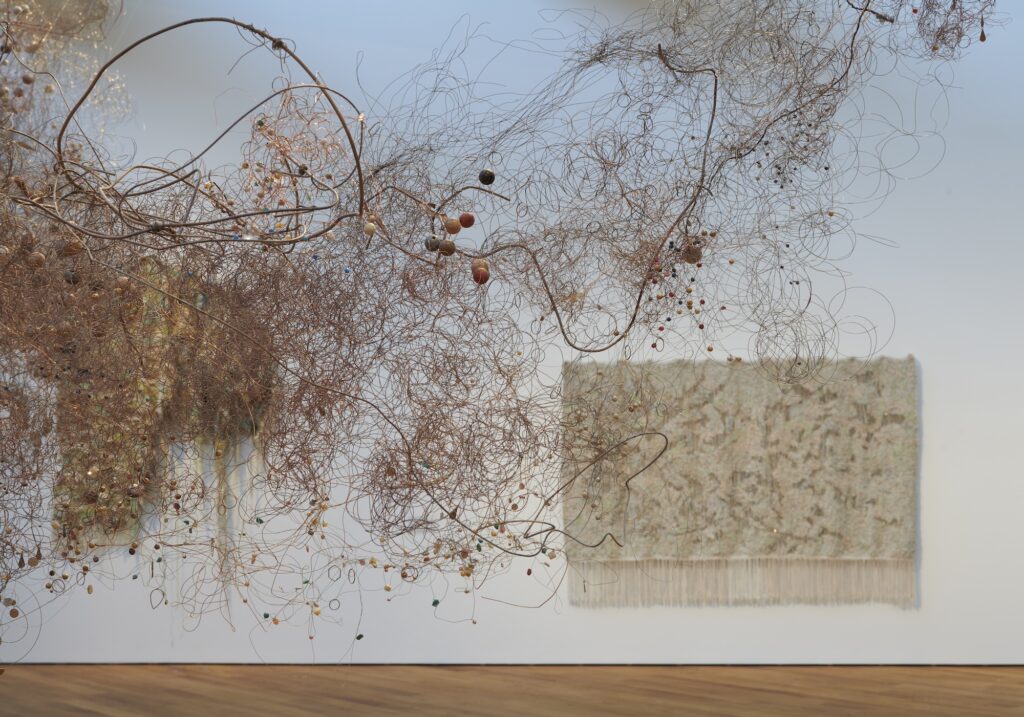
A large central hanging tapestry titled Gebedswolke iii [prayer cloud], 2025, was conceived for the light-filled foyer of the museum. The cloud has been a repeating metaphor for the artist for more than 10-years. He speaks about walking for hours in a harsh, chaotic industrial area when he was younger, looking for work and feeling like he was never getting anywhere. He would walk and pray and wonder where his prayers would go. In his mind, they would be trapped in a cloud, awaiting release. This very poetic idea is revealed in this large installation, made of beads, charms wire and metallic discs, becoming “an atmospheric constellation of floating forms,” writes Florence Ostende and Anaël Daoud, curators of the exhibition. It feels of nature but more elusive, almost like a dream catcher, holding onto hopes and wishes in this fragile yet hopeful way.
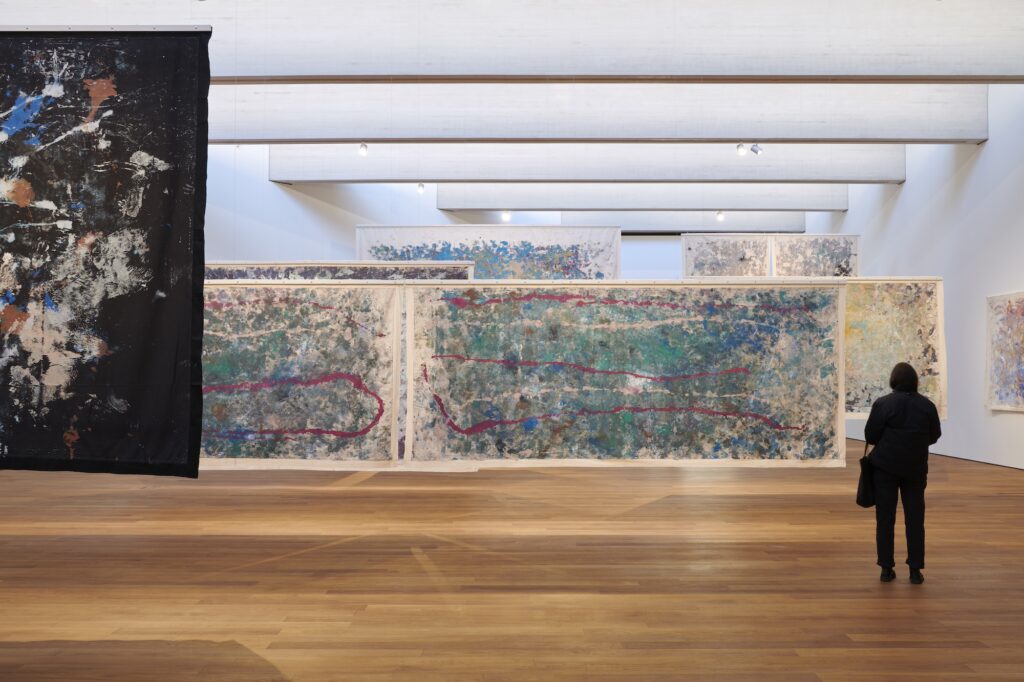
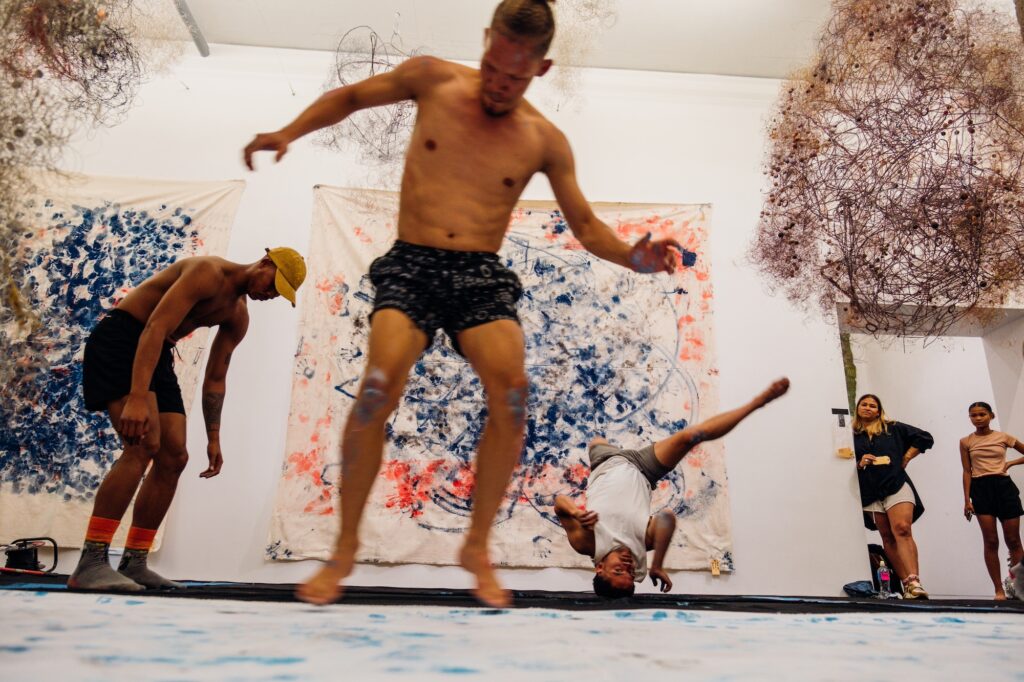
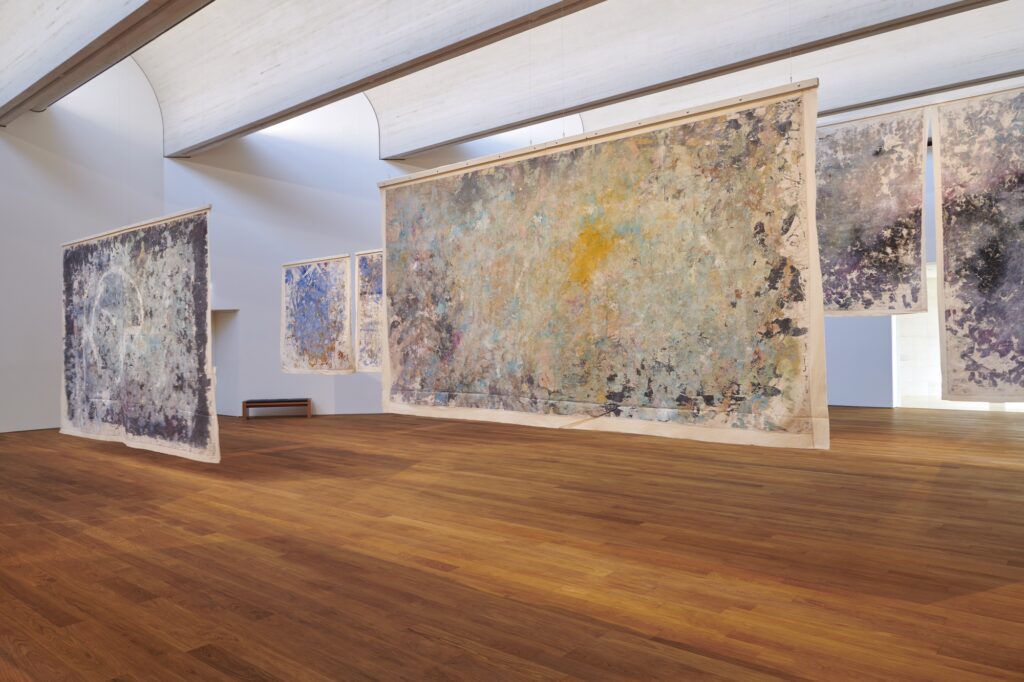
Dance and performance have been a consistent part of Adams’ work and at the museum, they present a series of his dance prints, which were produced by performers moving across the canvas, their feet transferring paint to the surface. “Exploring the body’s capacity to hold and release trauma, this colourful installation reflects Adams’ interest in the traces that lived experiences can leave behind,” write the curators. The paintings themselves, suspended from the ceiling, are energetic abstractions that pull you into their orbit.
Throughout Igshaan Adams practice is this underlying idea of letting go, and not letting categories or identities define you. His practice merges into the mystical, the poetic, whether through its intricate details or the process with which each piece is made. Adams writes: “I’d much rather imagine how beautiful the future could be than understand how dark the past was.” This vision on art and life offers something to connect with, a sense of hope in a moment when we can all use some.
Igshaan Adams: Between Then and Now is on view at Mudam Luxembourg between February 10-August 23, 2026. It was organised organised by Mudam Luxembourg and The Hepworth Wakefield in collaboration with ARoS Aarhus Kunstmuseum.

Articles you also might like
Contemporary textile art and design from the Collection Thalie is in dialogue with Leo Orta in Tissier les imaginaires, at the Fondation Thalie, in Arles, through July 31, 2026

On Saturday, March 14th, Belgian textile designer Vera Vermeersch will open her studio between 12-20h, offering visitors the opportunity to see her latest work, works-in progress, and have a unique glimpse into this prolific artist’s process and vision.
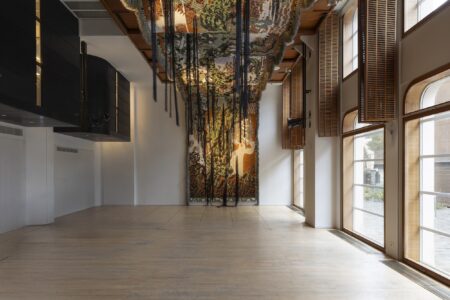
Roots is a monumental installation by Finnish artist Kustaa Saksi made from jacquard weaving and delicate Japanese washi paper yarns. The installation is on view at the Institut finlandais through February 21, 2026.

La Galerie Patinoire Royale Bach presents Geneviève Levivier: Un Arbre á Soi, a solo show of 11 weavings and 4 large laser artworks, which are made with an innovative laser technique created by the artist. Levivier creates a dialogue between the manual and technical as well as with natural fibres and mixed media. Through her unique processes that build up and take away materials, her work refers to the growth of nature and its destruction. They are like a metaphor of life, which advances by adding experiences and the subtractive experience of time. All of the work is about finding the balance point between those extremes.