

Jean Pigozzi Has His Own Rules
For TLmag41: The Art of Collecting, Simon de Pury spoke to Jean Pigozzi about his gift for throwing such legendary parties, his obsession with collecting art, most recently contemporary Japanese Art, and how he is essentially the inventor of the selfie.
Simon de Pury: There are a few things that I wanted to talk about today. First, I think you are the ultimate “people collector” because you love to entertain and you have a gift for bringing interesting people together and from all different worlds. And people love coming to your place because they know that they will meet people who they would never meet otherwise. And the other thing I would love to talk about is how you are essentially the inventor of the selfie; you are really the precursor of this selfie culture we have today. And then, of course, your incredible collection.
Jean Pigozzi: Let’s start with the first, about people. I think that a lot of hosts make a mistake. They think, ‘oh my dentist s coming for lunch, so we should invite other dentists and their office patients’. Or, ‘today we have a painter coming, so we should have other painters and some collectors’, but I think that’s a complete mistake because if you’re a dentist all day long, you are always in that world and you probably want to meet a painter or a pilot. People have no interest in meeting other people who are in their same profession. And I think a lot of people, for example the upper-upper class in England, they only want to meet people who speak about shooting and things like that. And they say, ‘oh my God, if Pigozzi brings one of his African artists here, what are we going to talk to him about? This guy doesn’t know anything about shooting or anything about the queen’. And that’s completely wrong because usually when you bring somebody completely different to a dinner, people are very interested in this new person. So, I think the secret for a good party is really to mix people. And age is absolutely very important in that
mix. When I was in my twenties, I was very close with Gianni Agnelli, and I never understood why at 75, he hung around with his young nephews and his friends. Now that I’m 73, I am much more interested in meeting people in their twenties than people who are my age. Because I remember when I was young, we used to talk about hedge funds and girls, and now old people, they speak about taxes and what kind
of doctors they’re visiting. So, I think that mixing people is essential.
Now let’s talk about collecting. I am incredibly focused on my collection. When I started, I had a collection like a rich dentist from Memphis; I had a little Clemente, I had a little Warhol, a little Sol Le Witt; and then I met Charles Saatchi and he said there are a thousand hedge fund guys who have better collections than mine, and that it was the wrong way to do it. The right way to collect is to specialise in something. And when you find an artist that you like, you have to buy as many as possible. If you’re interested in Picasso, very few people have more than two or three Picassos. But if you find some young artists, the prices are lower and you can usually buy quite a few of them. So that’s the advice that I would give to people starting to collect. And they should go to as many museums as possible. They should go to as many fairs as possible. They should go to as many galleries as possible. Some people think, ‘oh, I’m going to make money with my collection’. I never thought about that. And obviously I started 35 years ago. If I bought two Basquiat’s and two Warhol’s, my collection would be worth more than a hundred million dollars now, or much more if they were good. But I didn’t do that. I bought African art. I’m not sure what the value of my collection is today, but it has been shown all around the world from the Guggenheim to the MoMA, to the Fondation Louis Vuitton in Paris. I think more than a million people have seen my collection. If I had one Warhol and two Basquiat’s, nobody would be interested. I have at least 15 books on my collection. It has been a hundred times more interesting putting my collection together than walking up and down Madison Avenue with a big check book and buying expensive paintings. But if you want to build a collection, it’s another thing. You could have 20 paintings and try to make your collection better and better. It is not a bad thing if you can do it that way. Or, you are hoarder like me, and you end up with more than 10,000 pieces of art. There’s alcohol anonymous, there’s narcotics anonymous. They haven’t started collectors anonymous but I should go there immediately because that’s my problem.
S.D.P: We all need to join.
J.P.: And then about eight or nine years ago, I said, well, the African collection is great , but I want to tr y something else. I started to look at others things and I started a collection of very young Japanese artists. I met Takashi Murakami in New York and he told me about Geisai, an event that he used to organise. He would rent a huge place, let’s say the size of an American football field, and people would rent 10 square meters for a hundred dollars and they could show whatever they want. Some people showed knitting, some showed wood carving, and some people show painting. I walked around and there must have been, I don’t know, 400 people there. And he asked me to be on the jury but I said no because then I couldn’t buy anything. I ended up buying the artist who received the second price and the one who received the ninth price, but without knowing. And that was a really fun experience. And I have a rule for that collection. The artist has to be Japanese, live in Japan and born after 1985, and now I moved it to 1990. And then for my African collection, I also had a rule. They had to be black, they had to be alive, and
they had to live in Africa. I think when you collect, you have to have rules of some kind – maybe its artists who make only pink paintings or of horses, whatever, but you have to have some kind of rule. I like when people are obsessed by something. But if you have Renoir, a Sol Le
Witt and Clyfford Still, for me, it doesn’t really work.
S.D.P.: I’ve never seen your Japanese collection. I’ve seen parts of your African collection in museums all over the world… have you exhibited the Japanese work before?
Jean Pigozzi: I have done two shows one was in Grenoble and one was at the Garage in Moscow, and it was called Japan-Congo. Carsten Höller did the exhibition design and built two semicircles for the installation and in one side we put the work from the Congo and the otherside we put the work from Japan. And in the semicircle, there was a corridor, and the interesting thing was that at night, somebody could have moved a few of the Japanese works into the Congo and vice versa, and very few people would know. Obviously if it’s some young geisha running in the field, ok that is clearly Japanese, but otherwise, you could have moved them around and people would not have known. But let me be very honest with you, my African collection has been a huge success. As I mentioned, more than one million people have seen the work. I’m lending thirteen pieces by two artists for an exhibition at the next Biennale, and I have a show opening on the 9th of December at the MoMA in New York,
which is a studio photography in the fifties and sixties. Two weeks ago, I opened a huge show of Seydou Keïta at the Brooklyn Museum. But the Japanese collection is still less known or appreciated.
S.D.P.: I can’t wait to see it and it will happen because the knowledge about contemporary art in Japan is limited to the giants such as Murakami, Yoshimoto Nara and Yayoi Kusama.
J.P.: I discovered two things. First of all, in Japan, they like old people. If you’re less than 70, they don’t even talk to you. The second thing I discovered is that very few people collect, because if you rent an apartment and you make a hole in the wall to hang a painting, when you move from the apartment, you have to paint back your entire wall. So, people buy one painting, they put it there, and then it stays for the next 20-years. That’s the one painting they have. It is not like in Europe or the United States where people move things around and try different things. And there are only a few Japanese collectors who are interested in contemporary Japanese art. They bought Impressionists and Pop Art twenty-thirty years ago but they don’t really buy Japanese artists, although it is starting slowly.
S.D.P: Well, I hope I can help bring about an exhibition because that definitely needs to be seen. That’s fascinating. And tell us about the selfie.
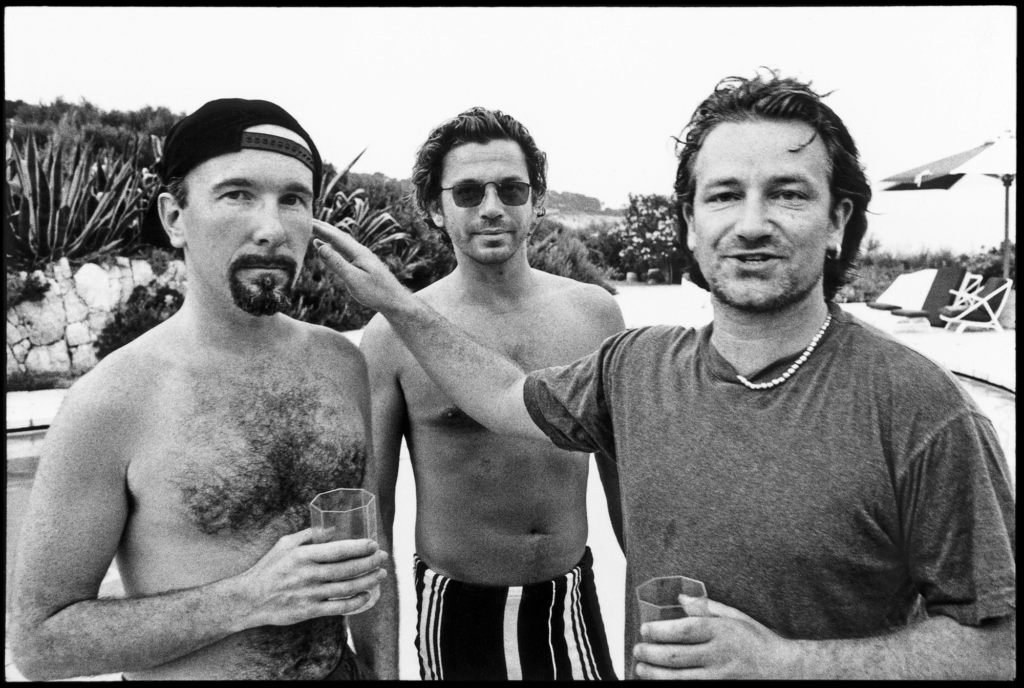
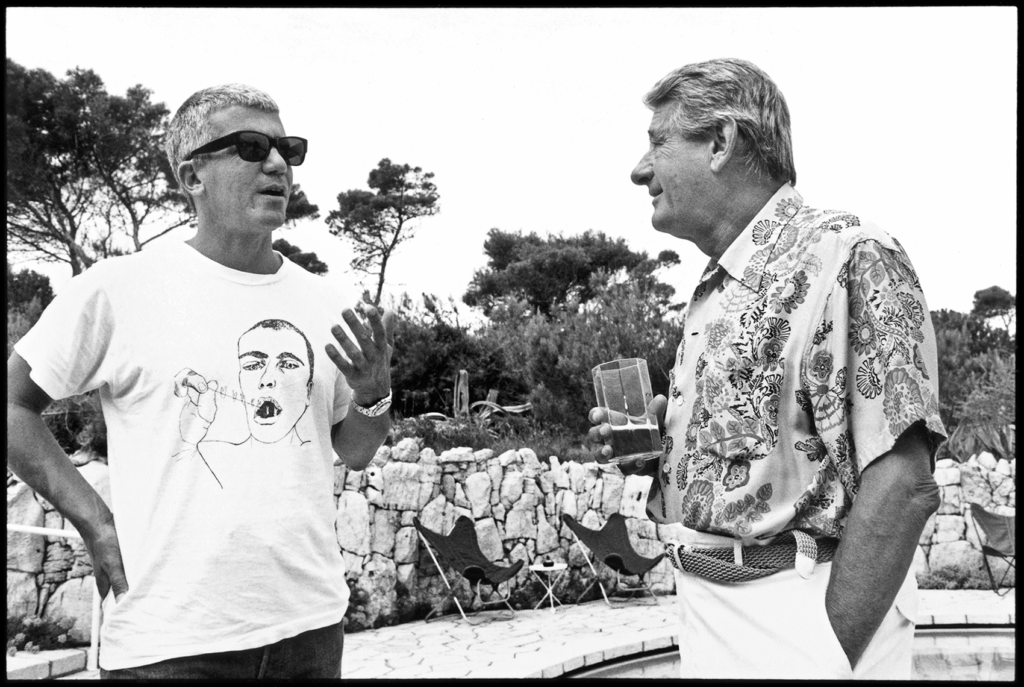
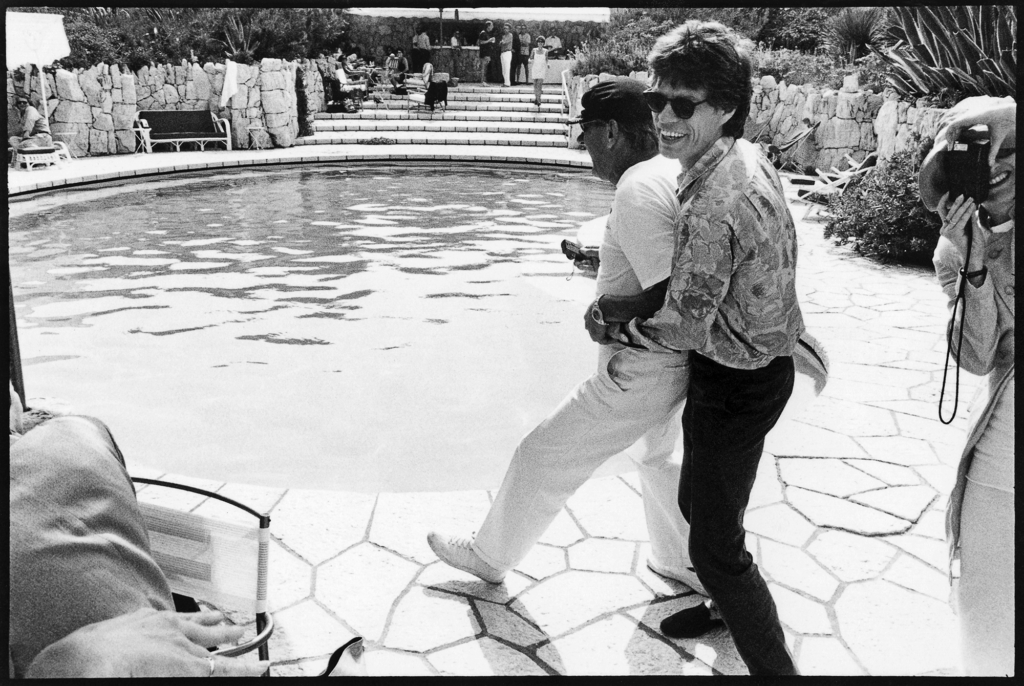
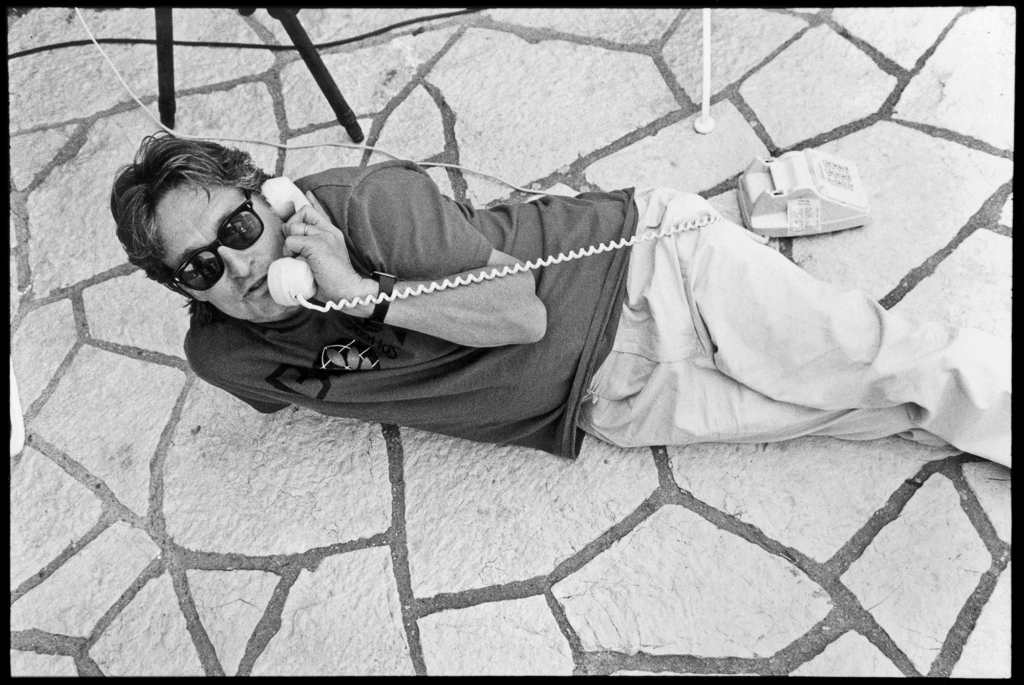
J.P.: Photography is also incredibly important in my life. In addition to being dyslexic, which makes me more visual, at a very young age, around nine, my father gave me a little brownie camera and I started taking pictures. And then he gave me, when I was eleven, his old Leica, which was really difficult to use, but I started taking pictures with it. And then sadly, my father died when I was twelve, so I inherited his Leica, an M something, and then I could really take pictures. I’ve taken more than a million pictures in my life and my goal is to try to take one good picture a month. So that’s twelve good pictures a year. This year I have taken, I think 60,000 pictures. We are in November, so we should have 12 good pictures this year. Obviously, somebody like Richard Avedon or Robert Frank or Cartier Bresson would do better than just one good picture a month. They would take a good picture a week. I’m still not there, but I’m trying.
Now the invention of selfie. When I was studying at Harvard, there was a thing that was called the Hasty Pudding Club or something. They would invite a movie star every year and that year, in 1972, it was Faye Dunaway. In those days, people would ask celebrities for autographs. And I said, well, the autograph is not of interest, it could be a fake autograph of Faye Dunaway, but if I take a picture of her next to me, it’s very difficult to make a fake. You could with A.I, but in 1972, there was no A.I. So, I took it and the picture came out well. And then I thought, okay, I’m going to do that. And I took hundreds and hundreds of pictures of movie stars, and my friends and people I meet in the street. So the selfie has been great, but I take pictures all the time. I’m really obsessed by taking pictures.
www.japigozzicollection.com
@jeanpigozzi
@jeanpigozziphotosandvideo



Articles you also might like
Miami-based art collectors Mera and Don Rubell talk to Simon de Pury about how their love of art turned into a decades-long passion for collecting, why they still get excited about visiting artist’s studios and how collecting has become a true family affair.
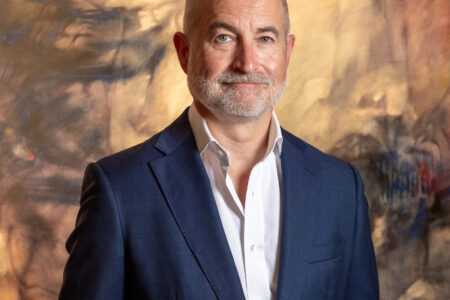
For TLmag41: The Art of Collecting, Christian Levett, founder of FAMM (Femmes Artistes de la Musée de Mougins), writes about how he came to create one the largest collections of art by women artists.

For our 2026 print issue: TLmag41: The Art of Collecting, Patrizia Sandretto Re Rebaudengo writes about her discovery of American costume jewellery over 40 years ago, sparking a passion for the jewellery as much as the history behind each piece. In 2025 she published a monograph with Taschen documenting her collection.
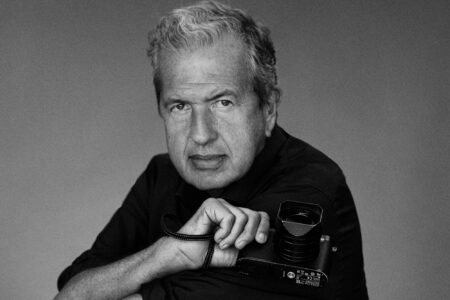
For TLmag 41: The Art of Collecting, Mario Testino writes about how collecting art and collaborating with contemporary artists was influential in his long career as one of the world’s top photographers. This is an edited version of the article which appeared in our 2026 print issue.