


Made In Situ: Noé Duchaufour-Lawrance
The Mobilier National offers an invitation to discover Made In Situ, Noé Duchaufour-Lawrance’s most personal project to date, a comprehensive inquiry into Portuguese craftsmanship and materials. The exhibition is on view through November 29, 2026.
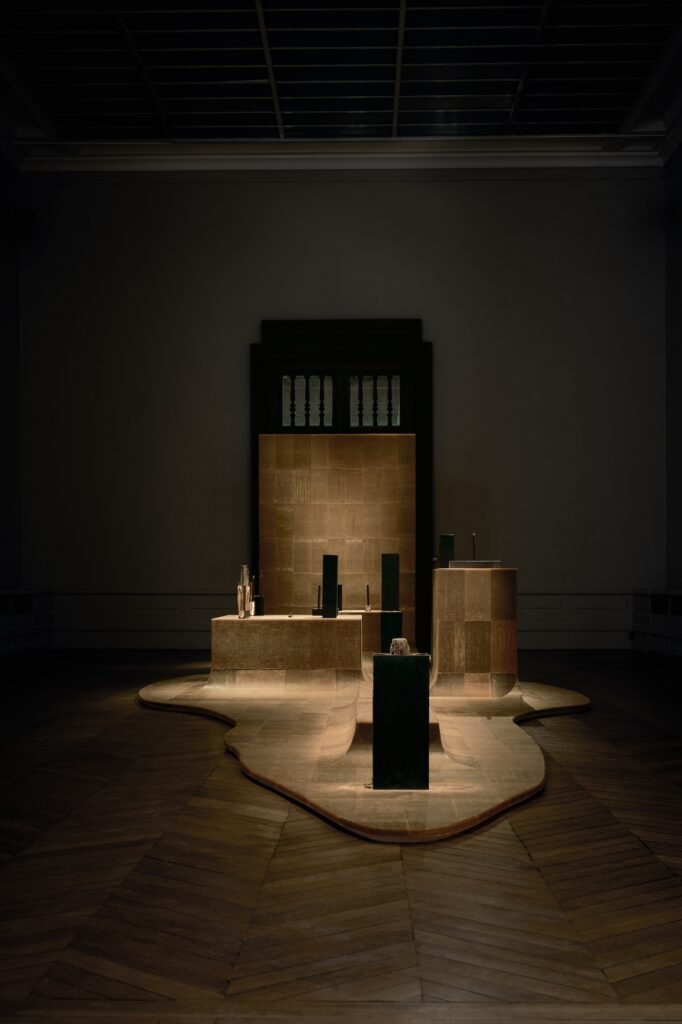
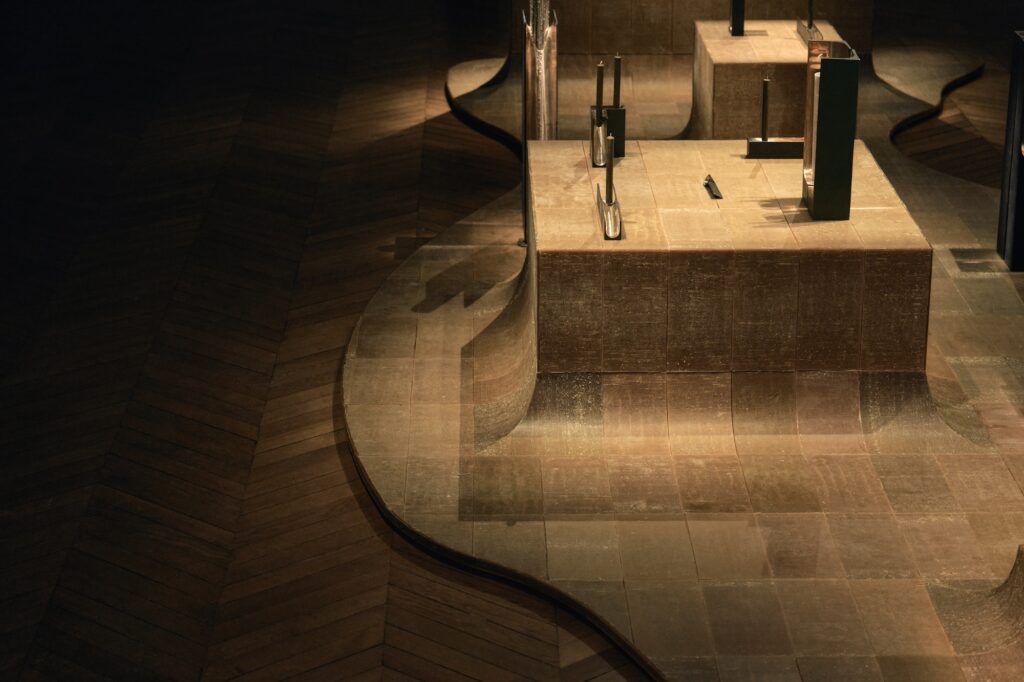
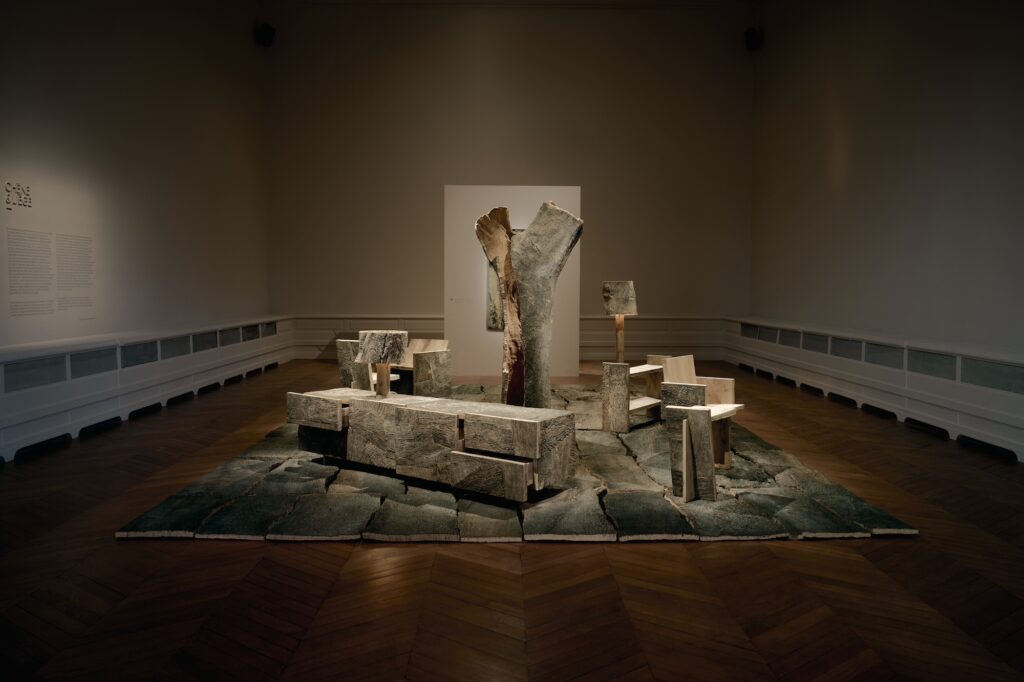
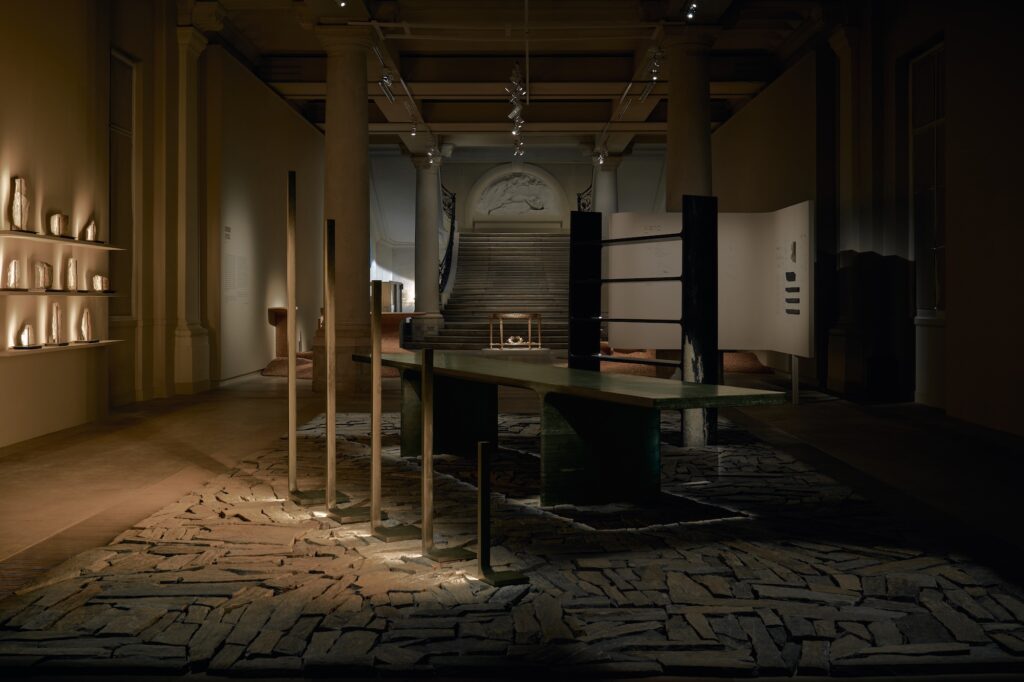
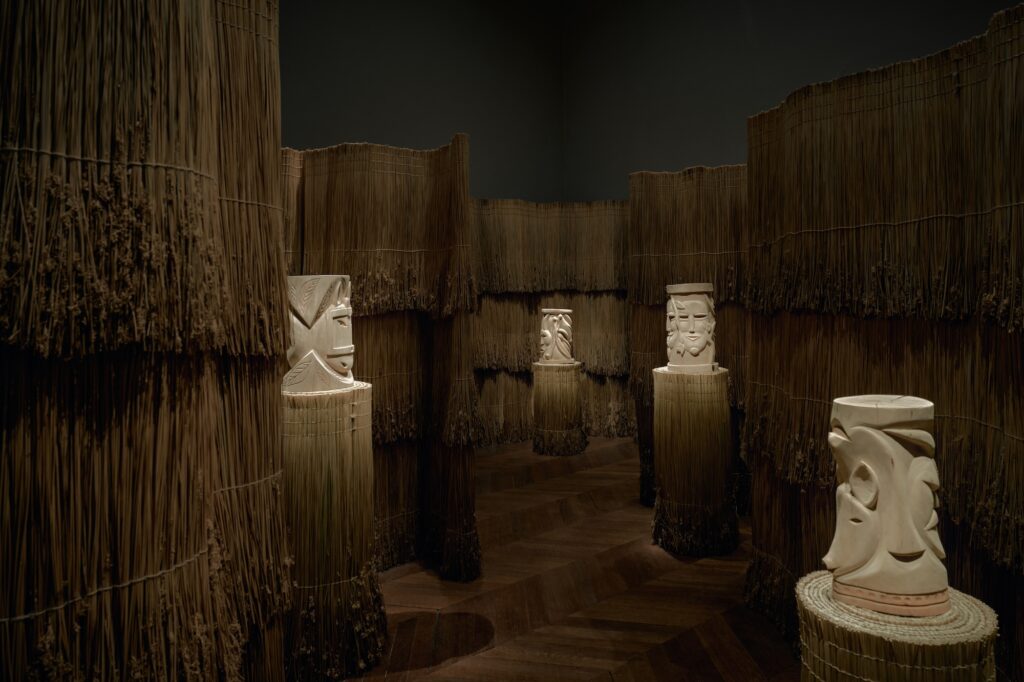
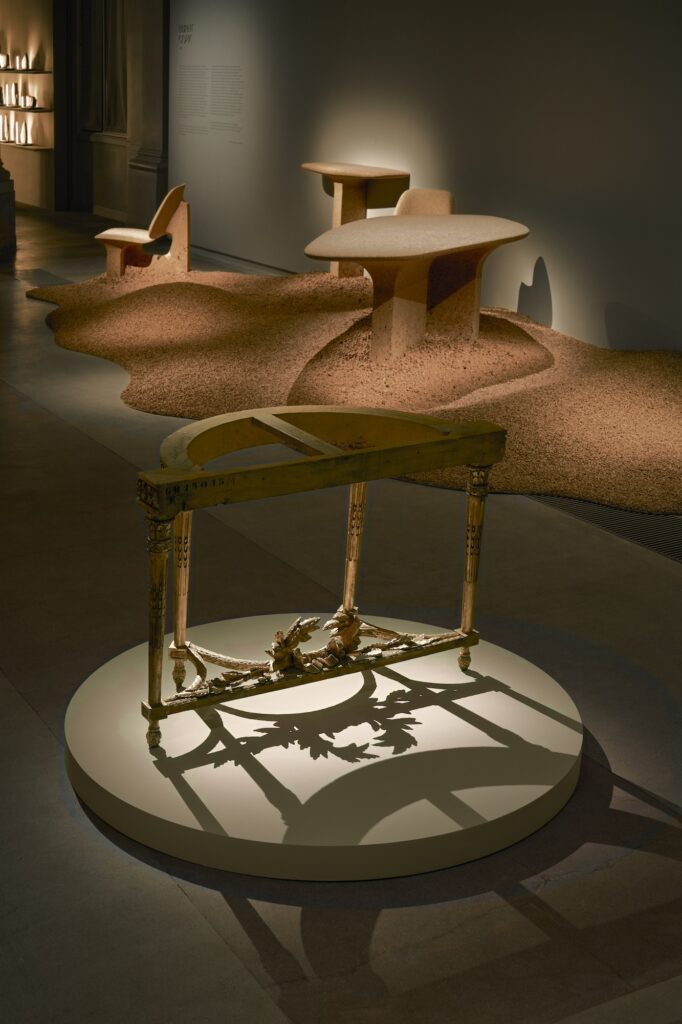
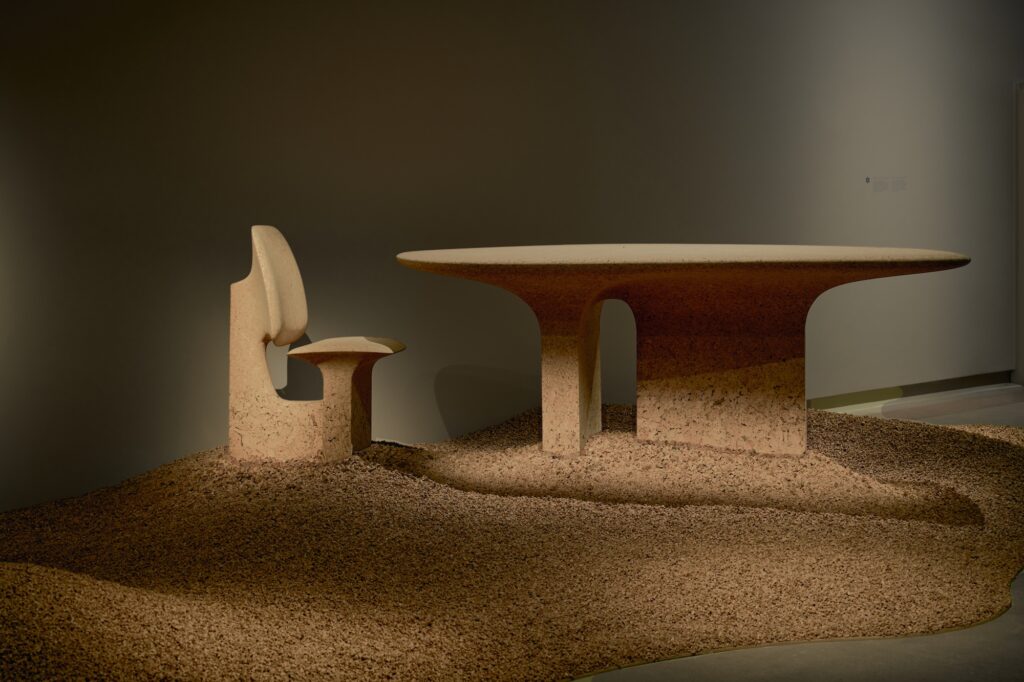
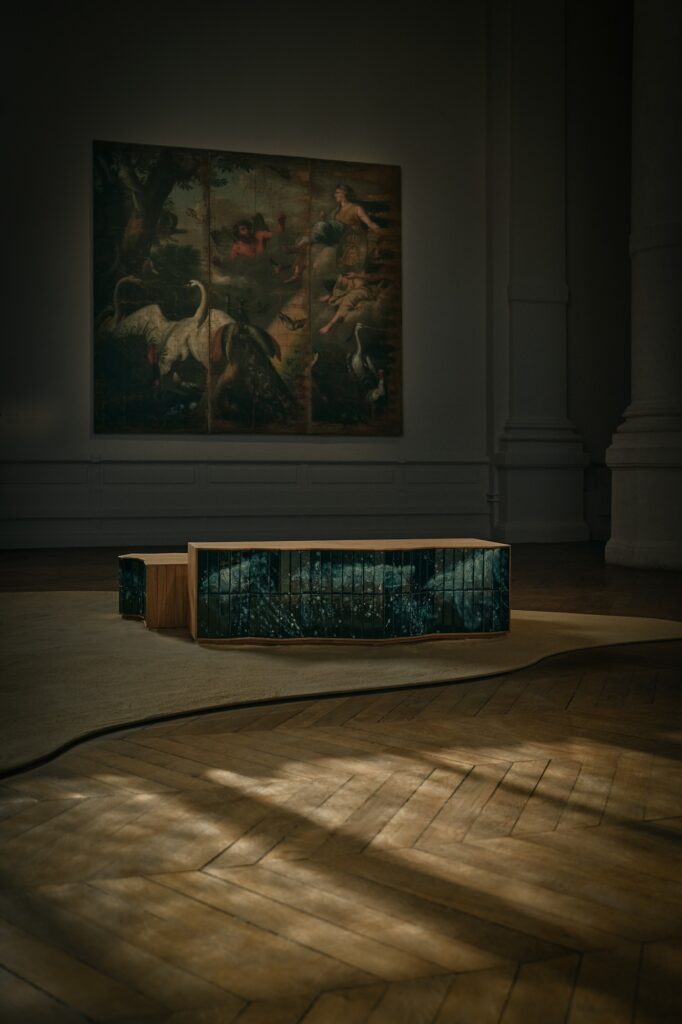
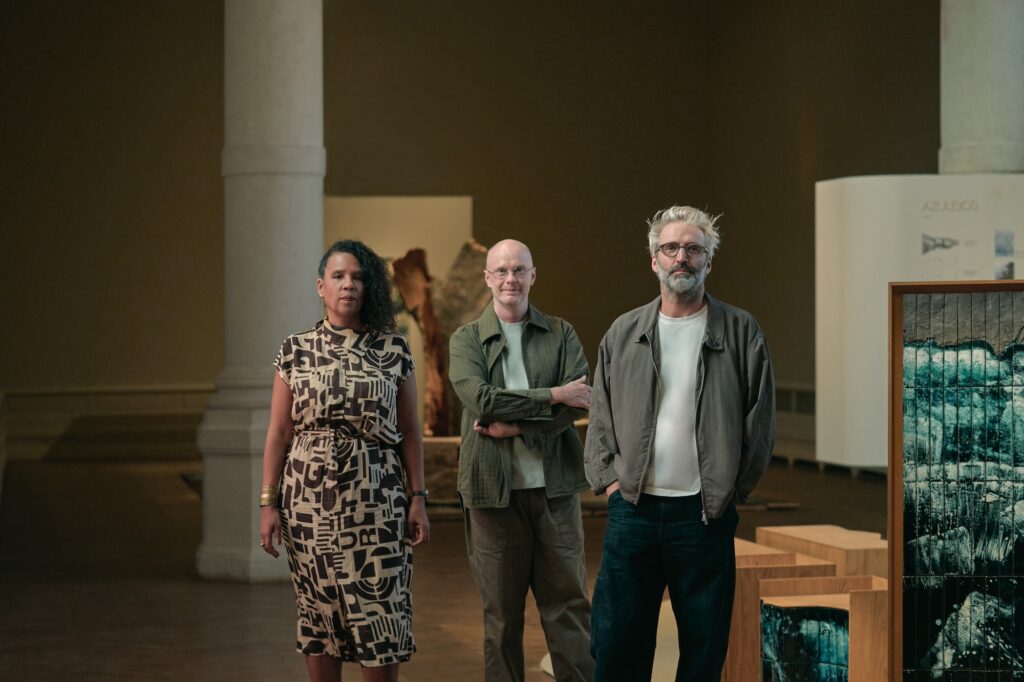
The Mobilier National presents Made In Situ, the first exhibition of Noé Duchaufour-Lawrance’s project to be seen in its entirety. Started ten-years ago, Made in Situ is the designer’s extensive investigation into the materials and artisans of Portugal, an evolving project that is in many ways an ode to the country’s craftsmanship. Through material research, books, objects, food, sound and films, Made in Situ features seven individual collections built around materials and traditions found in Portugal: Barro Negro, xisto, burnt cork, caretos (carved wooden stools), bronze & beeswax, azulejos and oak & cork. At the Mobilier National, each project is presented in conversation with a historical piece from the museum’s collection, further extending the dialogue and relationship of the works between past, present and future. As Duchaufour-Lawrance says, “What has become clearer over these years is that Made In Situ is not simply a collection of objects. It is a way of working and thinking, and above all it has become a powerful vehicle for human encounters and relationships. For me, this human dimension is perhaps the most important part of the project.”
TLmag: You moved to Portugal in 2017, taking a leap into something new and unknown. Talk about that moment when the Made In Situ project started to take form in your mind, what you first envisioned.
Noé Duchaufour-Lawrance: I had been carrying the idea of this project with me for almost ten years before moving to Portugal. In a way, Portugal was partly chosen because of it. I knew that there was still a very strong culture of vernacular craftsmanship here, deeply rooted in local traditions and ways of living. It is also a country with an extraordinary diversity of natural resources and landscapes, and very often you can understand how a particular craft developed precisely through the resources available in a particular place.
After spending about a year observing, travelling and thinking, I began to give Made In Situ a more concrete form. I created a team dedicated to the project and a space in Lisbon that could accommodate its different dimensions: a place to work, of course, but also a place for research, experimentation and encounters; a space to present our projects; and a kitchen where we could invite chefs and explore the relationship between territory and food, something that had been an important source of inspiration for the project from the beginning.
I want Made In Situ to remain somewhat undefined, a structure capable of evolving according to what we encounter rather than following a predetermined programme. At the same time, each project operates within a very precise framework, with a strong set of principles: it must be rooted in a specific territory, engage with a local material or resource, and develop through a genuine relationship with the people and know-how connected to that place. So while the outcome remains open, the way we approach each project is quite rigorous.
TLmag: Did you ever imagine it would continue for nearly a decade?
N.D.L.: Yes, although I am still questioning what form it should ultimately take. Is it about producing objects and collections? Is it a place for experiences, hospitality, gastronomy, research? Or perhaps all of these things together?
What has become clearer over these years is that Made In Situ is not simply a collection of objects. It is a way of working and thinking, and above all it has become a powerful vehicle for human encounters and relationships. For me, this human dimension is perhaps the most important part of the project. The future still has to be invented, but it can now be built on the foundations and experiences of these first years.
TLmag: How did you get started with the project – was Barro Negro a material that you were immediately drawn to and wanted to explore?
N.D.L.: During the first year, my team and I travelled extensively throughout Portugal, looking for craftspeople, materials and techniques that were singular to particular places. Barro Negro was one of the first techniques we encountered, although it was not necessarily the first project we started working on. At that time, we had three or four projects developing simultaneously, each with completely different rhythms and timelines. Barro Negro simply became the first one to reach completion.
This question of time is fundamental to Made In Situ. Our approach requires patience. You have to understand and respect the rhythm of the craftspeople, the material, the landscape and sometimes even the seasons. The project cannot impose its own tempo on a place.
TLmag: Was there a project that felt the most like a discovery for you, in terms of your previous work? For example, a material you were not familiar with or the process of how the craftspeople worked?
N.D.L.: In fact, I was familiar with almost none of the materials or techniques we have worked with through Made In Situ, and that is precisely the point. The project is about going towards something you do not know, without preconceptions.
One of the principles I established very early on was not to draw anything before the encounter. I don’t want to arrive somewhere with an object already in mind and simply ask someone to execute it. First we meet. We observe. We listen. We spend time understanding the material, the technique, the landscape and the people working within it. Only then can we begin to design.
TLmag: Talk about the films that were made alongside each project. Why was this important for you as a way of documenting the experience and process?
N.D.L.: The object is only one mediator of a much larger situation. It creates an interaction with the person who encounters or uses it, but it can never communicate everything that led to its existence.
Film, sound, scent and books are therefore additional forms of mediation. Each reveals something that the object alone cannot necessarily express. Film in particular allows us to bring back an atmosphere, a landscape, a gesture, a rhythm, a voice, a moment of silence. It can communicate something emotional and sensory about the process through which the project emerged. For me, these films are not simply documentation. They are another way of telling the story of the encounter.
TLmag: Did you select the pieces from the museum to be ‘in resonance’ with Made In Situ work? Could you talk about this process?
N.D.L.: I invited Hugues Jacquet, a sociologist and historian specialising in craftsmanship and savoir-faire, to curate the exhibition. He proposed to ‘situate’ Made In Situ itself within the context and history of the Mobilier National.
Together with Emmanuel Pénicaut, Director of Collections, he proposed a selection of works from the Mobilier National, which we then refined together. They are not there to illustrate Made In Situ, nor to establish direct comparisons, but to create resonances — sometimes unexpected ones, between different periods, materials, techniques and approaches to making.
In a way, it allows Made In Situ, which has always questioned the relationship between place, material and savoir-faire, to enter into conversation with a much longer history of craftsmanship and creation.
TLmag: Sound plays an important part of the scenography at the museum?
N.D.L.: For this exhibition, we created a single choral film from the seven films that accompanied the seven Made In Situ collections. The artist Moullinex reworked the soundtracks, bringing together the different sonic environments so that the atmospheres of all seven territories could coexist within one continuous soundscape.
Sound has this extraordinary capacity to reach the body directly through vibration. Sometimes words, forms and textures are not enough to communicate what gave birth to a project. Sound can bring back a landscape, a gesture, a rhythm, a distance or an atmosphere. Here, it becomes almost an invisible material within the exhibition, connecting the seven projects and allowing the visitor to experience something of the places from which they emerged.
TLmag: Will some of the craftspeople be coming to see the show?
N.D.L.: Yes, and this is very important to me. One of the reasons for creating the Made In Situ gallery in Lisbon was precisely to present the projects as close as possible to the territories where they were born, and therefore to make it possible for the craftspeople and everyone involved in them to experience the work themselves.
It was the same when I was invited to exhibit at Villa Noailles in 2023. Rather than simply bringing Made In Situ there, I wanted to create a new project situated in the Var, connected to that territory. At the Mobilier National, something different happens. Made In Situ leaves the places where these projects were born and enters a museum and an institution with its own history. It reaches another audience and takes on another dimension.
Of course, all the craftspeople have been invited. I very much hope that many of them will be there, because Made In Situ would simply not exist without them.

Articles you also might like
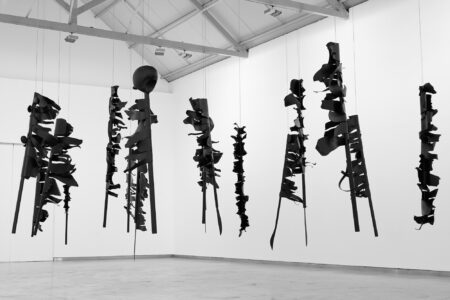
Lisbon Art Weekend returns for its 7th edition, taking place November 6-9th, a citywide celebration of contemporary visual art from Portugal and internationally. With more than 50 venues and 80 free events, Lisbon shines as a contemporary art capital.
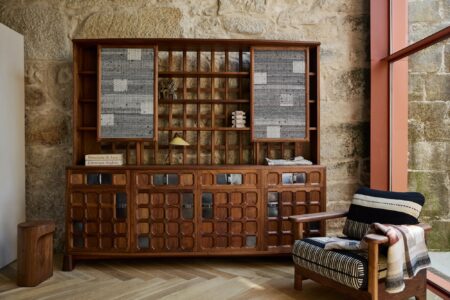
From a barn in rural Spain, to a small showroom in London, to collections with designers including Neri & Hu, Manuel Aires Mateus and Sam Baron, De La Espada continues to innovate and expand while always staying true to its belief in slow, handcrafted design.
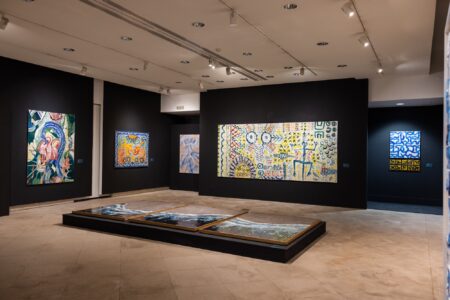
Viúva Lamego is an icon of Portuguese ceramic traditions and after 175 years, is managing to lead the way with contemporary collaborations, from the tiled roof on Kengo Kuma’s design for the Gulbenkian Museum to Joana Vasconcelos’s wild ‘Wedding Cake’ at the Rothschild Foundation.
During Lisbon Design Week, Oficina Marques partnered with Spacegram Studios and the heritage ceramics company Viúva Lamego, to present “Arcádia,” a joyful, contemplative temple-like structure that was adorned with a new collection of handcrafted tiles that are inspired by the botanical world.