

Collecting as a Family Passion: Mera and Don Rubell
Miami-based art collectors Mera and Don Rubell talk to Simon de Pury about how their love of art turned into a decades-long passion for collecting, why they still get excited about visiting artist’s studios and how collecting has become a true family affair.
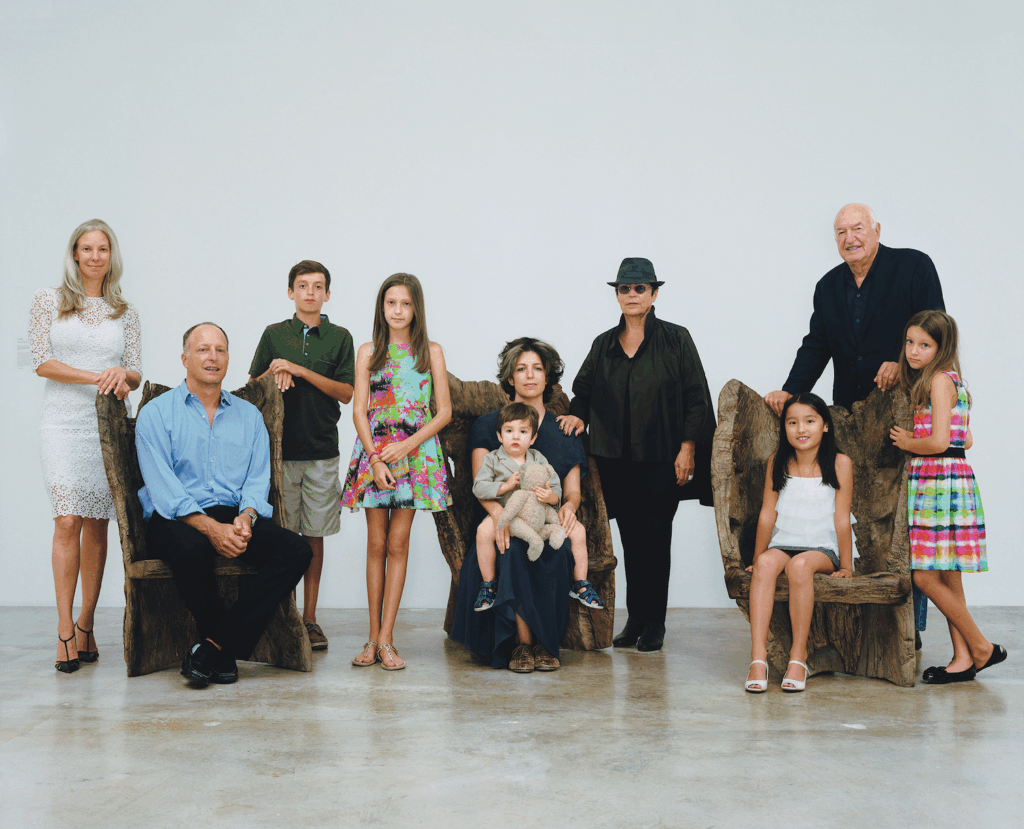
Mera Rubell: Before we start, I have to correct you, because we’re not just a couple, we are a threesome. Because Jason, when he was about eighteen years old, he became a member of our team. And we actually don’t buy any work that the three of us don’t agree on. For 37 years he’s been an equal partner. But this also causes a lot more discussion and sometimes a lot of fighting. We have a pact, you know, that the three of us have to convince each other of the work we present. And it creates a momentum and it’s a little bit of a competitive sport between the three of us. And so, in the process of the liberation and convincing each other, we come to a resolution. Also, because we work together, our finances to some extent are pooled.
Don Rubell: And if we can’t reach an agreement, we probably shouldn’t buy the piece anyway.
M.R.: But also, when you’re dealing with different generation, it’s kind of fun. As you know, Jennifer, our daughter, refuses to be on the team. She says, as an artist, that she brings too much criticality to this process. She has chosen to remove herself from that process. And we hope that in the future, we might put a grandchild on the team. I think collecting on consensus in a committee could be extremely compromising because there’s so many political agendas, you know. But our agenda has always been very clear – that we want to build the most important collection of our time.
Simon de Pury: It’s a wonderful mission.
D.R.: We are collecting for the future. In a sense, we’re collecting in an attempt to help define our time.
M.R.: I have to say, I’ve come to appreciate my husband, and I’ve never said that before; but the truth of the matter is that my husband was born with a collecting gene. You can identify those people because as young people, or especially my husband, as a young boy, he collected stamps, he collected baseball cards. He basically has this need to categorise, to just collect… It’s a collecting gene and it’s compulsive and it’s very organisational. This describes the complete opposite person to who I am. And the thing about collectors, and I am generalising, of course, but a lot of collectors who we meet are extremely selfish. It’s like, ‘it’s my bat, it’s my ball, it’s my game’. So, the fact that Don was by birth a collector and I was not, it’s hard for a collector to let in anybody into this private obsession. So, you have to admire couples. It means that unless both of them have that gene, one of them has to be generous. And I think Don was generous from the very beginning.
S.D.P.: That’s fascinating.
D.R.: Jason has the ultimate vote because Mera and I always disagree. The only advantage we have in terms of the politics of it is that when we get up every morning, and I know it’s hard to believe that during pretty much the entire marriage of 61 years, we wake up talking about art. And usually it’s a conflict.
S.D.P.: I’ve often found that collectors have a very good flair for artists of their own generation. And then they still have a pretty good flair for artists of the next generation. But very often they no longer have the right flair for the third generation coming. And so, your threesome has a great advantage of being two generations. And hopefully three generations.
M.R.: We all know how seductive art is. And we are starting to see each of grand- kids get pulled in. One is interested in the logistics of art. Another one loves the social part of it. We have a granddaughter who’s now studying abroad in Barcelona and she’s travelling every weekend to galleries all over Europe. She’s already addicted. And the other two are now working in New York and they’re attending all these openings. I mean, only Jason, Don, and I are involved in the museum — of course, with our director, Juan Valadez, who’s been with us 27 years.
D.R.: Although the grandchildren don’t have a vote, we encourage them to give us their ideas when they go around to galleries or museums. We take their ideas seriously. And we discuss it with them.
M.R.: I would say, if you’re interested in communicating with the next generation, art is a great vehicle. If you want to stay connected to people, I would say art is a language that has potential to keep you connected with the next generation.
D.R.: Our model is much more a European one than an American model. American collectors’ collections seem to be single generation. And we were exposed to Europe so early that we really understood the meaning of an ongoing collection and what it means to not only collect art, but to understand the responsibility of the art, to understand following the ideas going forward.
M.R.: And this is very important for us. Europe just has the generational commitment to art. There’s something about going into a home, whether it’s England or Cologne or Berlin, and people take pride in having artwork from a generation past, even if it doesn’t match the contemporary furniture that they have. It’s not an art that matches the couch. It’s a piece of art that a great-grandfather left them.
D.R.: Strangely enough, you see this most often in Belgium, where the collections are the least public. But when you visit them and you go into their basement, you see collections that reflect 100–150 years of consecutive collecting. And I think that’s a very interesting way to look and think about art.
M.R.: But I’ll tell you one thing, people always say to us, you are married 61 years, please tell us one thing that makes this 61-year marriage work. And I’ve thought a lot about it. And you know what, I have to say, I have to say it’s art. For us, it’s art.
D.R.: I would have to say it’s based on my wife marrying an absolutely wonderful person. [laughs].
M.R.: I have to say that it is the art because it’s such an important part of our life. I feel like we talk art, we sleep art, we eat art, meaning it’s such a dynamic spice in everything we do in our life.
D.R.: Art doesn’t keep you young. It keeps you relevant.
S.D.P.: That’s a good quote. I would say it does both.
M.R.: You of all people would understand this because this is how you’ve lived your life. It’s really a dynamic universe that is constantly morphing. And if you don’t morph with it, if you’re not flexible enough, you can get angry and bitter and say, I don’t like this. It’s not predictable enough for me. But if you allow yourself to bend with the wind in the art world, it’s always interesting.
S.D.P.: I feel we are all possessed by the same passion and obsession. And it’s a real privilege because we are never bored. There’s no routine. And we always have new things to amaze us. I was trying to think of other multi-generation collections. There is the Barbier Mueller collection that Joseph Mueller started and then his daughter Monique continued. Then the son-in-law Jean-Paul Barbier began as well. And now their three sons each in their own right have done amazing collections. It has become a big family collection. And with you, it’s now two to three generations collecting together. Count Panza di Biumo, I think he had six children. But what was interesting with him, his first collection was sensational. Each artist that he chose turned out to be a major artist. And then he did his second collection, some of which is housed in his villa in Varese, which again, he had his finger on the pulse, with all the key artists. And then when he presented his third collection, I believe not a single artist from the third collection has really made it or has really lasted. When I was a teenager in the 1960s, I was obsessed with, and I still am obsessed with pop music. We were all listening to Jimi Hendrix, to the Beatles, Rolling Stones, Bob Dylan, et cetera. Some of these friends still today listen only to music of the 60s, maybe 70s. And they say no great music has been done ever since. Whereas I’ve always continued to follow pop music and rock. And I think music never stops. There’s always great music. I think it’s a question of mental attitude. And when you have your children and grandchildren and you can follow what makes them tick, then you are much more attuned to the evolution of taste. And you can, in a way, predict how taste will evolve.
D.R.: There’s the excitement of discovery, when there is what you might call a lack of information, where you’re forced to look at the artwork and to make your own judgment. You know, you cannot look at the Mona Lisa or at a Jackson Pollock and make a judgment because you’re so biased by the history that you know about.
M.R.: For us, there’s no greater pleasure than thinking that we found another talent. It’s like finding the black tulip. And also, it’s like a naive faith that there is always going to be new talent. You know, like you have to believe that there is another Picasso. There is another Matisse. There’s another Giacometti.
D.R.: You know, all you have to do is look at the inverse to realize that Leonardo was young once. Everyone was young once. Every great artist was young once. And oftentimes it’s the work they produce when they’re relatively young. That’s the work that becomes the historical definition.
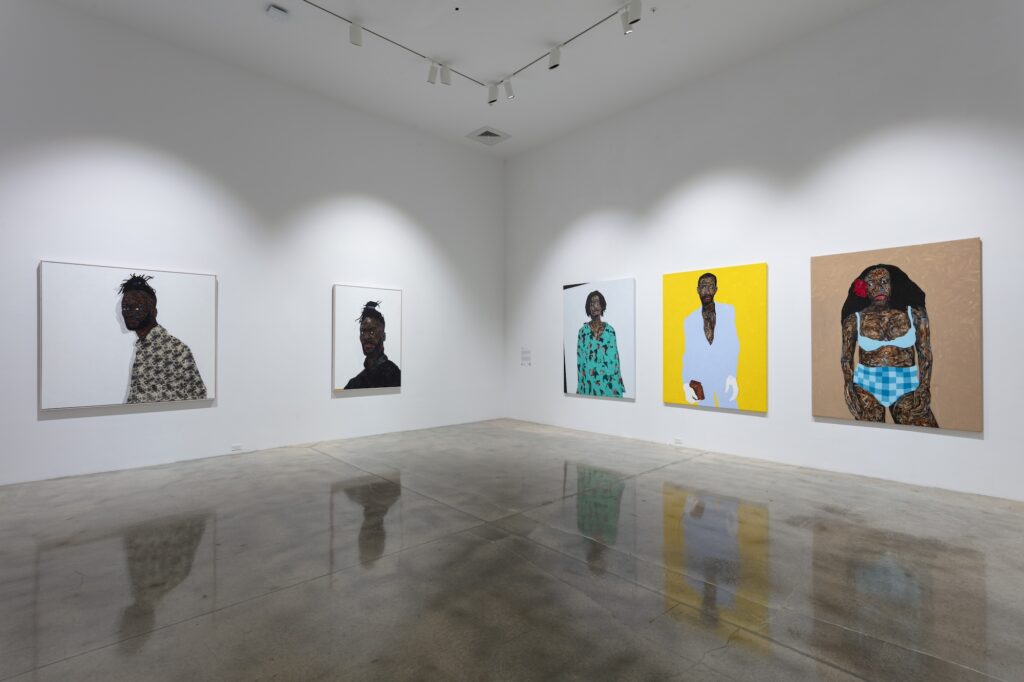
M.R.: I have to share with you a story. Last year we heard that Tracey Emin had this residency complex in Margate, England. And she is such a force and we wanted to know what was compelling her to do a residency. So before going to Art Basel, we decided to take a trip to Margate to see this artist, Vanessa Raw, who Emin is supporting. We flew to London and then totally jetlagged we got on the train to Margate for a few hours. And we arrive to Margate and it turns out that she is not doing a residency but that Tracey Emin is so enthralled with her work that she’s given her three galleries inside of this complex to work. We walk in and we were just blown away. It was incredible. We literally brought ten paintings on the spot. And later in the year we went to a small farm outside of Pittsburgh to see Seung Ah Paik’s studio and it was absolutely incredible.
D.R.: And at the same time, Jason’s in Paris and he goes to visit the Crevecoeur Gallery and he sees this young artist named Yu Nishimura. We had never heard of him before. Jason immediately saw the work and sent us images, which were spectacular. We love this part of the adventure, discovering something new
D.R .: Finding talents is so intoxicating. Whether it takes us to Pittsburgh or Margate, the underlying principle is we believe that with a young artist, you should go to where the art is produced. It’s not enough to see it in a fair or a gallery. You have to really meet the artist, talk to the artist, learn what are the factors that allow the artist to make work.
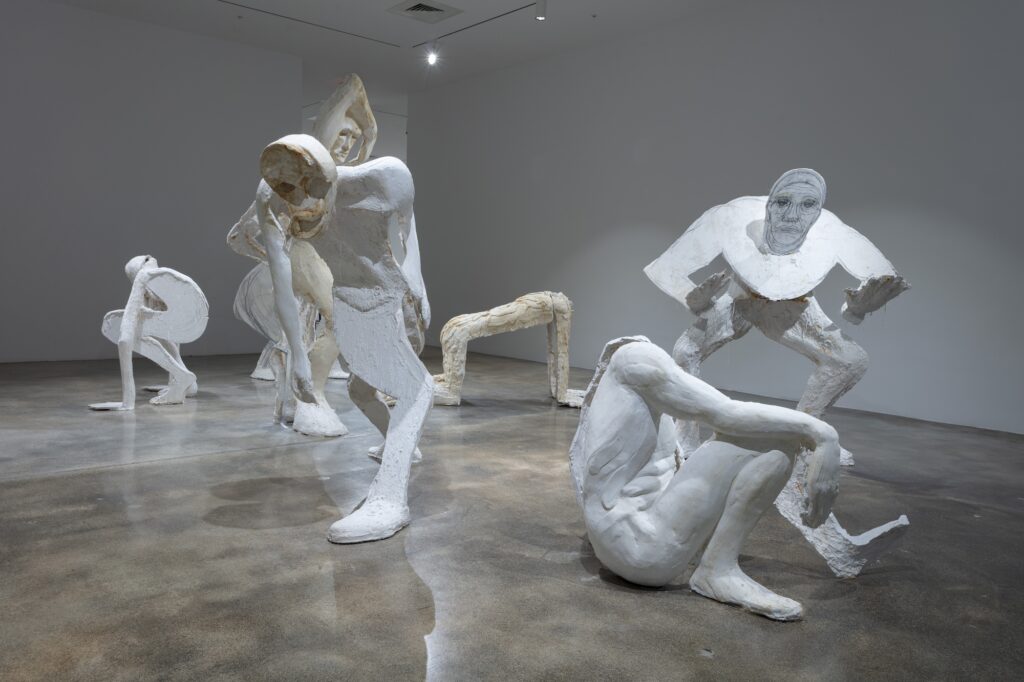
M.R.: We have to talk about another important thing happening this year, which you will experience at Art Basel. Thomas Houseago came to visit us a few months ago and we were walking through the museum and we were talking about how we have a 20-year history together. He was in our Red Eye exhibition 20 years ago and we have continued to support
his work. And he said that we should do something around this. And so, it’s starting a new series of survey exhibitions, where we will feature artists with whom we have had a long history, such as Richard Prince, Hernan Bas, Oscar Murillo. And each year we’ll devote eight galleries to one artist. And that artist this year is Thomas Houesago. I can’t even begin to tell you how exciting this is.
D.R.: It’s not just about buying the artist at the first show, but artists that we feel that strongly about, we actually commit to for many years.
S.D.P.: You must be very proud of the fact that you are considered to be two seminal tastemakers in the art market, and you have been for many years.
M.R.: It’s a big privilege what we do. We have a mission. We run two museums. We have a big responsibility running these public museums. But we don’t do it for others, we do it because it is a big joy, a big joy to have done this all these years.
D.R.: Collecting art is the ultimate privilege and we are lucky to share it with people. We enjoy it. To see the geniuses of our generations, the ideas, the talent, the genius that arises from the art world is fantastic.
S.D.P.: Is there an ultimate dream that you have not yet realised?
M.R.: Yes, I would say the ultimate dream is beyond us — that it is to leave a legacy that reflects the pleasure and the adventure that we have experienced in our lives. That would be my dream. Art is without emotional limits. In the age of AI, depersonalisation, etc., art still connects you to people intimately.
www.rubellmuseum.org
@rubellmuseum


Articles you also might like
For TLmag41: The Art of Collecting, Simon de Pury spoke to Jean Pigozzi about his gift for throwing such legendary parties, his obsession with collecting art, most recently contemporary Japanese Art, and how he is essentially the inventor of the selfie.
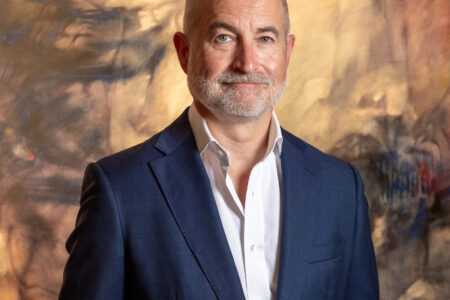
For TLmag41: The Art of Collecting, Christian Levett, founder of FAMM (Femmes Artistes de la Musée de Mougins), writes about how he came to create one the largest collections of art by women artists.
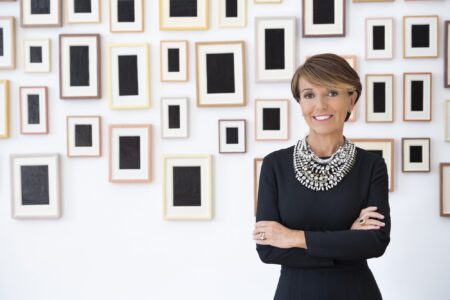
For our 2026 print issue: TLmag41: The Art of Collecting, Patrizia Sandretto Re Rebaudengo writes about her discovery of American costume jewellery over 40 years ago, sparking a passion for the jewellery as much as the history behind each piece. In 2025 she published a monograph with Taschen documenting her collection.
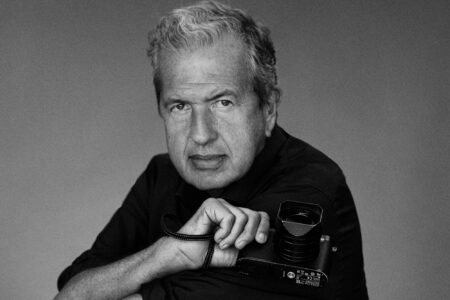
For TLmag 41: The Art of Collecting, Mario Testino writes about how collecting art and collaborating with contemporary artists was influential in his long career as one of the world’s top photographers. This is an edited version of the article which appeared in our 2026 print issue.