

Alejandra Esteve of ERENTIA
Spanish architect Alejandra Esteve talks to TL Mag about her early influences, the foundation of her multidisciplinary practice ERENTIA, and her commitment to designing spaces that resonate emotionally while addressing broader contexts.
Architect Alejandra Esteve, founder of the multidisciplinary platform ERENTIA, is part of a new generation of practitioners redefining the role of architecture today. With experience working with RCR Arquitectes, Frida Escobedo and David Chipperfield, Esteve’s practice is deeply engaged with materiality and place. Her practice extends beyond the traditional studio model to include a laboratory for research and a foundation dedicated to social initiatives. From housing projects in Mexico and Spain to community-based work in Cuba, Esteve pursues a holistic vision in which architecture is not only a built form but also a catalyst for cultural, environmental, and social transformation.
TLmag: Would you talk a bit about your early inspiration & influences that led you to want to study and practice architecture?
Alejandra Esteve: I grew up in a family environment deeply tied to natural stone. I remember accompanying my father to the factory, watching him explain in detail the processes, the machines, the rhythms of work. The landscape of a quarry and the way it operated fascinated me. Without realising it, I began to develop a curiosity for materials—for how they are transformed and given form in construction. I believe it was my father, indirectly, who led me to architecture: he passed on to me that passion for materials and its processes.
Later, while studying and working at RCR Arquitectes, I had the opportunity to visit Casa Horizonte. I remember vividly the moment I walked into the living room and looked outside: I was overcome by a very intense emotion, one that is difficult to put into words. It was a deeply revealing and personal moment. That was when I understood why I wanted to be an architect: for the ability of architecture to generate an emotion, to transform someone’s inner state. As Luis Barragán said, “architecture is an art when it produces, whether consciously or unconsciously, an aesthetic emotion in the atmosphere.” That experience became a guiding axis in my practice: the search for that spatial intensity, for that shared emotion, is always present in my work.
TLmag: When did you start Erentia?
A.E.: Erentia was founded in 2022. The year before, I had been exploring the idea of starting a studio with two friends, born from a collaboration that had drawn us together. For different reasons, that project never materialized. I remember, the very next day after deciding to let it go, sitting in a café with blank A3 sheets, a pen, and a book that inspires me a lot. After several hours and many coffees, the pages were covered with ideas. That was how Erentia was born.
TLmag: Was it always your vision to have the studio, lab and foundation together? Can you talk about how each one connects to the other and the studio in general?
A.E.: Always. Since that morning I mentioned before, the three spheres that make up Erentia already existed. In fact, one of those papers has a drawing of three circles —the Studio, the Laboratory, and the Foundation— interconnected. Yes, it was always my vision, because it stems from a very personal concern. Erentia, in itself, reflects the way I understand architecture and the way I wish to practice it. The Foundation is perhaps the most autonomous. It is not approached solely through architecture, but also through the formulation of its own statement and the entire structure needed to make it possible. That is why part of the team is dedicated exclusively to the Foundation, although it maintains some degree of participation from the rest. When, for example, we design architecturally for the Foundation, the rest of the team becomes involved: this is our way of ensuring that everyone is part of everything and that there is a shared vision among the three spheres.
The Laboratory, in turn, was conceived as an independent space: a place to withdraw from the noise and limitations of the everyday, to research and explore more freely. Although it develops its own capsules, it decisively nourishes the Studio. The idea is that everyone is part of everything. Each person then finds the space where they want to deepen their involvement, according to their interests, but always within a common vision that holds the three spheres of Erentia together.
TLmag: Talk about the Foundation. Do you collaborate with other organizations on-site on projects? How did the connection with working in Cuba come about?
A.E.: The Foundation is the most beautiful, complex, exciting, and rewarding project; I learn from it every day. It was born with the commitment to generate a positive impact through architecture and learning in the rural communities of the Palmarito Valley in Viñales, Cuba. One of our main goals is to respond to housing that faces serious risks in future natural disasters in vulnerable rural areas, using material innovation and architecture as tools. The construction of a Workshop-School will be promoted in order to provide technical training to the community so they can participate in building their own homes, making them more resilient to future climate events and thus reducing their vulnerability.
We work with Cuban entities such as the Office of the Historian and Conservator of Viñales (responsible for heritage and conservation), the Faculty of Architecture at CUJAE, a local SME, several local architecture studios, and of course, the community itself. All of these agents are fundamental to the development of the project; their participation allows us to deepen our understanding of the context while also bringing decisive technical capacity to the research and production of CEB (Compressed Earth Blocks), among other aspects.
The connection to Cuba arises from something very personal. I first visited the country six years ago, on a trip with friends. At the airport, just before returning to Spain, I decided to stay a couple of weeks longer and returned to Viñales. There I had the opportunity to live with the community and get involved in local construction processes, such as building a tobacco drying house and a horse stable. That direct contact allowed me to understand, and learn firsthand, a body of knowledge passed down from generation to generation: vernacular techniques of extraordinary simplicity and intelligence, which respond with precision to material, climatic, and cultural contexts.
Back in Spain, that experience led me to articulate the first attempt at what would later become the Foundation. Nearly twenty people came together voluntarily to work on the project’s development. It was truly remarkable. Each of them had their jobs, yet they found time to meet, to keep the initiative moving forward. That collective commitment was deeply inspiring. Then the Covid came, forcing us to put the project on hold for some years. Yet that pause only reinforced the need to rethink it with greater solidity and long-term vision. The connection with Cuba thus stems from a personal experience but also from a broader conviction: that architecture is a tool capable of generating and driving positive transformations. From this perspective, I believe architects have a responsibility to actively commit to a social architecture that engages with contexts and contributes to their resilience.
TLmag: What are a few materials that you often go-to when designing projects? Is it often very site-specific? Are you working on any furniture collections?
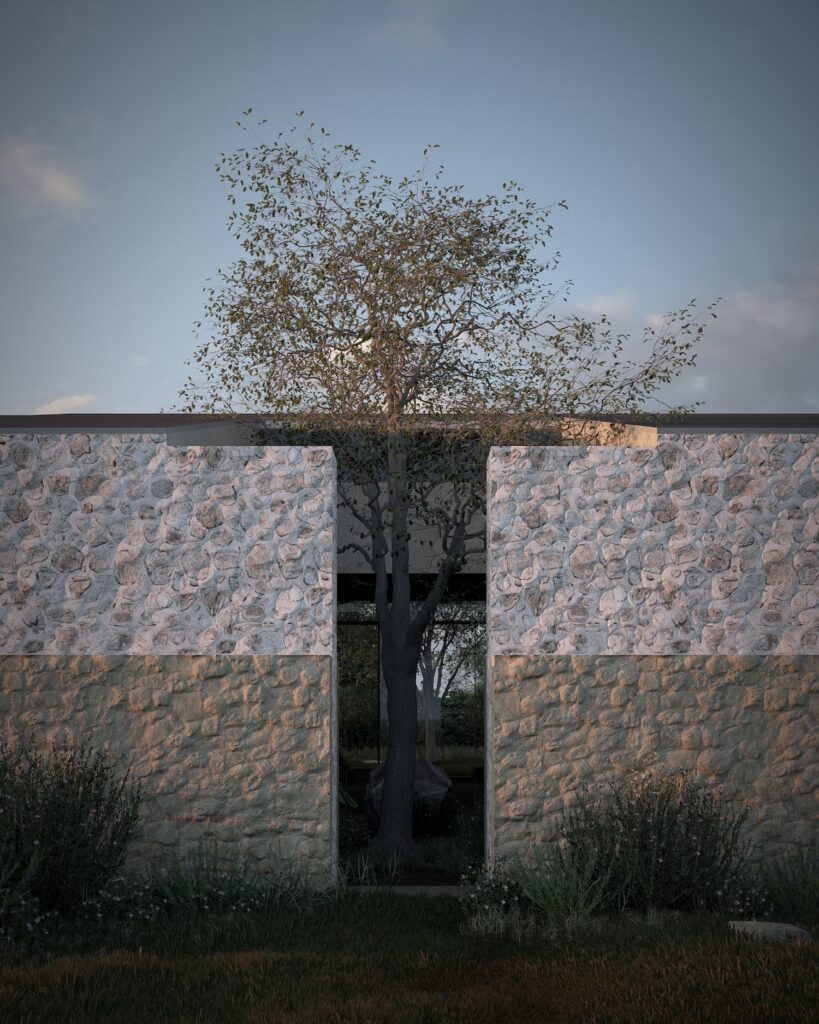
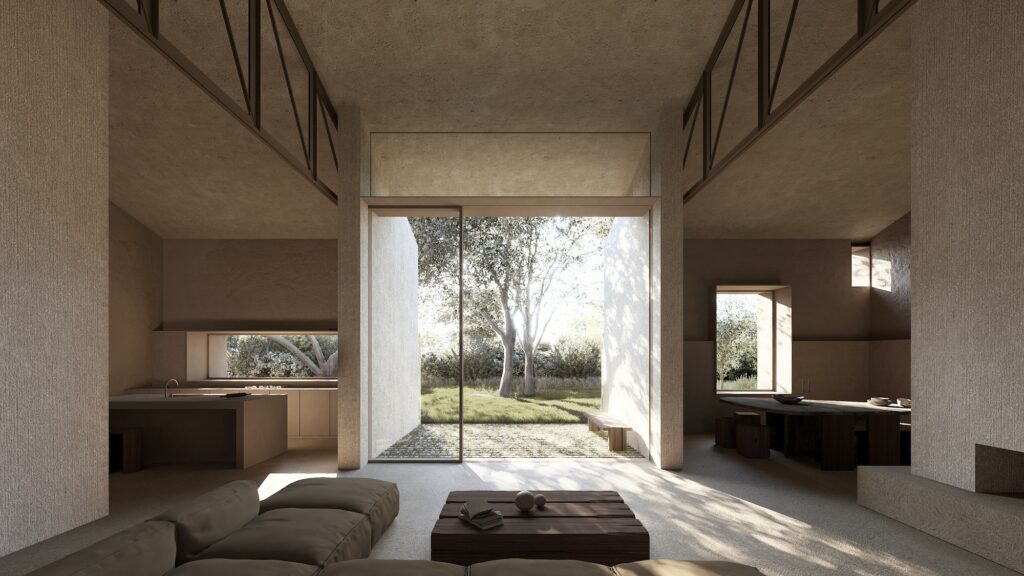
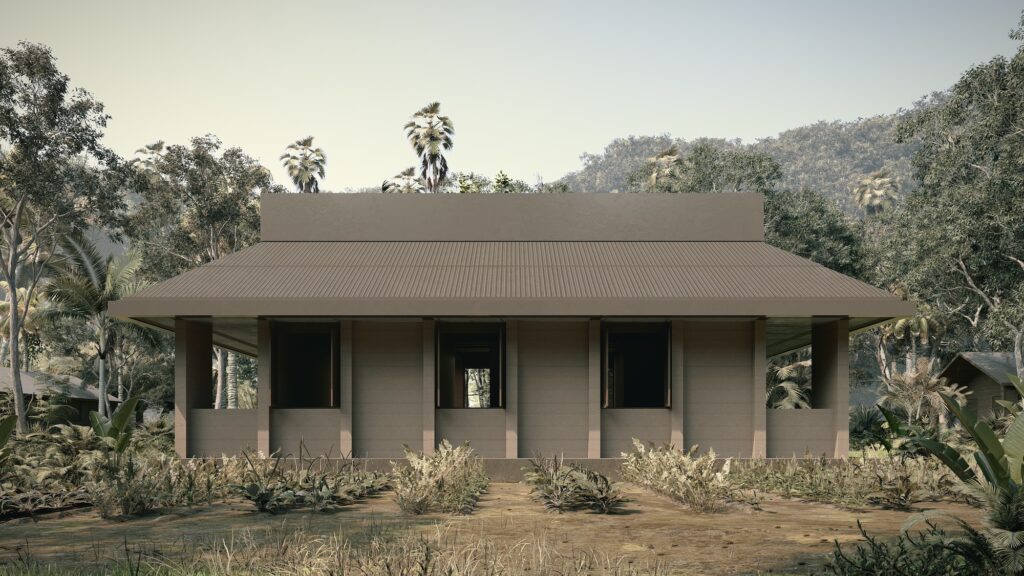
A.E.: I tend to design with honest and noble materials, those that clearly express their origin and intrinsic condition. I am especially interested in the idea that a constructive material can simultaneously serve as both structure and finish. I have not yet been able to fully materialise a project in this way—largely because budget constraints often condition materiality—but it remains a clear direction of research. In each project, we strive for the architecture to speak of the place in which it is set: from its initial conception to its materialisation. This naturally leads us to work with local materials and techniques. In Casa Magma, in Lanzarote, materiality emerged from volcanic stone and solidified ash; we sought not only the mineral density of the territory but also that dark, almost telluric tonality that makes the house appear as though it rises directly from the earth.
We are currently developing our first line of furniture for the interior design of Casa Terra, and in the coming weeks we will begin prototyping a chair and an armchair for the living room. We do not conceive of this furniture as an independent exercise, but rather as an extension of the architectural concept of the house: pieces inscribed in the same material and formal logic, as if architecture and furniture formed a single system. Designing a piece of furniture also demands a different kind of attention: the intimate scale, ergonomics, and construction detail. It is in this proximity to the body and to everyday use where the true complexity of design lies, and where we aim for every decision to remain coherent with the architecture that hosts it.
TLmag: Would you talk about 1 or 2 current projects underway?
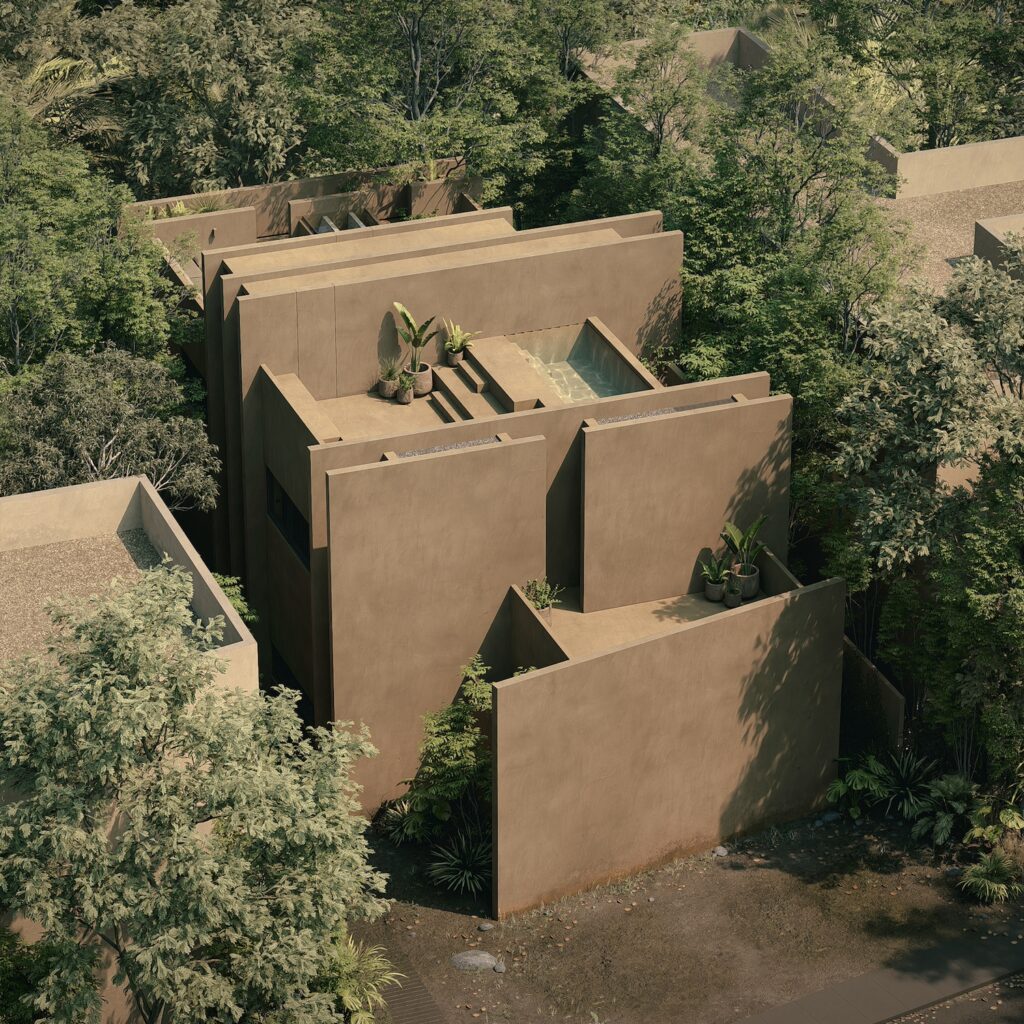
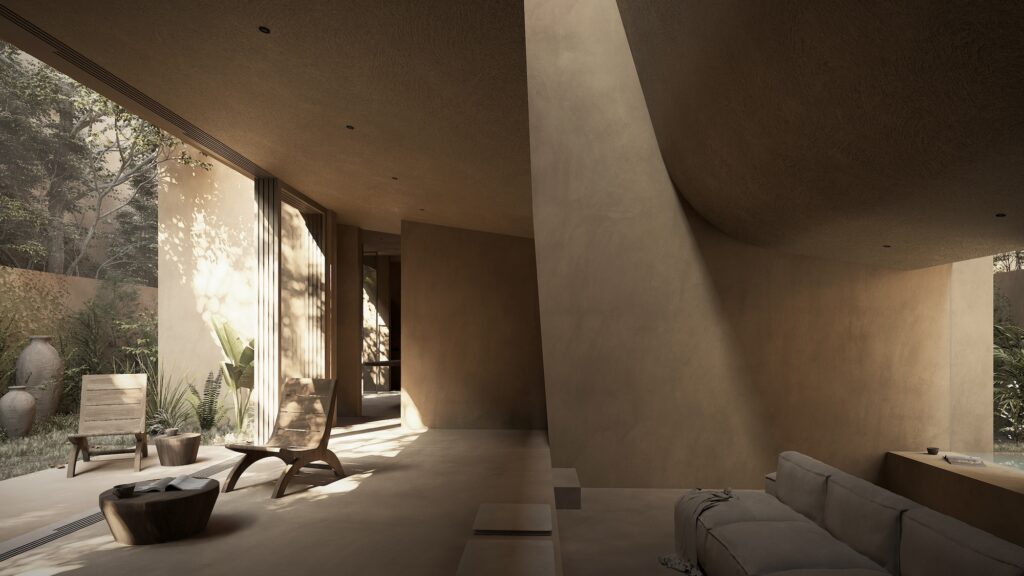
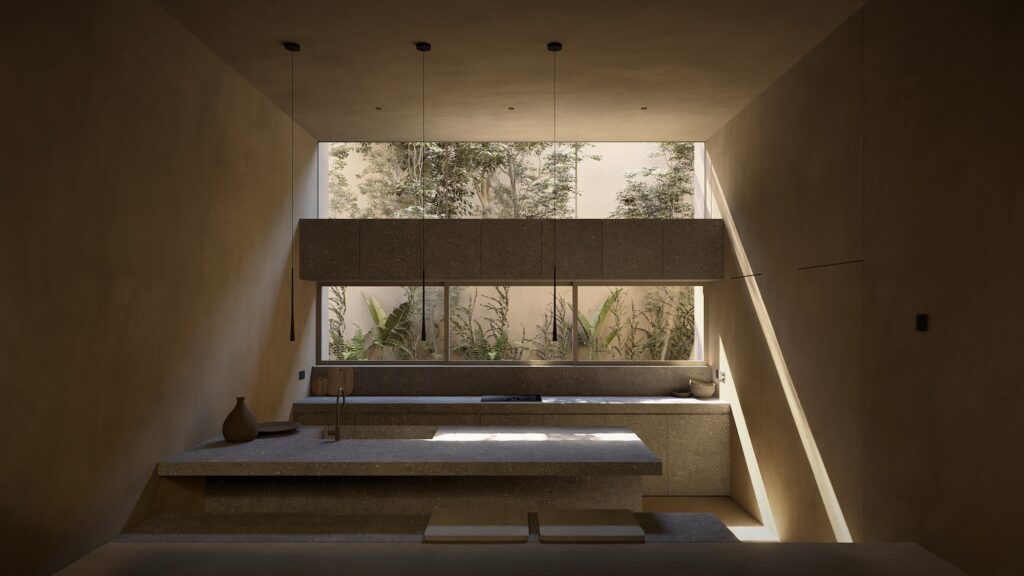
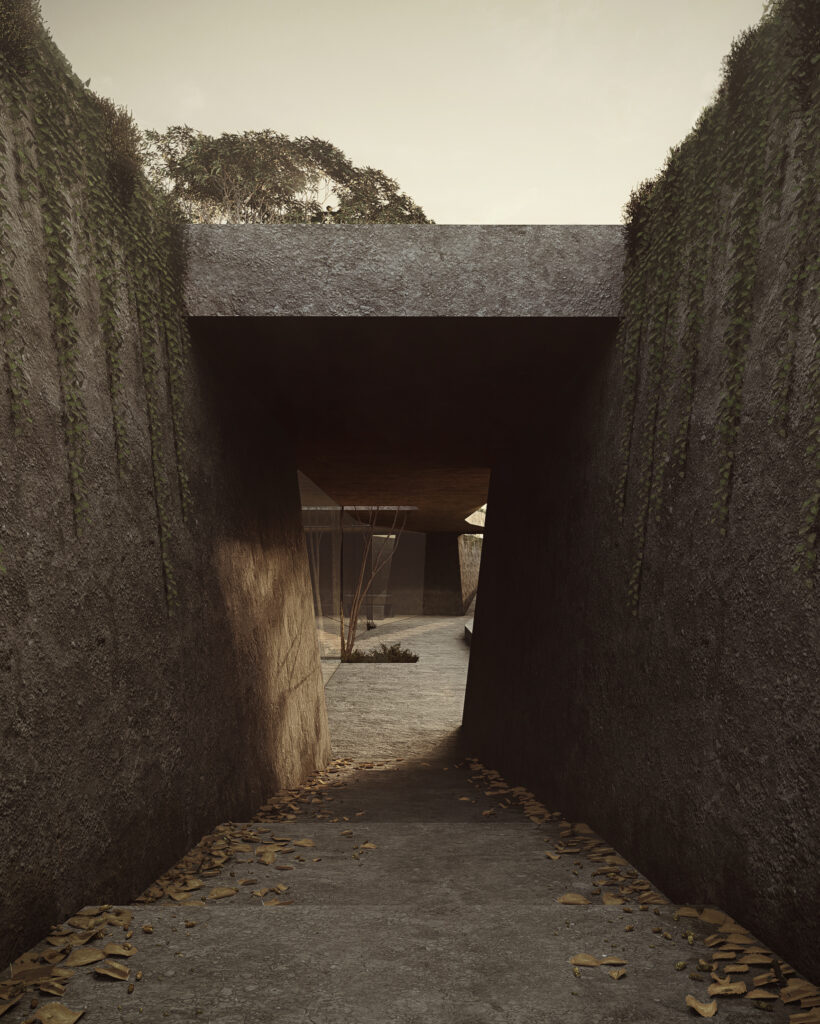
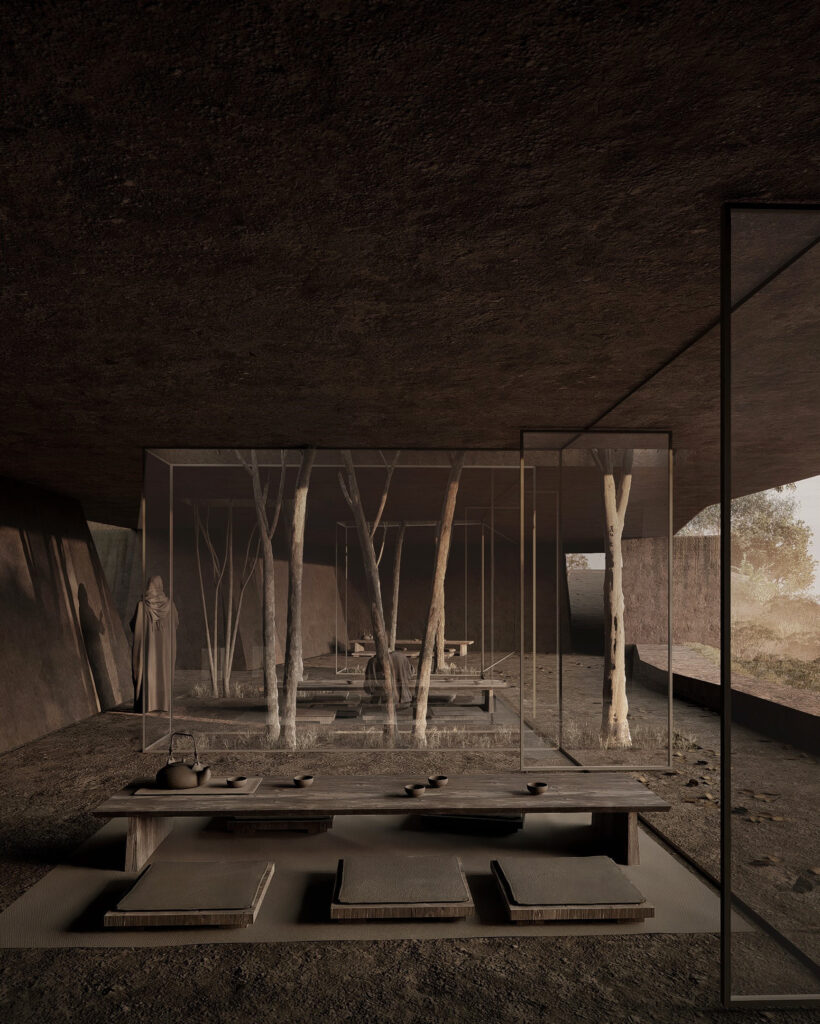
A.E.: Casa Terra is a house that seeks to inhabit duality. It is located in the heart of Aldea Zamá, in Tulum, a place where real estate pressure has generated very homogeneous urban environments, detached from context and conceived almost exclusively for tourists or investors. Against this logic of accelerated growth, which often prioritises profitability over urban quality, Casa Terra proposes an architecture anchored in the territory, in its memory, in its cultural layers. Casa Terra is a home that reveals itself as it is inhabited. Its interconnected yet independent volumes create a sequence of pathways that invite exploration and experience. The house is oriented from east to west, not only as a functional decision but also as a way of choreographing the entry of light throughout the day. Everything is conceived as part of a system that speaks without the need for explanation.
TLmag: There seems to be an intentional approach to design and architecture in your practice that connects to place, to taking time and being holistic. How are those three things a part of your work?
A.E.: I believe architecture finds its true meaning when it emerges from place. Place as a weave of memory, matter, and culture that gives it depth. But it is also built in relation to time, understood not only as the span of a project but as an essential condition of space itself. Time appears in architecture through light and shadow, through the way materials age, through the way the sequence of a space accompanies and measures our experience. We are interested in architecture as a medium for slowing perception, for withdrawing from the speed of urban life, and opening the possibility of another cadence: that of a more attentive, slower consciousness that reconciles the individual with their environment. In this sense, time is not an external framework but a constitutive part of the work; we do not only inhabit space, we also inhabit the temporality that space is capable of unfolding.
The holistic vision, meanwhile, invites us to conceive architecture not as an isolated object but as a complex reality where the social, the material, the environmental, and the spiritual converge. It also incorporates something less tangible yet essential: the experience of inhabiting, the ability of space to provoke an aesthetic emotion, to heighten perception, and to generate a poetic dimension in those who live it.
TLmag: Tell us about your upcoming projects.
A.E.: We are currently engaged in several new projects, some in Spain and others abroad —in France, London, and a new one in Mexico— across very different programs. One of them moves beyond the residential field and explores gastronomy and experience, a project where we have been given remarkable freedom to create.
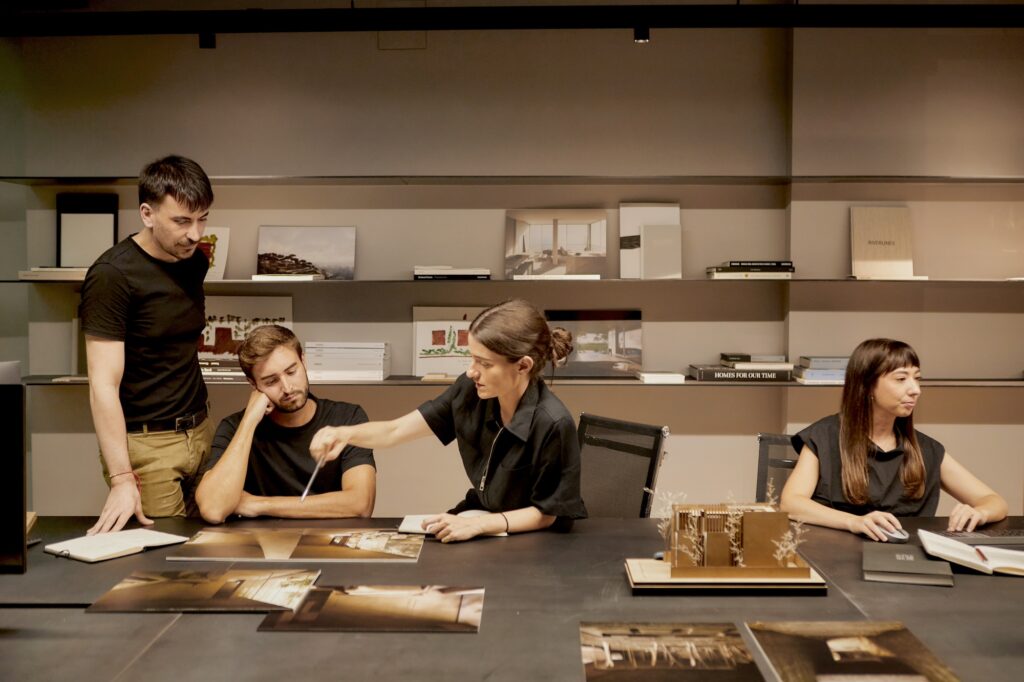

Articles you also might like
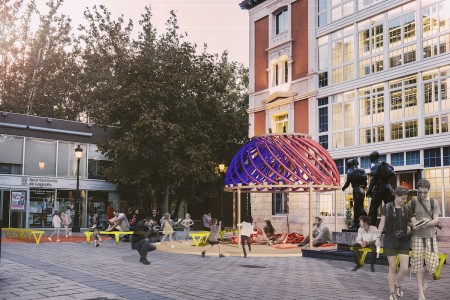
The city in La Rioja becomes a design hub for the fourth edition of Concéntrico, a celebration of the squares, streets, terraces and hidden spaces that usually go unnoticed.

After Peru and Brazil… South America has already given us a desire to go elsewhere… For the Summer 2013, we invite ourselves to Mexico! We… Read more
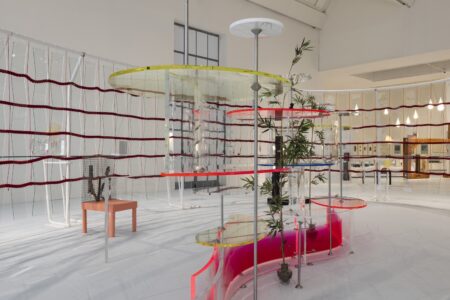
Triennale Milano pays homage to one of Italian design’s most radical minds — Andrea Branzi — through the eyes of his longtime friend and collaborator, Toyo Ito.
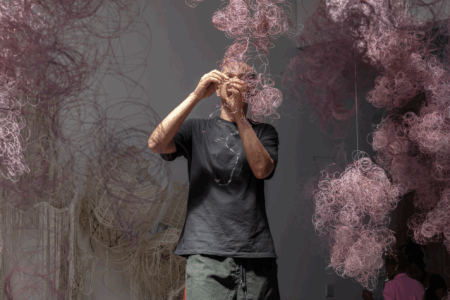
Mudam Luxembourg presents Igshaan Adams: Between Then and Now, a comprehensive exhibition that traces the South African artist’s distinctive practice, one that is shaped by care, healing and community. The exhibition is on through August 23, 2026.