


Arcadia: Wild, Vibrant and Contemplative
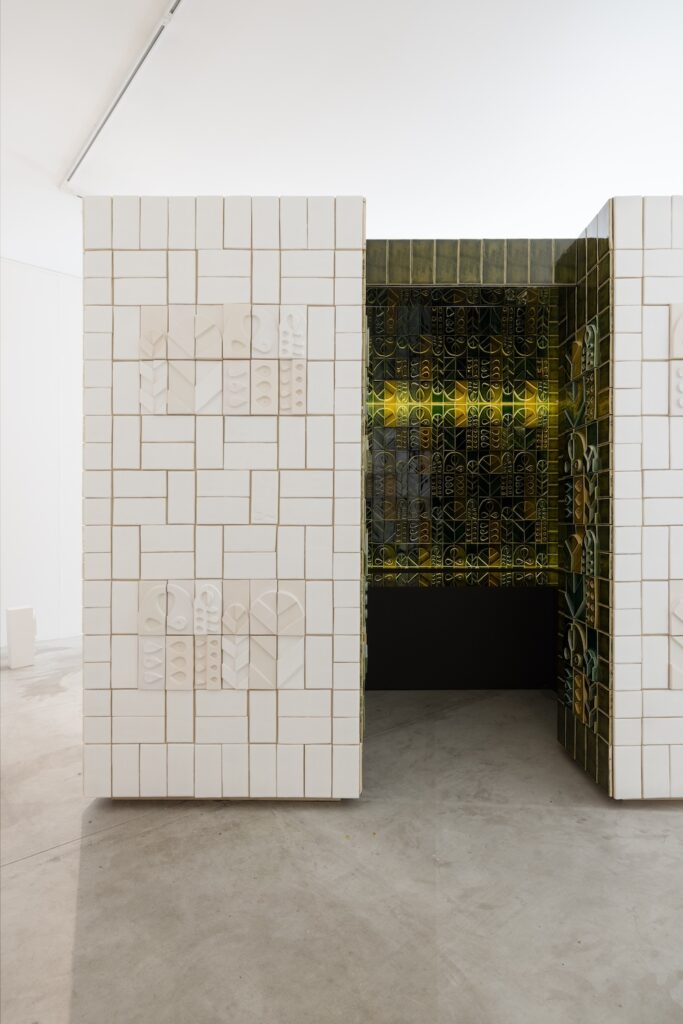
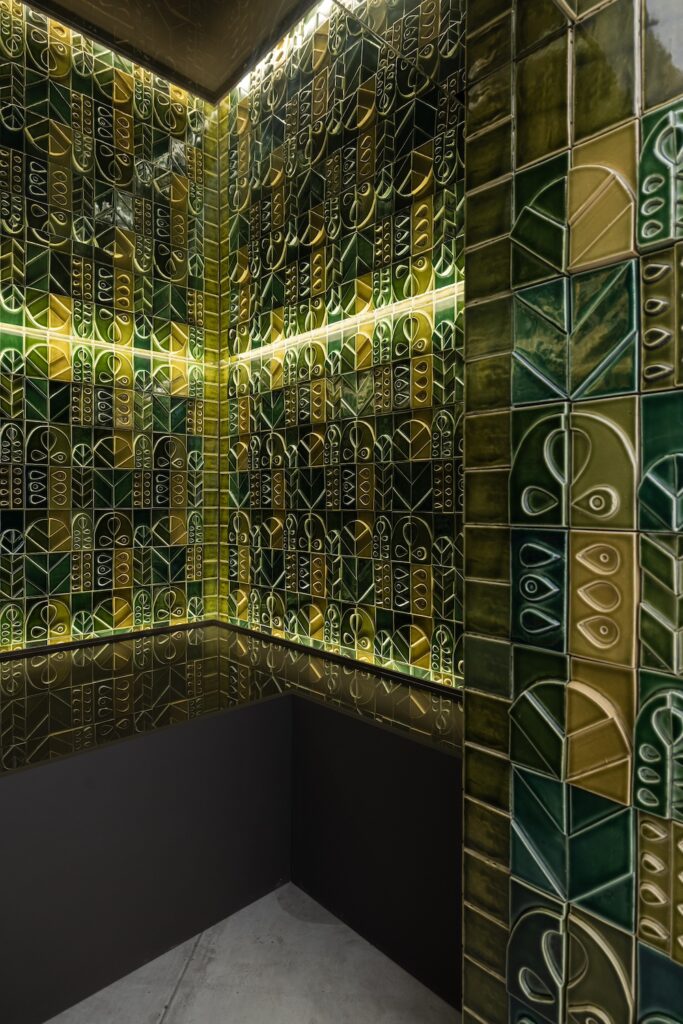
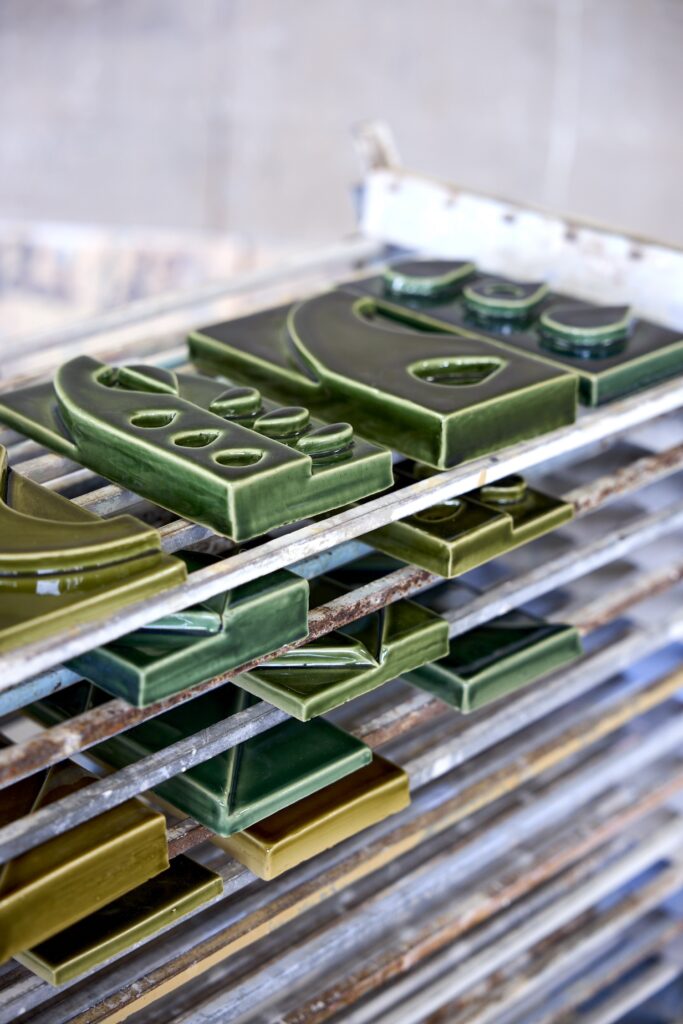
During Lisbon Design Week, Oficina Marques partnered with Spacegram Studios and the heritage ceramics company Viúva Lamego, to present “Arcádia,” a joyful, contemplative temple-like structure that was adorned with a new collection of handcrafted tiles that are inspired by the botanical world.
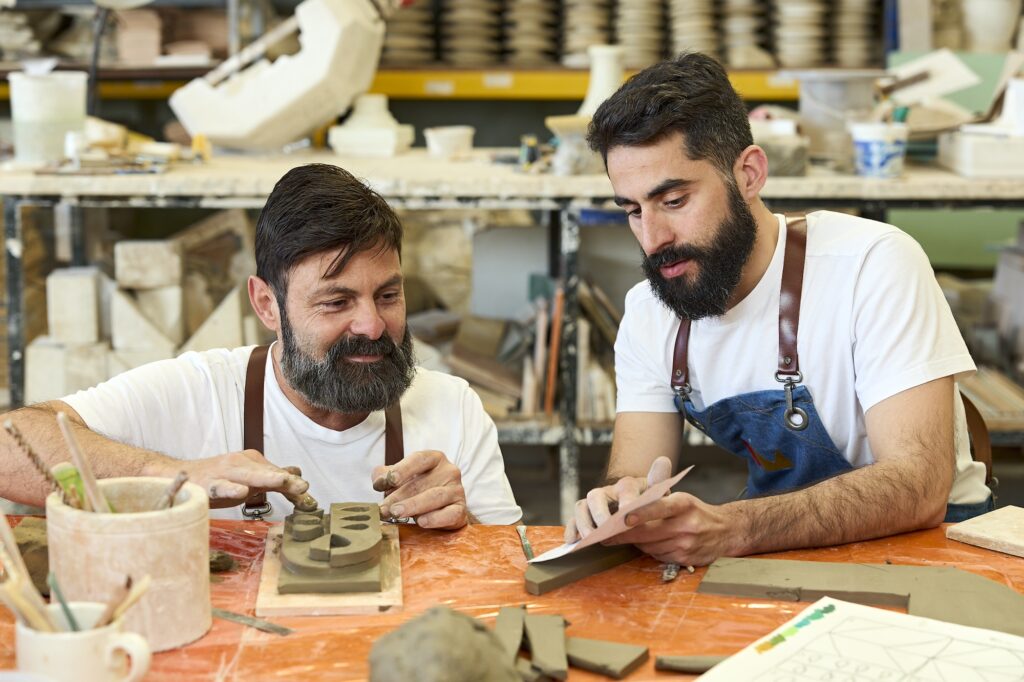
During Lisbon Design Week, Oficina Marques partnered with Spacegram Studios and the heritage ceramics company Viúva Lamego, to present “Arcádia,” a joyful, contemplative temple-like structure that was adorned with a new collection of handcrafted tiles that are inspired by the botanical world. Lisbon-based Oficina Marques, founded by Gezo Marques and José Aparício Gonçalves, stands out for its distinctive style, one that blends elements of the natural world with a handcrafted aesthetic and a touch of the baroque. Five themes – the Sea, the Wilderness, the Body, Faith, and Lisbon – serve as a framework for the brand. As Jose explains, “These themes sum up our motto and spirit — what we like to call a ‘Tusa de Viver’. It’s a positive outlook on the world: a celebration of life, people, relationships, and objects.” When it came to designing “Arcádia,” José says, “we focused on wilderness – something untamed that stands in contrast to the built environment, a space not tied to humans but alive with animals and fantastic creatures.”
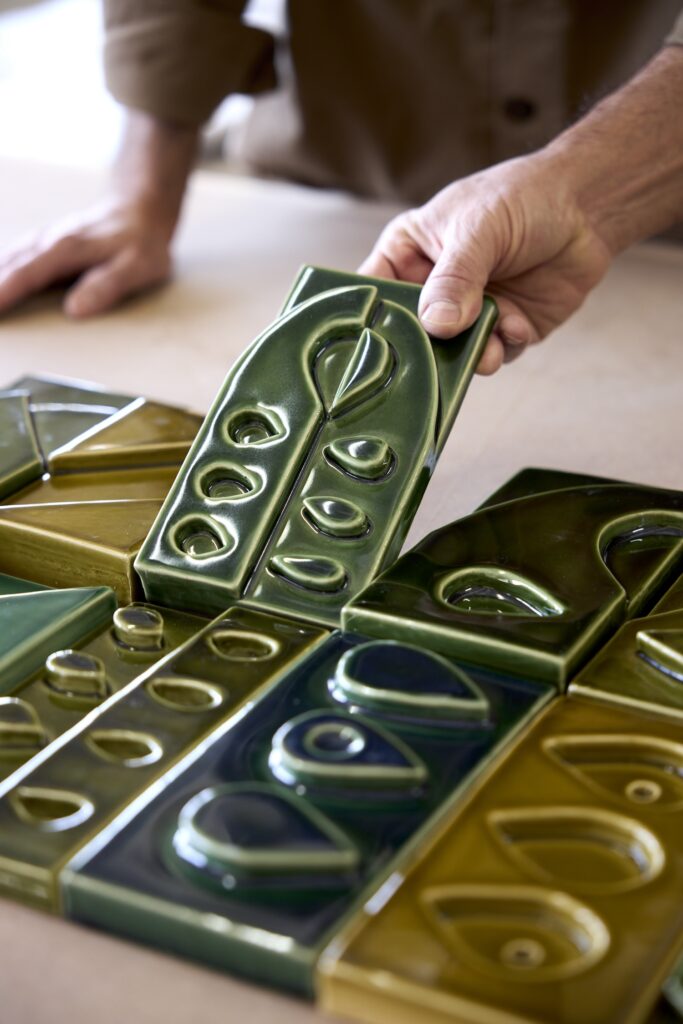
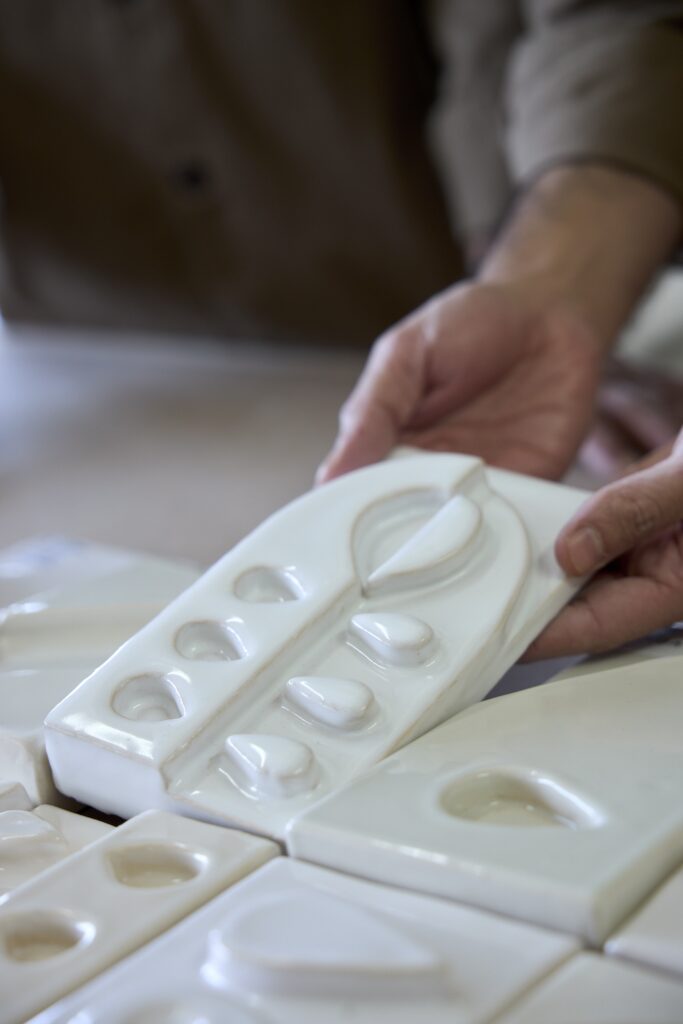
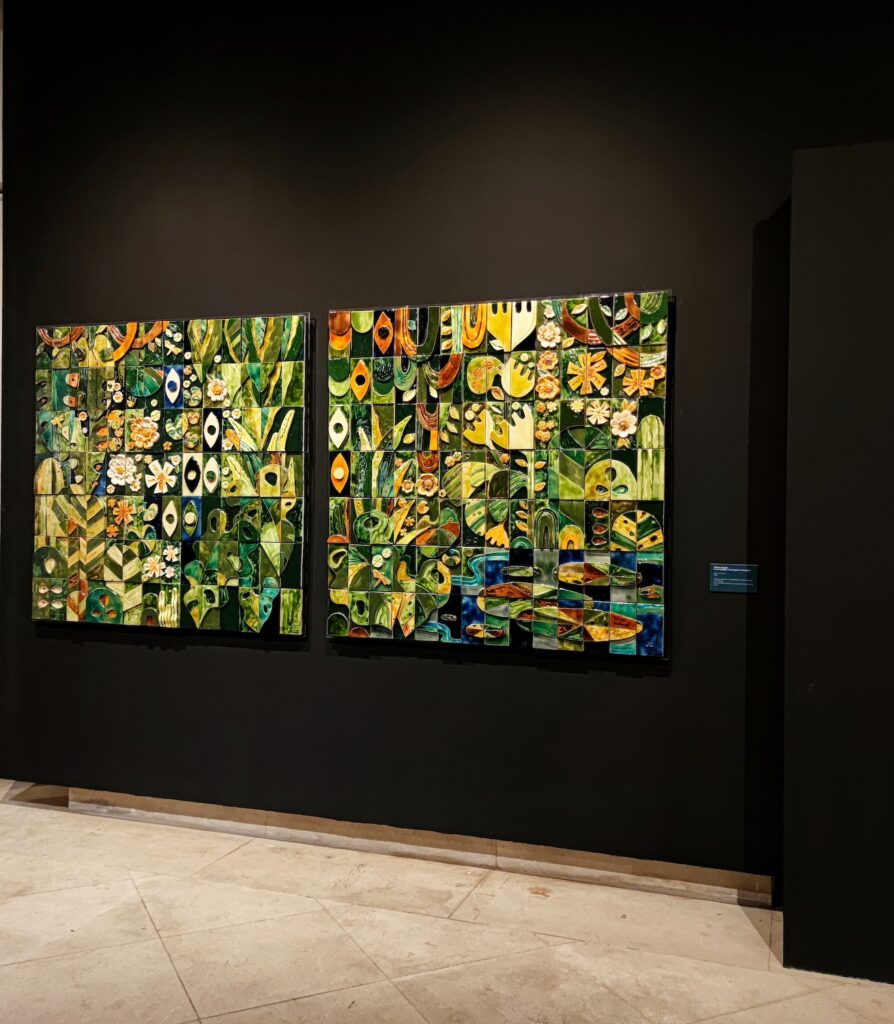
The project began to take shape when the designers were invited in 2024 to do an artistic residency with Viúva Lamego as part of the company’s 175-year anniversary celebration. Here, they created two panels that became the seeds of the handcrafted tile collection “Arcádia.” As Gezo describes, “This strong connection to nature and the idea of celebrating life led us straight to “Arcádia” — the name itself evokes the mythological territory, an idyllic place where humans and nature live in harmony. It resonates deeply with how we see the world: wild, vibrant, and contemplative all at once.” Viúva Lamego has been nurturing and expanding the possibilities of ceramics within the design, art and architectural world for decades and Oficina Marques wanted to reference that history in this project. “With Viúva Lamego, we wanted to honour their legacy while adding our own language — layered reliefs, tactile depth, and volumetric gestures that merge heritage with contemporary craft,” José explains.
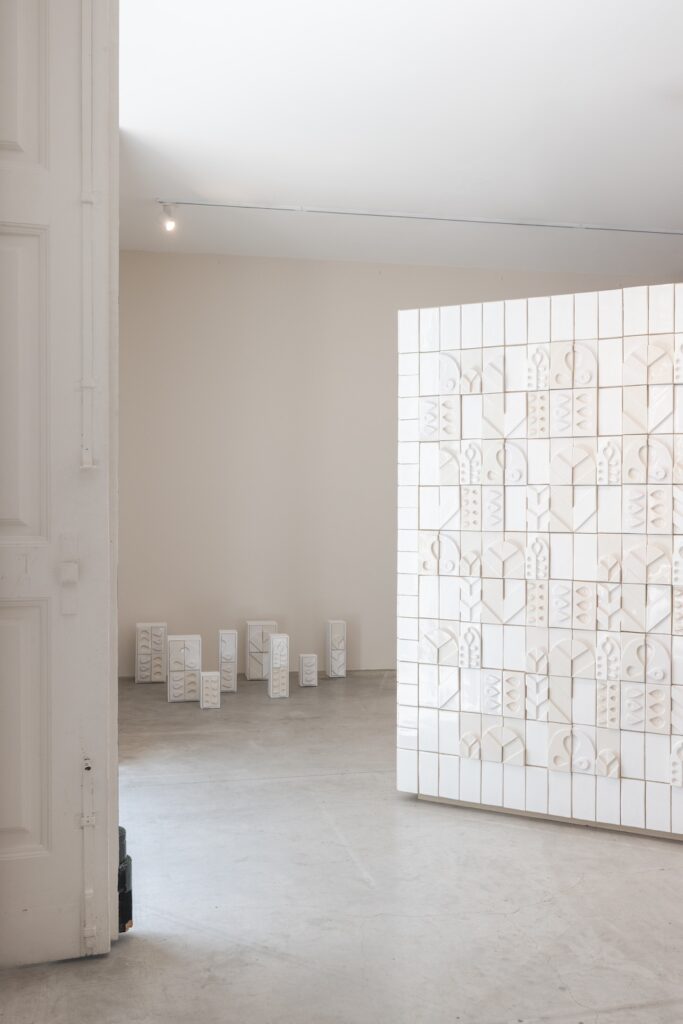
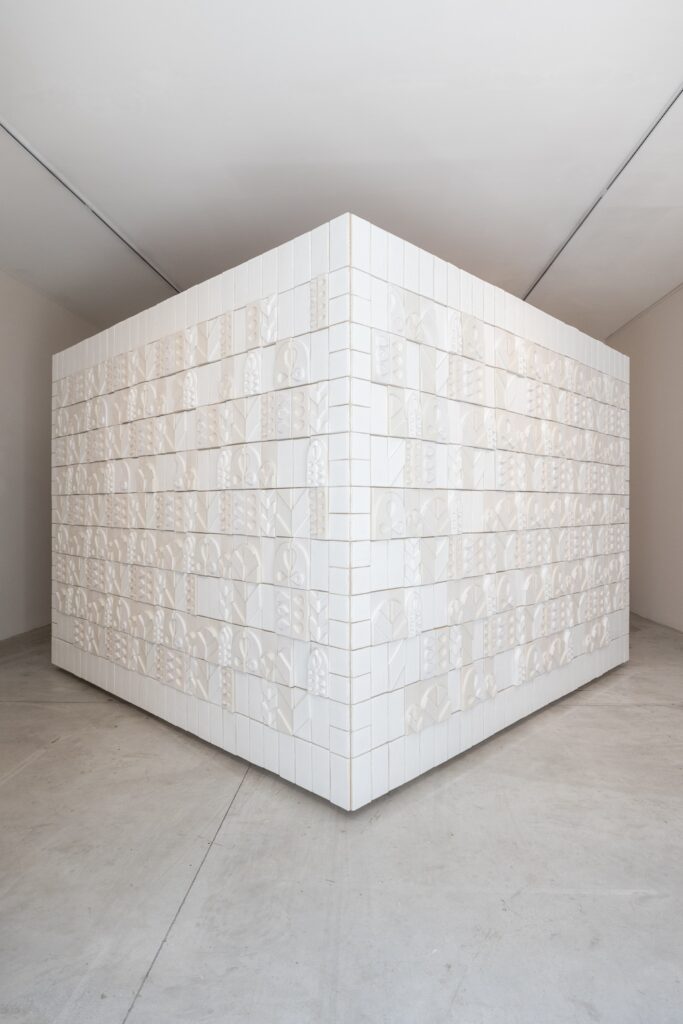
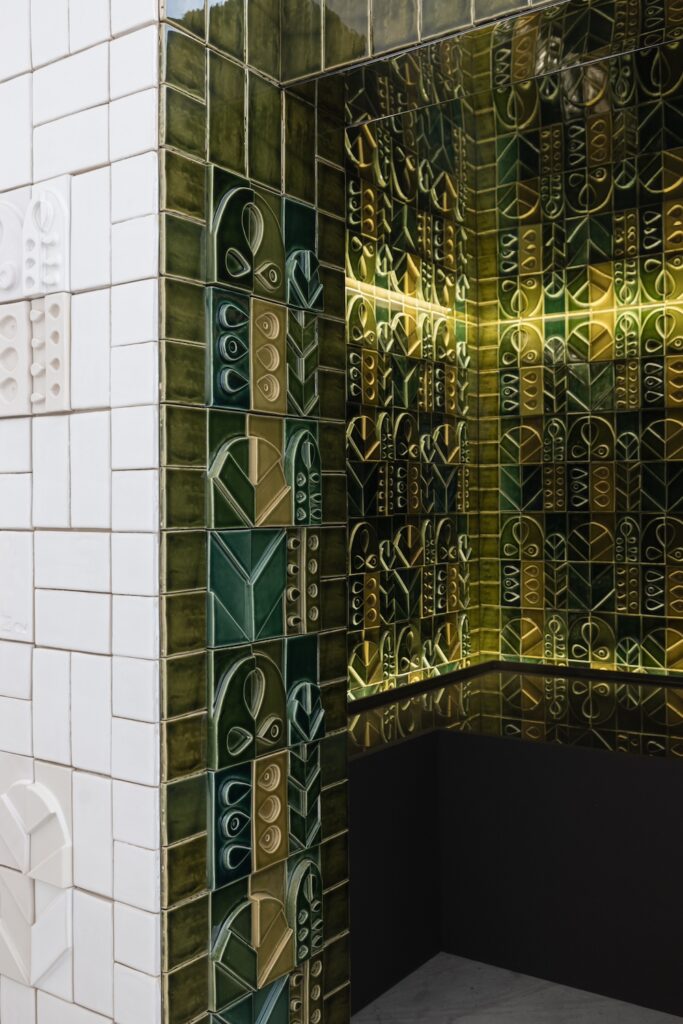
The pair went on to create two collections of tiles – one in shades of white and the other in earthy-jewel tones of green yellow and browns. As Gezo explains, “At Oficina Marques, we love to explore chromatic duality. From the very beginning, we’ve worked with white glazed ceramics — our earliest collections were all white — but over time, we opened ourselves up to colour and everything it brings. For “Arcádia,” we wanted to keep that duality alive. The white versions highlight the form, the volume, the subtle textures and reliefs; the coloured pieces, on the other hand, belong fully to the natural world — they feel vibrant, like an extension of the surrounding environment.”
As a way of presenting the collection of tiles in an architectural way, they collaborated with Lisbon-based Spacegram studio to help envision the physical structure that embraces an interior-exterior duality, reminiscent of Greek or Roman temples. Texture, scale and shape combine to create an experience that is visually stimulating and grounding. During Lisbon Design Week, visitors entered their showroom and encountered white-tiled exterior walls and then walked around and into the coloured tiled interior, where a small pool of water added to the inviting and introspective atmosphere. As Ana Ferrão, Founder & Architect of Spacegram explains: “Rather than a static object, the structure was conceived as something spatial, a temple-like form that could be walked around, discovered slowly, or even puzzled over. Its design invites movement, curiosity, and moments of pause. Like a labyrinth, it conceals and reveals depending on your position, your attention, or the way light hits its surfaces. Inside, a water feature reflects the textures of the handmade tiles, amplifying their tactility and shifting presence. It’s a space that asks to be entered — not just looked at.”
The installation embraced a confluence of ideas and dualities: interior and exterior, nature and man-made, history and the contemporary. “As with all our collaborations, the real beauty lies in what’s built between hands, minds, and visions, says Ana. “In that sense, Arcádia was less about escape, and more about remembering that design, at its best, can reawaken a sense of wonder.”

Articles you also might like
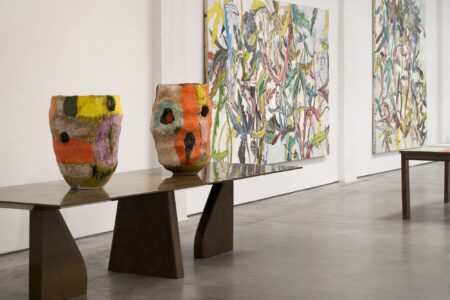
Carpenters Workshop Gallery Los Angeles presents California Poppies, a solo exhibition by Roger Herman that includes paintings, ceramics and functional furniture. The show is on view through September 20, 2026.
The third edition of ceramics brussels runs from January 21-25, 2026 at Tour & Taxis and features 75 Belgian & international galleries.
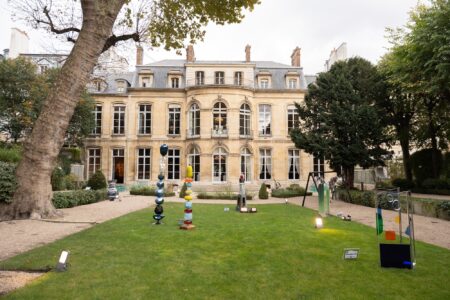
Featuring 23 French and international galleries, the inaugural Ceramic Art Fair takes places this week, between October 21-25, at the Maison de l’Amérique latine, including installations in the building’s elegant garden.
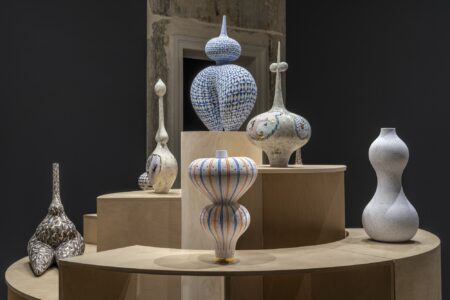
Galerist presents Earth on Their Hands, a solo exhibition by Elif Uras that features a selection of sculptural vessels and ceramic plates that were made between New York and Turkey. The delicately painted, handcrafted vessels reveal layered stories about the invisible labour of women throughout time. The exhibition is on view through November 8th, 2025.